What Are the 4 Main Branches of Theology? A Simple Guide
Wait, theology has branches now?
Just a few months ago, theology was simply theology to me. I did not even know there were different types. But as I’ve deepened my studies, I’ve started noticing them in places where I was already learning about God.
For instance, when I go to church, the priest may explain how Christian teaching should affect our day-to-day lives.
That is close to practical theology: taking what we believe and asking how we should actually live it.
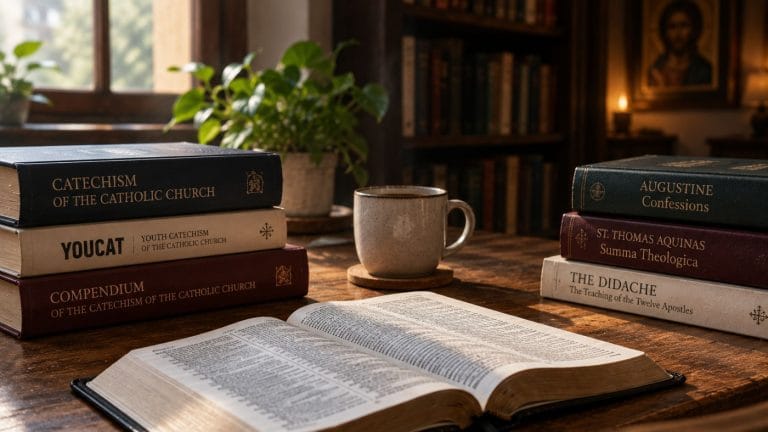
When I read the Catechism, I encounter something more systematic. I know the Catechism is not exactly a systematic theology textbook, but it organizes the Church’s teachings into subjects that make them easier to understand.
All this is to say that we may already be studying different branches of theology without knowing their specific names. These branches are not different versions of Christianity competing against each other. Instead, they are different ways of studying the same Christian faith.
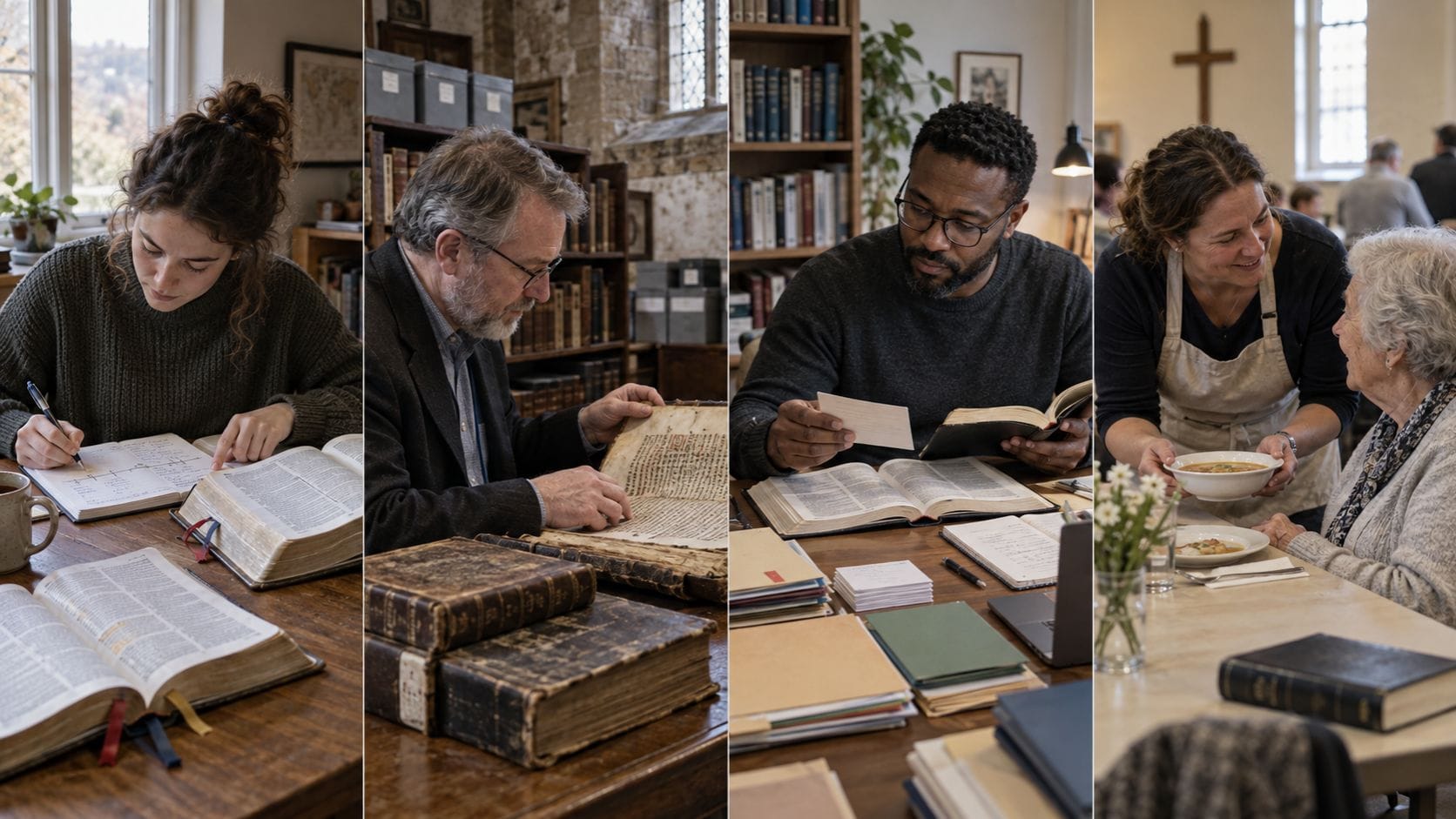
In this guide, we will explore four major branches of theology: biblical, historical, systematic, and practical theology. We will look at the questions each one asks, how they work together, and how ordinary Christians can use them to understand their faith more clearly.
Key Takeaways
- Biblical theology follows the story: It looks at how God’s revelation unfolds throughout Scripture, from creation and the covenants to Jesus Christ and the New Covenant.
- Historical theology listens to Christians who came before us: It studies how the Church understood, defended, and expressed its beliefs throughout history.
- Systematic theology puts the pieces together: It organizes Christian teaching into subjects such as God, Christ, salvation, Scripture, and sin.
- Practical theology asks what we do with what we believe: It connects Christian truth with worship, ministry, relationships, daily decisions, and the way we live.
Why Lists of Theology Branches Differ
Different schools, authors, and Christian traditions organize theological studies in different ways. That is why you may find one list with four branches and another with six or more.
Usually, this happens because theology can be organized by method (how you study), topic (what specific doctrine you examine), or source (where you draw knowledge from).

For example:
- Practical theology: Helps us put Christian teaching into practice in our daily lives, ministries, and churches.
- Natural theology: Studies how human reason, logic, and observation of creation can reveal truths about God.
These branches often overlap, but each one helps us study God and the Christian faith from a distinct angle.
But to keep this simple and prevent it from sounding like we’re studying rocket science—I’m going to focus on four major branches. There are others, of course, but for someone new to theology, these four make the different approaches much easier to understand.
Biblical Theology Follows the Story of Scripture
Biblical theology follows the unfolding of God’s revelation throughout history. This study helps us see how God reveals Himself and His plan to save humanity step by step.
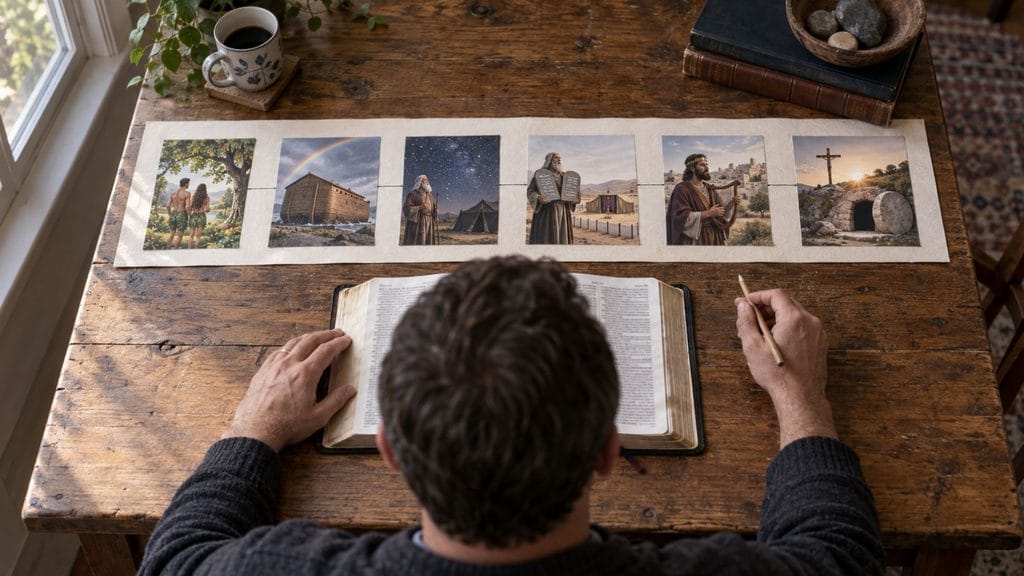
We come to understand several stages and covenants, such as:
- Adam and Eve: The first marriage between a man and a woman and the beginning of the human family. God told them to be fruitful, multiply, and care for His creation.
- Noah: God established a covenant with Noah, his descendants, and every living creature. He promised never again to destroy all life with a flood.
- Abraham: God promised Abraham land, countless descendants, and that all nations would be blessed through him. Later, Abraham’s grandson Jacob was named Israel, and the twelve tribes of Israel descended from his family. Circumcision became the sign of God’s covenant with Abraham.
- Moses: Through Moses, God formed Israel into a holy nation. He gave them the Law, which worked in some ways like a constitution and included civil, moral, and ceremonial laws. God also gave them the Tabernacle, where He dwelt among His people, and the Sabbath as a day of rest and a sign of their covenant with Him.
- King David: God promised that David’s house and kingdom would endure. One day, an eternal King would come through David’s lineage and reign forever.
- Jesus Christ: Jesus established the New Covenant through His death and Resurrection. Through Him, people from every nation can receive forgiveness, become adopted sons and daughters of God, and be reconciled with Him.
As you can see, biblical theology gives us a more concrete idea of how the books of the Bible connect.
We stop seeing them as separate books and start seeing each one as part of the unfolding story of God revealing His plan to save humanity through His eternal Son, Jesus Christ.
Historical Theology Listens to Christians Who Came Before Us
Historical theology explains how the Church developed a clearer understanding of God’s revelation throughout the centuries. For instance, nowadays we can study the doctrine that God is Father, Son, and Holy Spirit.
We quickly forget that it took centuries for the early Church to express some core Christian teachings in a more precise and comprehensive way. And even now, the Trinity can still make smoke come out of our heads.
Historical theology asks how Christians in different centuries interpreted their faith, wrote their creeds, defended doctrines, and responded to the cultures around them.
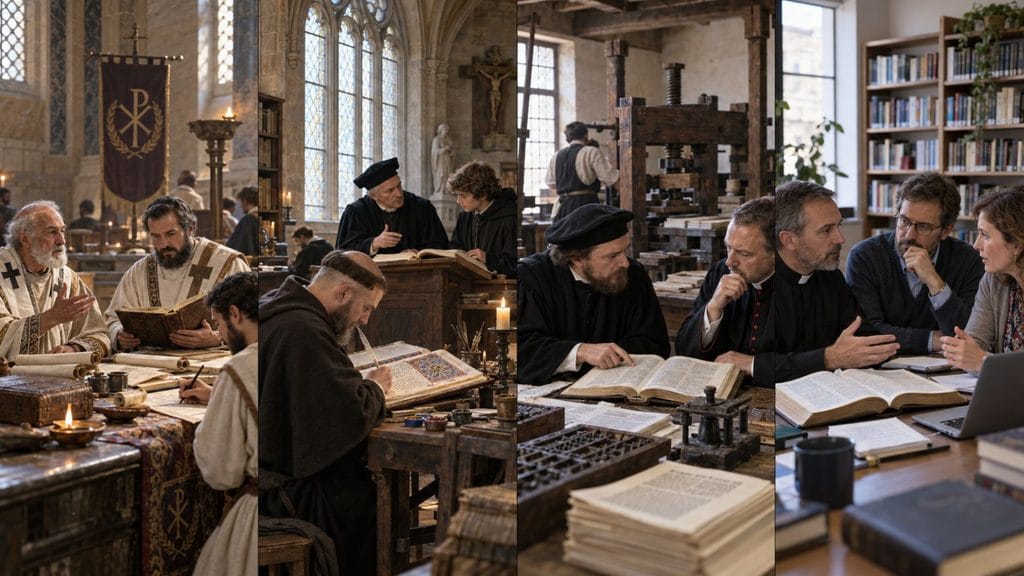
One simple way to divide Christian history is into four major periods:
Patristic Period (AD 100–700): This includes Church Fathers and early councils such as Nicaea, Constantinople, and Chalcedon.
During this period, the Church clarified and defended doctrines such as the Trinity and Jesus being fully God and fully man. The books belonging to the biblical canon were also gradually recognized.
Middle Ages and Renaissance (AD 700–1500): This period saw the growth of monasteries, cathedral schools, and universities.
The Church continued developing its understanding of the sacraments and other teachings. It also included the growing separation between Eastern and Western Christianity, traditionally associated with the Great Schism of 1054.
Reformation and Post-Reformation (AD 1500–1750): Western Christianity became divided as reformers such as Martin Luther, John Calvin, and Ulrich Zwingli challenged the Catholic Church and helped form different Protestant traditions.
Christians debated biblical authority, Sacred Tradition, justification, the sacraments, and other teachings. The Catholic Reformation also responded through the Council of Trent, which took place from 1545 to 1563.
Modern Period (AD 1750 to Today): This period includes the influence of the Enlightenment, modernity, and secularism.
Christians have faced new debates about faith and reason, while movements such as Pentecostalism, feminist theology, and liberation theology have also grown. For Catholics, this period also includes the First and Second Vatican Councils.
What I’ve Noticed?
When I look back, historical theology was one of the main branches that helped me understand the Sacred Tradition of the early Church, reformers like Martin Luther, John Calvin, and Ulrich Zwingli, and how Western Christianity became divided into so many denominations.
Later, this study played an important part in bringing me to the Catholic Church.
I consider this an important branch of theology. Whether you belong to a Protestant, Catholic, or Orthodox church, historical theology helps you understand why your church defends certain doctrines and follows particular liturgies or forms of worship.
Systematic Theology Puts the Pieces Together
We spoke about biblical theology, which follows the unfolding of God’s revelation throughout history. By comparison, systematic theology organizes Christian teaching into different subjects or categories.
For example, on Blessed Compass, I organize my blog posts into categories. This post and others connected to theology go into the theology category. Posts about putting our Christian faith into practice go into the Christian life category.
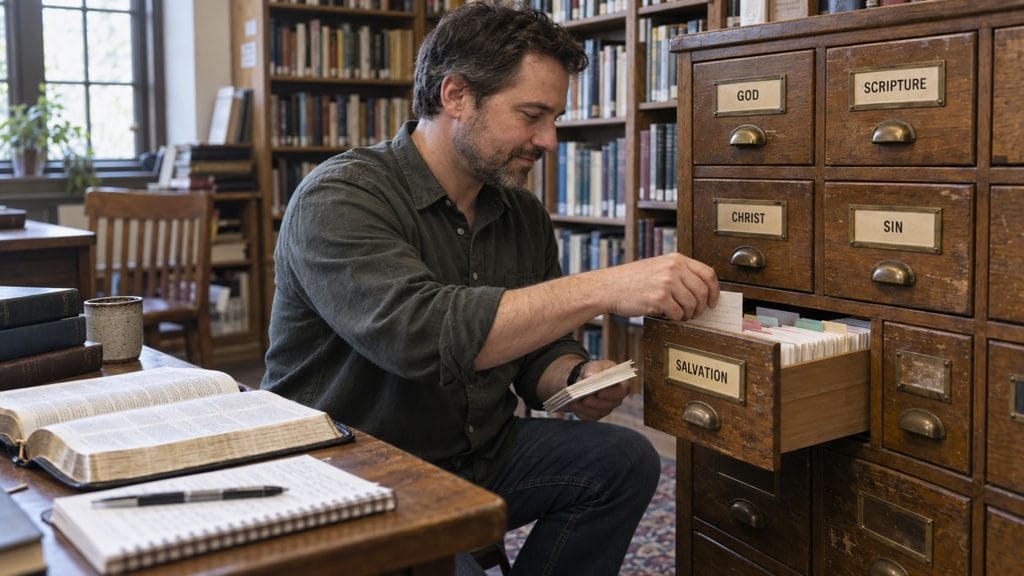
So, when someone wants to quickly find all the blog posts related to theology, they can simply visit that category page.
Systematic theology works in a similar way. If you want to learn what Christianity teaches about salvation, you can study the category called Soteriology, also known as the doctrine of salvation. It gathers teachings about grace, faith, justification, atonement, and sanctification into one place.
Other common categories include:
- Theology Proper (Doctrine of God): The study of God’s existence, nature, attributes, the Holy Trinity, creation, and providence.
- Bibliology (Doctrine of Scripture): The study of Scripture’s origins, inspiration, authority, interpretation, and how the biblical canon was recognized.
- Christology (Doctrine of Christ): The study of who Jesus is, His two natures (fully God and fully man), His earthly ministry, and His saving work.
- Hamartiology (Doctrine of Sin): The study of the origin, nature, and consequences of sin.
You have more categories than these. But I guess you get the idea, and your head may already be spinning from all these strange names.
Anyway, systematic theology gives you more clarity and consistency in your studies. Let’s say you want to learn more about angels and demons. Today, you could study Angelology and Demonology.
Which, by the way, sounds pretty fascinating. You could start by searching for a trustworthy video, course, or book that focuses specifically on that subject.
So, as you can see, systematic theology helps you study a specific topic without randomly digging through the entire Bible and not knowing where to begin.
It gathers the relevant passages and teachings so you can understand how they fit together.
Practical Theology Asks What We Do With What We Believe
Reading the Bible is amazing, but God’s Word is also meant to shape the way we actually live.
That’s exactly what practical theology is about. Usually, when you listen to a homily at Mass or a sermon in a Protestant church, the priest or pastor reads a few passages and then explains how we can put them into practice.
For example, last Sunday, the priest spoke about Matthew 18:21–22, where Jesus tells Peter that we should forgive “seventy times seven.” Then the priest explained how difficult this can be for us.
We normally struggle to let go of what someone has done to us. Forgiving does not mean forgetting that it happened or pretending that it did not hurt.
It means releasing resentment, refusing revenge, and choosing mercy. That’s also another reason why we need Christ and His grace to help us truly forgive.
That’s one example of practical theology, but we also have other applications, such as:
- Pastoral Counseling: How Christian communities can support people experiencing trauma, grief, mental-health challenges, and major life transitions through Christian wisdom, prayer, and appropriate care.
- Church Administration: How churches can organize themselves, resolve internal conflicts, and handle organizational changes.
- Christian Education and Catechesis: How we can teach our Christian faith and pass it on to the next generation.
Without practical theology, we risk theology becoming only theoretical. You could say, too much blabla without good works and godly fruit.
We are called to live godly lives. Practical theology helps us connect what we believe with the way we worship, serve others, make decisions, and live our daily lives. In that way, it can also help us come closer to God.
Watch All Four Branches Work on One Question
Even though these branches may look different, all of them help us better understand God’s revelation and the Christian faith. In other words, all these branches belong to the same tree.
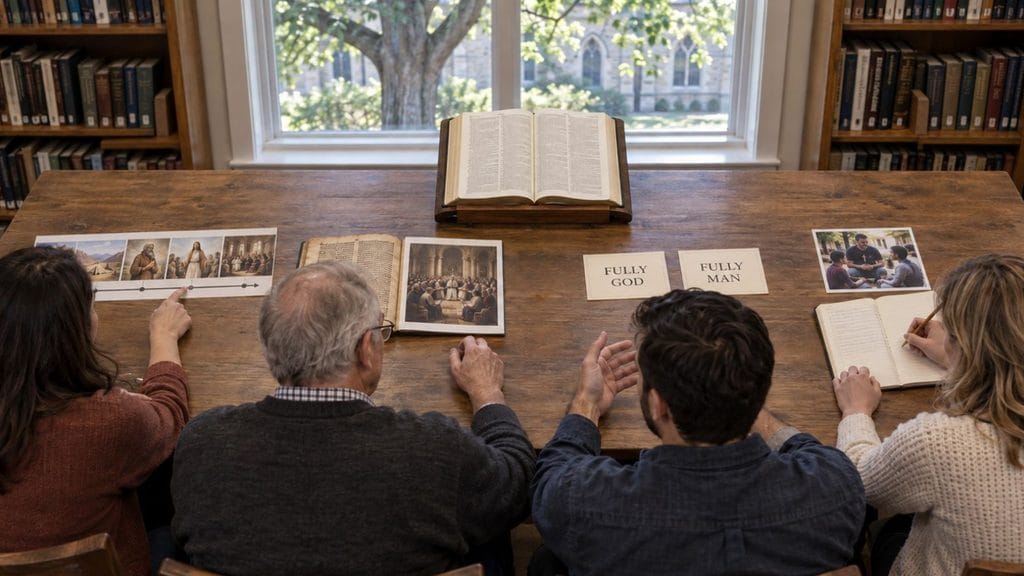
For example:
Who Is Jesus?
Biblical theology: We go through the Old Testament and see how the coming of the Messiah unfolds through the different covenants, the story of Israel as God’s chosen people, and the prophets announcing His arrival.
Then, in the New Testament, we read about the life and saving work of Jesus and the early Church’s witness to Him in the book of Acts.
Historical theology: How did early Christians wrestle with questions about Christ’s divinity and humanity? How did the Church defend and express these truths more clearly through creeds, councils, and core doctrines?
Systematic theology: What should we conclude from everything God’s revelation teaches us about Jesus? We bring those teachings together and arrive at the doctrine that Jesus Christ is fully God and fully man.
Practical theology: Okay, we know that Jesus is Lord and truly God. So, what does that mean for us? How should we worship Him, obey Him, pray, and make more disciples?
Different Branches Work Together
As you can see, combining these different ways of studying theology helps us better understand God’s revelation.
Each branch brings something important to the table and helps us understand who God is, what we should believe, and how to put our faith into practice.
So, we do not need to choose one branch and throw the others into the trash. They may ask different questions, but they all belong to the same Christian faith.
How to Use These Branches in Your Own Study
So, how can you start using these branches in your practical day-to-day studies? Well, you certainly do not need four books open at once. Studying theology is already hard enough, so let’s not make it impossible.

A simple way to begin is to ask these questions when you’re studying your Bible:
- What does Scripture say, and how does this develop through the Bible?
- How have Christians before me understood it?
- What should I believe after putting the evidence together?
- How should this affect the way I live?
This helps you reflect on Scripture in ways you probably would not if you were only casually reading it.
You start looking at the culture of that time, where the passage fits within the larger biblical story, what it reveals about God’s purposes, and why Jesus or another biblical author said this or that.
Of course, answering how earlier Christians understood something may require resources outside the Bible, such as creeds, Church history, or a trustworthy commentary.
Anyway, you can also buy books. I’ve always loved books because they are one of the cheapest ways to understand things more deeply.
Depending on your church or Christian tradition, you can probably also find a free online catechism. This can help you grasp the core doctrines of your faith and understand how your tradition explains them.
Last Thoughts
Now I’m curious: Which branch of theology interests you the most? Have you already been using one of these approaches without knowing its name?
You do not need to have the perfect answer. Leave your thoughts or any questions you still have in the comment section below. I’d love to know what you’re currently studying.