
How to Grow Closer to God: A Biblical Guide
Have you ever spent a quiet moment with God in prayer and felt only silence?
You begin to wonder where He is.
You remember how it felt at the beginning, when prayer came naturally and He seemed so close. But now, reading the Bible feels harder, going to church does not feel the same, and the peace you once experienced seems distant.
You are not the first believer to go through this. David wondered where God was. Joseph spent years in slavery and prison without understanding what God was doing. As Ecclesiastes says, “There is nothing new under the sun.”
One problem is that we often measure our relationship with God by how emotional we feel. We want to feel His presence, peace, joy, or something powerful when we pray.
Emotions are part of our relationship with God, but they cannot be its foundation.
Feeling far from God does not always mean He has left you. Sometimes sin, distraction, or neglect affects our fellowship with Him. Other times, suffering, exhaustion, disappointment, or unanswered prayer makes His presence harder to recognize.
Growing closer to God is not only about recovering a feeling. It means learning to know, trust, love, obey, and depend on Him more deeply.
So, let’s look at what biblical closeness means and which practices help us grow in faith, love, and hope.
What Does It Actually Mean to Grow Closer to God?
I remember when I started praying a few years ago. Of course, each person has their own experience. Yours may be different.
I would sit in my chair at night, in my bedroom, with only my salt lamp on. I love its dim, orange light.
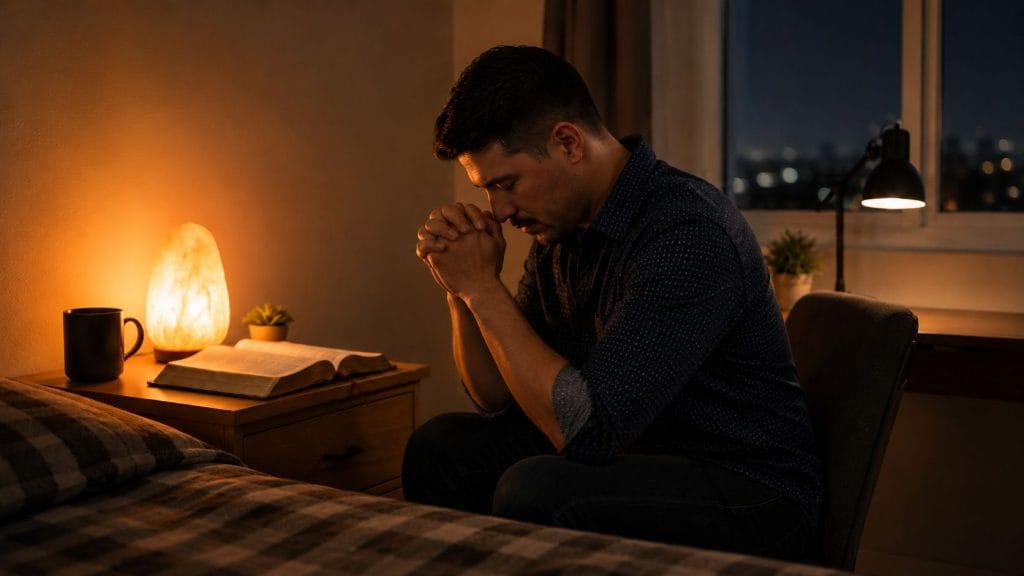
I’d close my eyes, and within a few minutes, I could feel the holy presence of God. It was like a wave of peace coming over me. Sometimes, I also had other, deeper emotional experiences.
But that quickly changed when I faced one of the hardest spiritual times of my life.
I felt confused. The enemy was constantly bothering me with negative thoughts and putting doubts about God into my mind. Oftentimes, I blamed God for all the challenges I was facing. I simply did not understand what was happening, and I wondered where God was in the midst of all of it.
But those hardships taught me several things.
Closeness to God Is Relational, Not Physical
God is always with you. You really have to settle that in your mind.
Just because you do not feel His presence does not mean He is not with you.
David spent part of his life hiding in caves from King Saul and living like a lost dog with nowhere to turn. Yet God later said to him:
“I took you from the pasture, from tending the flock, to be ruler over my people Israel. I have been with you wherever you have gone.”
—2 Samuel 7:8–9, CSB
God was always with David from the time he was a boy tending the flock, through the years he hid in caves, and all the way to becoming king over Israel
Just because you do not see God working does not mean He is not beside you, just as He was beside David.
Growing closer to God is not about reducing a physical distance between you and Him. God is not standing several miles away, waiting for you to reach Him.
It is about growing in your knowledge of Him, trusting His character, loving what He loves, and depending on Him more deeply.
Feeling Close to God Is Not the Same as Being Spiritually Mature
Having emotions is good, but we should not base our relationship with God solely on them. Scripture warns us that our hearts can sometimes mislead us:
“The heart is more deceitful than anything else, and incurable. Who can understand it?”
—Jeremiah 17:9, CSB
Especially nowadays, we live in a world that is focused on creating emotional hype. We see it in the news we watch and in the videos we scroll through on TikTok or YouTube.
We forget that emotions come and go.
One morning, you may feel full of faith. Later that same day, you may feel anxious, disappointed, tired, or confused.
But the Word of God teaches us to rely on His character. From Genesis to Revelation, God shows us that His character does not change.
Being spiritually mature means understanding and internalizing in our hearts that our emotions may change from day to day, but God remains faithful.
Other signs of spiritual growth include:
- Increasing love
- Growing faith
- Greater humility
- Growing obedience
- Perseverance under pressure
- The fruit of the Spirit
- A deeper desire for truth
These are far greater signs of God transforming our hearts, minds, and lives than always needing to experience strong emotions during prayer or worship.
Christians Draw Near to God Through Christ
In the Old Testament, the high priest entered the Most Holy Place once a year with a sacrifice for the sins of the people.
But now we have Jesus Christ. Through Him, we can come into God’s presence at any time.
We do not draw near because we have prayed enough, fasted for enough days, read enough chapters of the Bible, or finally made ourselves worthy.
Jesus has already opened the way.
Even when you have sinned, you can come to God. In fact, that is when you should come to Him to confess, repent, and ask for His mercy. You do not need to hide until you have somehow cleaned yourself up.
There is nothing we can do to earn God’s love or force Him to accept us.
Prayer, Scripture, fasting, worship, and obedience do not purchase a relationship with Him. They help us understand God’s heart, hear His truth, surrender our lives, and obey Him more closely.
Growing closer to God is not about persuading Him to love us. It is about responding to the grace He has already given us through Jesus.
Before Adding More Habits, Ask Why You Feel Distant
Before giving you practical advice, it is more important to look at the root of the problem.
A doctor cannot recommend the right treatment without first understanding what is causing the sickness. Spiritually, it is similar. Before adding more habits to your life, ask Jesus to help you see why you feel distant from Him.

Unconfessed Sin or Continuing Disobedience
I’ve noticed that many churches nowadays avoid talking about sin and the cost of disobedience. It is a difficult subject that people often do not want to hear because it hurts.
But it is a necessary conversation.
You cannot improve your fellowship with God while refusing to face what may be damaging it. Sin is like poison. We cannot free ourselves from its power, which is why we need Jesus.
For Christians, sin does not mean that God suddenly stops loving us. But when we continue in sin without repentance, our hearts can become colder and less willing to listen to Him.
Think about Pharaoh. Even after seeing what God did in Egypt, he repeatedly refused to humble himself. His continued resistance hardened his heart even further.
So, look honestly at your own life and ask, “Is there any sin I am refusing to deal with?”
This could include:
- Refusing to forgive someone
- Continuing in dishonesty
- Defending a secret habit
- Ignoring a clear responsibility
- Holding on to bitterness
- Continuing in sexual sin without repentance
There is a difference between struggling with sin and becoming comfortable with it. The danger comes when we stop resisting and begin defending what we know is wrong.
Ask God, “Please show me if there is any sin in my life that I am refusing to see.”
Sometimes we are blind to our own problems.
Disappointment With God
Some people feel distant because they are disappointed with God.
Perhaps He did not answer a prayer. Or at least, He did not answer it in the way they had planned.
I know this because I used to be in the same place. Here is what I began to understand.
God is not a genie in a lamp. He is not forced to give us everything we ask for. In fact, He has already given us more than we deserve. He gave His Son, Jesus Christ, to die for our sins and reconcile us to Himself.

God also has His own timing. His knowledge and wisdom go far beyond our understanding. We may want something now, while God sees that we are not ready or that it would not be good for us.
He may also use difficult times to change and prepare us. Moses spent forty years living as a shepherd in Midian before God sent him back to Egypt.
We cannot always say that we know exactly what God is doing. But waiting does not mean He has forgotten us.
I sometimes wish God would move faster in certain areas of my life. We are not the most patient bunch.
But learning to grow closer to God also means trusting His wisdom when His answer is delayed, different, or difficult to understand.
Constant Noise and Divided Attention
Nowadays, so many things compete for our attention.
WhatsApp, Instagram, Facebook, and other apps constantly bombard our phones with notifications. We have television series, video games, videos, and more distractions than we could possibly consume.
Even work can become the main center of our lives.
There is nothing automatically wrong with entertainment, social media, or working hard. But we need to be careful that these things do not slowly push God into second place.
God should not receive only the small amount of attention we have left after everything else has exhausted us.
Reflect honestly on your life.
Are you constantly too distracted to pray? Do you reach for your phone every time there is a quiet moment? Are you giving your best attention to everything except God?
Sometimes we do not feel close to Him because we have filled every silent moment with noise.
Spiritual Dryness, Exhaustion, or Suffering
Not every feeling of distance is connected to personal sin.
Sometimes we are simply exhausted.
Grief, stress, illness, disrupted sleep, disappointment, and depression can affect our concentration and emotions. We may find it harder to pray or lack the energy to read the Bible.

Remember Job. His friends assumed that his suffering must have been punishment for hidden sin. But Scripture describes him as a blameless and upright man who feared God. His suffering was not happening for the reasons his friends believed.
So, reflect on what you are going through at the moment.
Not every difficult period is God punishing you. Not every dry moment means you have failed spiritually. Sometimes you may be doing your best to follow God while carrying pain, confusion, or exhaustion.
The enemy may try to use those moments to fill your mind with doubt. But we should also avoid blaming every difficulty on a direct spiritual attack.
Sometimes our bodies and minds are simply tired.
Unrealistic Expectations About God’s Presence
God has many ways of answering our prayers.
I remember watching YouTubers share strange and dramatic supernatural experiences when I first began taking my faith seriously. Their stories gave me the impression that God would always answer me in a similar way.
That created unrealistic expectations.
Sometimes God answers prayer in what may seem like the most ordinary way possible. There may be no audible voice, dramatic sign, or Archangel Gabriel appearing before us.
God can act supernaturally. We should not close the door to that.
But He often guides us through simpler and more practical means. He may speak through His written Word. A sermon may address exactly what we are facing. A mature Christian may give us wise advice.
We should remain open to the work of the Holy Spirit without chasing unusual experiences or assuming every thought is a message from God.
Any impression, dream, prophecy, or word from another person must be tested against Scripture.
Sometimes God’s presence feels powerful. Other times, He quietly directs us through the truth He has already placed in front of us.
1. Read Scripture to Know God, Not Merely to Finish a Chapter
When I started reading the Bible, I thought the best approach was to read it from cover to cover.
I quickly found that this was not the easiest way for me. I often struggled to understand certain passages. Many parts of the Bible require some knowledge of the culture and history of the time. Some Bible translations are also easier to understand than others.

Later, I changed my approach.
The goal is not simply to finish a certain number of chapters, remember every small detail, or memorize every passage. Some people enjoy memorizing large portions of Scripture, and that is good.
But my main goal is to understand God’s character, His works, His promises, and His heart.
This helped me see how faithful and good God has been throughout every generation.
I suggest that you do not read the Bible as though you are in a sprint. Instead, read a few verses or pages and take time to reflect on what they mean.
Sometimes slowing down will help you understand more than rushing through several chapters.
Ask better questions while you read. For example:
- What does this passage reveal about God?
- What does it reveal about the human heart?
- How does it fit within God’s work of redemption?
- Does it point toward something Christ has done?
- Is there a truth I need to believe or obey?
Also, read each passage within its original context.
The people of Israel had customs, traditions, struggles, and ways of life that were different from ours. We should be careful not to interpret everything only through the lens of modern culture.
You do not need to become a Bible scholar before you can know God through Scripture. But slowing down, asking good questions, and paying attention to context can help you understand what the text is actually saying.
2. Learn to Pray Honestly, Not Performatively
King David was not a perfect man by any means. Still, Scripture describes him as “a man after God’s own heart.”
One thing David did right and something we can learn from was that he approached God honestly.
Throughout the Psalms, we see that he did not hide his fear, failure, repentance, confusion, or agony.
He poured out his heart before the Lord.

We should not ignore David’s failures or excuse the wrong things he did. But we can still learn from what he did right.
In the same way, we should approach God honestly. We should share not only our victories, but also our failures, fears, doubts, and disappointments.
One way I learned to pray more honestly was by reading the Psalms. I suggest you do the same. They teach us how to express what is happening inside us while still turning our hearts toward God.
Expressing what is happening inside you may not come naturally. But you do not need perfect words or have to pretend that everything is fine.
God already knows what is in your heart.
You can use different Psalms to help guide your prayers:
- Psalm 23 when you need to trust God
- Psalm 51 when you need to repent
- Psalm 42 when you feel spiritually dry
- Psalm 13 when God seems silent
- Psalm 103 when you want to give thanks
Prayer is not a performance. It is speaking honestly with the God who already knows you completely.
3. Confess Sin and Practice Real Repentance
When I first came to God, there were things I struggled greatly to leave behind. It was not easy to walk away from my old ways, and at the beginning, I still fell back into them.
But every time I failed, I went back to God and confessed what I had done.
I told Him, “I know what I did was wrong. I truly want to leave it behind, but I cannot find the strength.”
I tried to be honest.

Sometimes, after a week or so, I failed again. So I went back to God and asked Him once more to forgive me and give me the strength to change.
Remember this, because the enemy will lie to you: you are never too dirty to go back to God and confess your sin.
Satan is called the accuser. He wants you to believe that God no longer wants you, that you have failed too many times, or that there is no point in trying again.
But God calls us to return to Him.
This does not mean that sin is unimportant or that we should become comfortable with falling. Real repentance means turning away from sin and turning back toward God.
It means admitting that what we did was wrong, asking for forgiveness, and taking practical steps to stop returning to the same habits.
Sometimes change does not happen immediately. Old habits can be difficult to break.
But there is a difference between struggling against sin and making peace with it.
You may fall, repent, and continue asking God for help. The danger comes when you stop resisting, begin making excuses, and decide that you no longer care what God says.
When you fall, do not hide from God.
Go to Him honestly. Confess what you did and ask Him to give you the strength you do not have on your own.
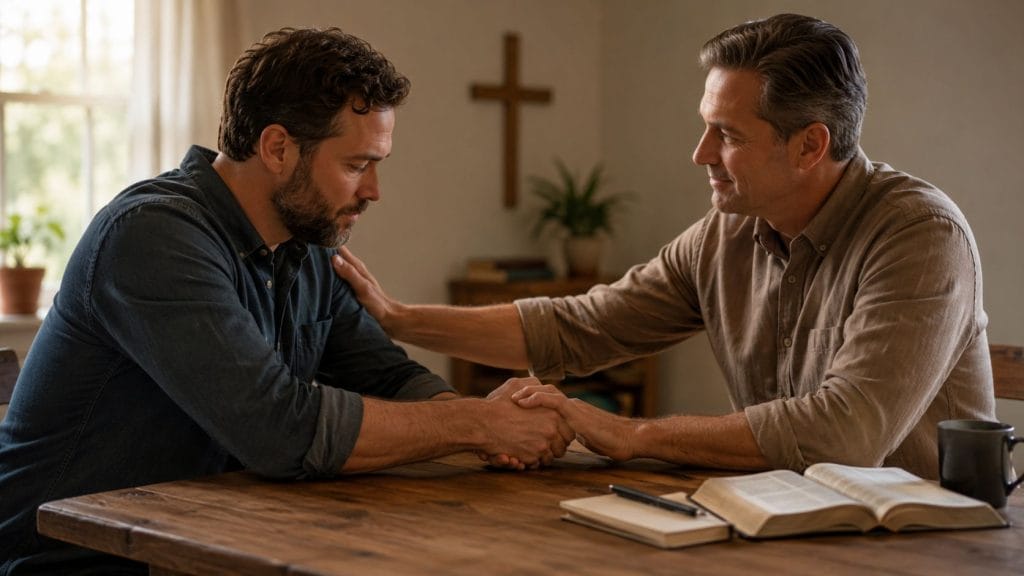
Depending on the church you attend, you may also find it helpful to confess your struggle to someone trustworthy. In more traditional churches, this may include confessing to a priest. In other churches, it may mean speaking with a pastor, mature Christian, or trusted friend who can pray with you and keep you accountable.
You do not need to tell everyone about your struggles. But bringing a hidden sin into the light with someone wise and trustworthy can remove some of its power and help you remain steady as you change.
Confession is not about earning God’s forgiveness. It is coming into agreement with God about our sin and receiving His mercy through Christ.
4. Obey What God Has Already Made Clear
Sometimes believers ask God for guidance while ignoring the guidance He has already given.
And you may ask, “Where?”
Well, in the Bible.
As you read Scripture, you begin to understand how God wants us to live. He calls us to live righteously, which means doing our best to obey what He has commanded.
We do not obey God because we are terrified that He will stop loving us. Nor does He give us commandments because He wants to control us like slaves.
We obey because we trust Him.
His commandments lead us toward what is good for us and for the people around us. Through the work of the Holy Spirit, obedience produces greater love, patience, faithfulness, hope, and self-control in our lives.
Jesus said:
“If anyone loves me, he will keep my word. My Father will love him, and we will come to him and make our home with him.”
—John 14:23, CSB
Jesus is not saying that we earn God’s love by obeying perfectly. Our obedience shows that our love for Him is real. It also helps us grow in deeper fellowship with Him.
For instance, God tells us to love our enemies.
I know I struggled with this one, and I guess many people feel the same way. I used to think, “Is God telling me to go around hugging people who have committed terrible crimes and becoming emotional toward them?”
But I realized that this idea of love came mainly from our modern culture and what we see in movies and television.
Biblical love is not merely a warm feeling.
Loving our enemies means that we refuse to take sinful revenge. We pray for them, desire their repentance, and do not allow hatred to corrupt our hearts.
This does not mean pretending that evil never happened. It does not mean trusting someone who remains dangerous or refusing to seek justice.
In some cases, loving that person may involve keeping firm boundaries while praying that they repent and that God brings justice.
So, look at what God has already commanded you to do. For example:
- Forgive the person you resent
- Speak truthfully
- End the dishonest arrangement
- Seek reconciliation when it is wise and possible
- Care for someone in need
- Stop feeding a known temptation
- Keep a promise
- Ask someone to keep you accountable
Believe me, not everything God asks us to do is easy.
Our nature has a hard time forgiving someone who has hurt us or seeking reconciliation when possible. But obedience often requires us to trust that God sees more clearly than we do.
His ways are higher than ours, and His commands are not meant to destroy us. They teach us how to love God and other people without allowing sin to rule our lives.
5. Grow With the Church, Not Only by Yourself
Our God is a God of unity. When we become children of God, we also join a family.
It can feel a little strange to think, “Gosh… do I now have millions of brothers and sisters in Christ spread around the world?”
That is a lot of new family members all at once.
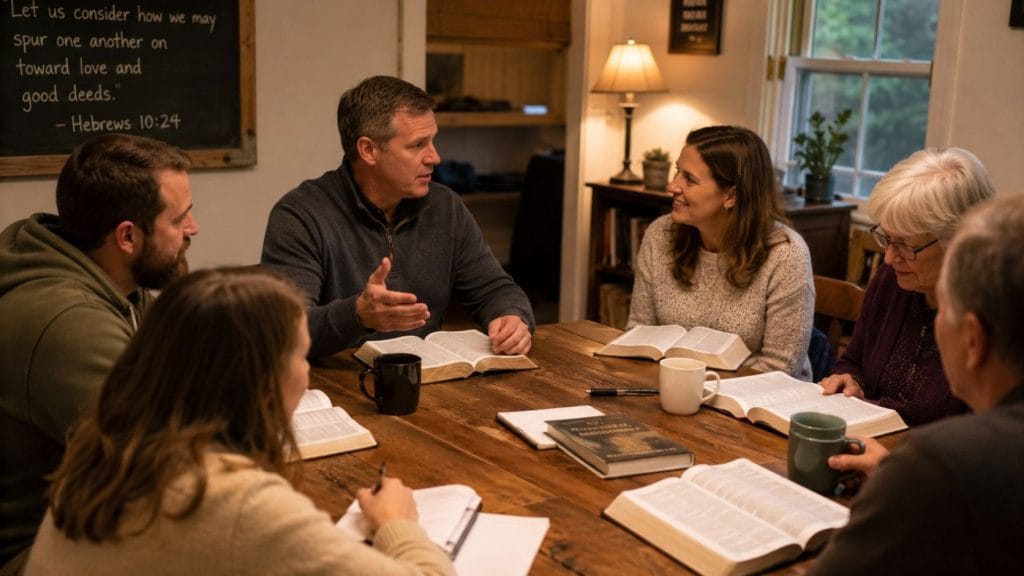
But this road can be difficult.
Honestly, in some ways, I have found the Christian life harder than my life before Christ. You become more aware of your fallen nature, the temptations around you, and the spiritual battles you previously ignored.
That is why we need brothers and sisters who can encourage us, pray for us, correct us, and help us when we are weak.
Joining a church was one of the best and, at the same time, most disappointing parts of my Christian life.
That may sound like a crazy statement.
I learned to care more deeply about other people, and I experienced what it was like to have others care about me. But I was also disappointed to discover that many Christians are far from perfect.
Of course, nobody is perfect.
When you join a church, do not expect that you are gathering with angels in Heaven. Churches are filled with imperfect people. Some will disappoint you. You may even be hurt by someone.
But you can also meet amazing, loving people who will support you and help you grow closer to God.
The early Christians did not try to follow Christ alone:
“They devoted themselves to the apostles’ teaching, to the fellowship, to the breaking of bread, and to prayer.”
—Acts 2:42, CSB
Following Christ involved teaching, prayer, fellowship, and sharing life with other believers.
I recommend searching for a local church, but be wise about your choice. Not every church has a healthy environment, and not every person leading a congregation teaches Scripture accurately.
It can also be confusing at the beginning because there are so many denominations, traditions, and independent churches.
Before joining, learn what that church actually believes. If it is Baptist, Methodist, Presbyterian, Catholic, Eastern Orthodox, or part of another tradition, research its teachings and ask why it believes what it does.
Non-denominational churches can require a little more investigation because the name itself tells you almost nothing about their theology.
Some are faithful and healthy churches. Others may be built mainly around the personality of one pastor or avoid clearly explaining their beliefs.
Look beyond the music, atmosphere, friendliness, or excitement of the service.
Ask whether the church teaches Scripture faithfully, takes sin and repentance seriously, points people toward Christ, practices genuine fellowship, and has leaders who can be questioned and held accountable.
You should not try to grow entirely by yourself.
We need other Christians not because they are perfect, but because God did not design the Christian life to be lived alone.
Simple System for Growing Closer to God
That was a lot of things to think about.
I know it may sound overwhelming. That is why I created this quick list to simplify everything. You do not need to change your entire life at once.
Choose one or two steps you can begin taking today.
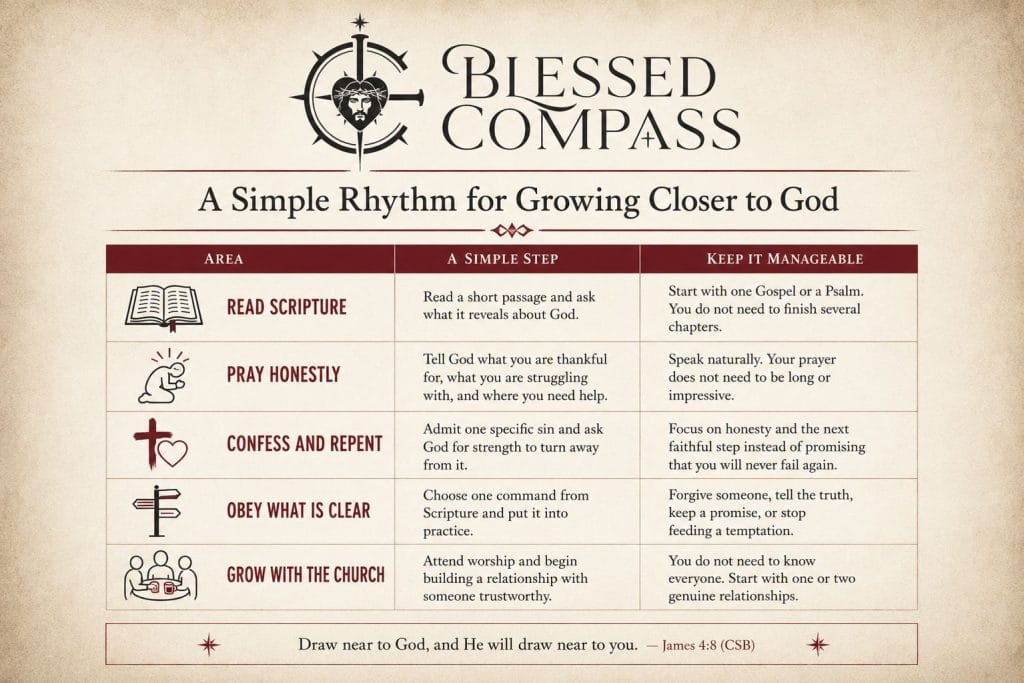
You do not need to apply every row immediately.
Start with three basic things:
- Read a short passage of Scripture.
- Pray honestly for a few minutes.
- Obey one thing God has already made clear.
Once these become more consistent, you can gradually add longer Bible study, fasting, service, accountability, or other spiritual disciplines.
The goal is not to create the perfect Christian routine.
It is to build a realistic rhythm that helps you know God, respond to His grace, and remain faithful over time.
Final Thoughts
Before you leave, let’s come together and pray. I love to pray, so let’s do it together:
“Lord God, please draw my heart closer to You. Purify my heart and mind, and make me more like Your Son, Jesus. Guide my steps and help me grow in Your love and truth. In the name of Jesus, amen.”
You do not need to change everything at once.
Take one faithful step toward God today, and then continue from there.
If you have any questions or need help, leave a comment below. You can also share this guide with someone who may be struggling to feel close to God at the moment.
I would love to hear from you and help where I can.
FAQ
1 – Which Book of the Bible Should I Read to Grow Closer to God?
There is no single book that will magically make you feel closer to God, but some are especially helpful.
Start with John to know Jesus better, Psalms to learn honest prayer, Ephesians to understand your identity in Christ, James for practical obedience, or Philippians for remaining faithful during hardship.
Choose one book, read it slowly, and ask what each passage reveals about God and how you should respond.
2 – How Long Does It Take to Grow Closer to God?
There is no fixed schedule because spiritual growth continues throughout your whole life.
However, change can begin today through one honest prayer, one act of repentance, or one decision to obey God.
You may not feel different immediately, but God often changes our character, desires, and habits gradually as we continue taking faithful steps.