

Christian Doctrine for Kids: Why Bible Stories Need Doctrine
I do not blame you if teaching Christianity to children feels hard.
I write content regularly for Blessed Compass, and explaining these things to adults is already challenging. Let’s be serious: subjects such as God, sin, Jesus, and salvation can be difficult even for us to understand at times.
Now, teaching all of that to children?
“Yeah, that’s a different ball game.”
It may feel easier to tell them familiar stories: David defeated Goliath, Noah built the ark, and Jesus died on the cross.
A child may think, “That sounds nice. David was brave, and Jesus suffered a lot.”
But the deeper question is: what do these stories actually teach them about God and the Christian faith?
Bible stories are essential. The problem comes when children learn the events but never understand their meaning.
David and Goliath is not only about being brave. Noah’s ark is not mainly about animals and rainbows. Even saying that Jesus died on the cross is incomplete if a child does not understand who Jesus is, why He died, or what His death accomplished.
We need to help children connect Bible stories to the truths they reveal about God, sin, salvation, and Christ.
Key Takeaways
- Bible stories are essential, but children also need help understanding what those stories reveal about God, sin, Jesus, and salvation.
- Christian doctrine does not replace Scripture. It organizes the truths Scripture teaches so children can understand how everything fits together.
- Teach one truth at a time: read the story, explain the doctrine, connect it to Christ, and show why it matters.
- Correct answers are not enough. Children also need adults who live what they teach through prayer, repentance, worship, and life in the Church.
Bible Stories Were Never Meant to Be Isolated Lessons
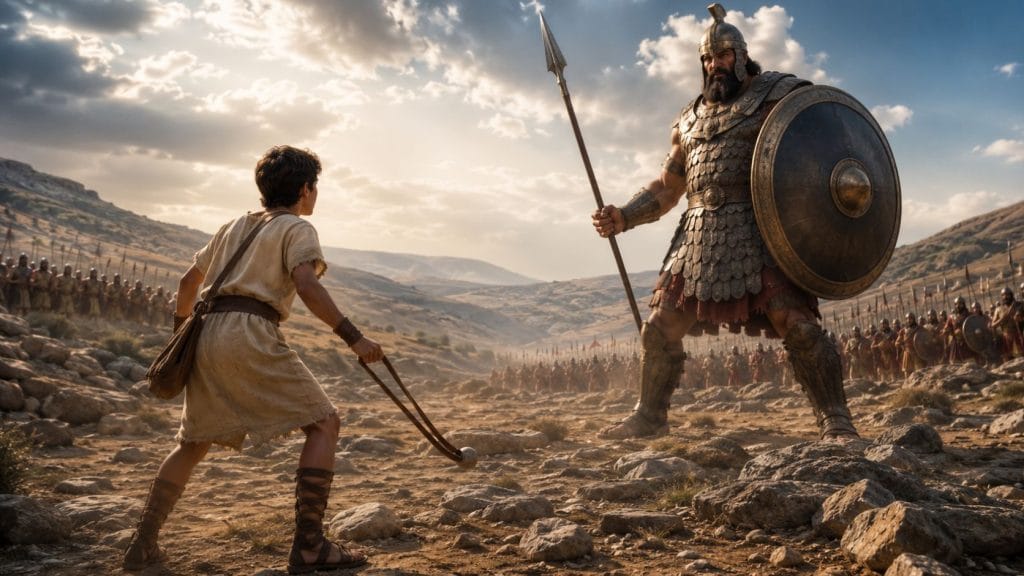
Children may watch an animated movie such as David and find it exciting. A young shepherd defeats Goliath with a sling and a stone. That is impressive, and children may naturally see David as a brave hero.
But what does that moment actually mean? Why did David defeat Goliath? How do we explain that David trusted God rather than his own strength and that God used His chosen king to deliver His people?
And what about the rest of the Bible? How do we connect creation, the fall, redemption, and restoration in a way that children can understand and carry with them into the future?
Children often encounter the Bible as separate weekly episodes:
- Noah teaches obedience.
- David teaches courage.
- Daniel teaches bravery.
- The Good Samaritan teaches kindness.
These lessons are not always wrong, but they are incomplete.
The Bible is not a collection of disconnected stories. From the Old Testament to the New Testament, everything is connected to God’s plan to redeem humanity. God revealed Himself through Israel’s history, promises, covenants, and Scriptures, leading toward the fullest revelation of His Son, Jesus Christ. Our Lord and Savior.
So, as we teach children Bible stories, we should also gradually help them understand:
- Who God is
- What God is doing
- What is wrong with humanity
- How the passage fits into God’s plan of salvation
Why does this matter?
“So that they might put their confidence in God and not forget God’s works, but keep his commands.”
—Psalm 78:7, CSB
Children do not need to understand the entire Bible at once. We can teach them gradually, adding one truth after another as they grow. Slowly, they begin to connect the stories and understand who God is, what sin means, and why we need Jesus.
What Is Christian Doctrine?
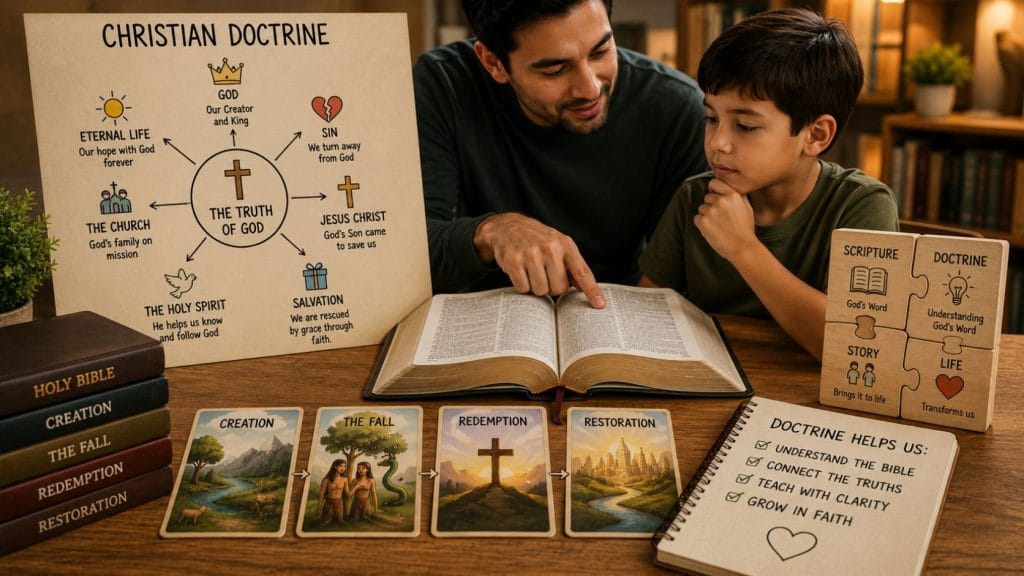
Christian doctrine is a clear explanation of what the Bible teaches about God, humanity, sin, Jesus Christ, salvation, the Holy Spirit, the Church, resurrection, and eternal life.
In other words, it helps us understand the main truths of the Christian faith and how they fit together.
However, doctrine does not replace Scripture. Actually, Christian doctrine comes from Scripture. It organizes what the Bible teaches so we can understand it more clearly and explain it to others.
For example, you could simply tell a child, “God does not want us to sin.”
My guess is they may think, “What does that mean?” and feel more confused than before.
Instead, we can begin with Adam and Eve. We can share other stories about people disobeying God and the consequences that followed. Then we can explain that God is always good and just. He created us, loves us, and wants us to live in fellowship with Him.
When we disobey God, we turn away from what is good and choose our own way instead. This damages our relationship with Him and also hurts other people and us.
That is what we call sin.
Doctrine helps us organize these truths so children can understand one small concept at a time. Eventually, the different pieces begin to form a fuller picture of the Christian faith.
Here are a few familiar examples:
- “God created everything” is doctrine.
- “Jesus is truly God and truly human” is doctrine.
- “Human beings need salvation because of sin” is doctrine.
- “Jesus rose bodily from the dead” is doctrine.
Doctrine is not only for pastors, priests, scholars, or older Christians. It is for everyone.
You can think of it as a toolset that helps us explain complicated Christian teachings more clearly without disconnecting them from the Bible stories where children first encounter them.
How Doctrine Makes Bible Stories Clearer
One of the main ways lessons have been passed from generation to generation is through stories. Stories are a powerful way to teach because, when we listen to one, we are in some way living it inside our minds.
That helps us remember the lessons more easily. For example:
Noah and the Flood
We could tell children about Noah, a righteous man living in a deeply corrupt world. God warned him that a flood was coming and gave him instructions to build a huge ark.
Noah entered the ark with his wife, his three sons, and their wives. He also brought the animals God commanded him to take. Then the rain came, and the flood brought judgment upon the earth.
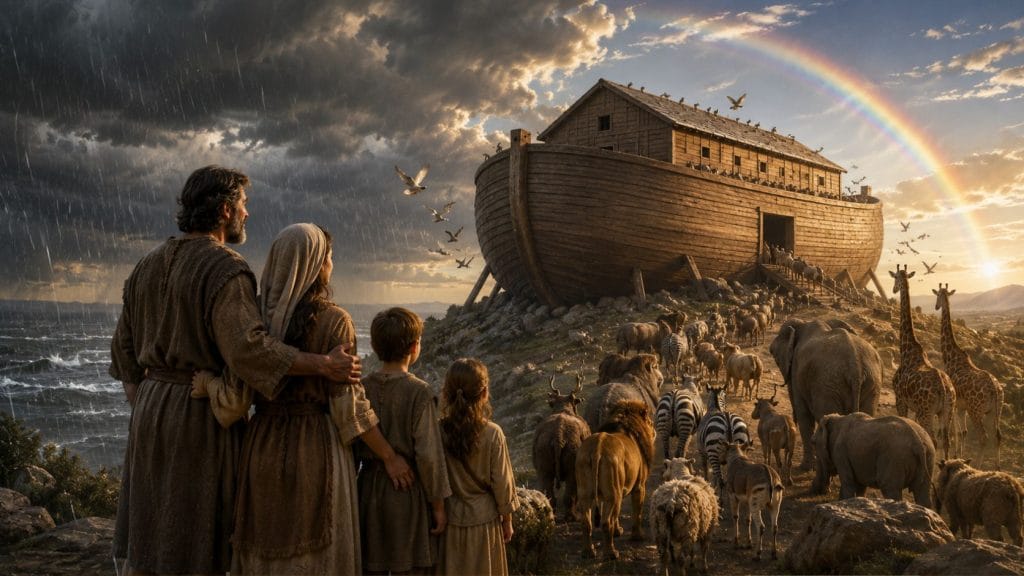
Afterward, God placed the rainbow in the sky as a sign of His promise never again to destroy all living creatures through a flood.
The story is powerful by itself. But it becomes even more meaningful when we explain the deeper truths:
- God is just. Human sin and violence had become so serious that judgment came.
- God also showed mercy. He saved Noah and his family through the ark.
- God gave Noah clear instructions and provided a way of deliverance.
- The flood judged a corrupt world, but it did not remove sin from the human heart completely.
- The rainbow was a covenant sign, God’s promise that He would never again destroy all flesh with a flood.
So, we can use this story to begin explaining sin, judgment, mercy, covenant, and salvation.
I know those words may sound complicated at first. But do not worry. Later, I’ll give you some easy steps to help children understand one truth at a time.
Which Doctrines Should Children Learn?
Doctrine should be taught in a way that each lesson builds upon the others. This helps children understand easier themes first and later move into more difficult topics because they already know what comes before.
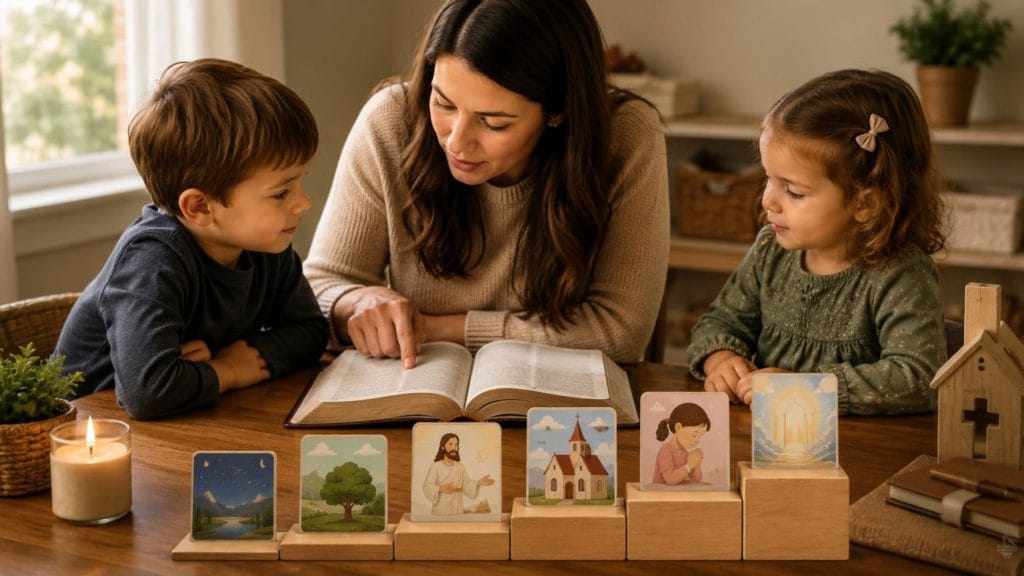
Here is a basic lesson structure:
- Who God is: He is the almighty and all-powerful Creator of Heaven and earth. He is always good, just, wise, holy, and loving.
- Creation and human dignity: God created human beings in His image. This gives every person value and dignity. We were created to know, love, and live in relationship with Him.
- Sin and humanity’s need for grace: Sin separates us from God, and we cannot save ourselves from it. We need God’s grace and mercy.
- Who Jesus is: Jesus is the Son of God, truly God and truly human. He came to reveal the Father, save us from sin, and reconcile us to God.
- Jesus’ death and resurrection: Jesus died for our sins and gave Himself to redeem us. On the third day, He rose bodily from the dead and overcame death.
- Salvation, repentance, and faith: We are saved by God’s grace through faith in Jesus Christ and what He has done for us. Repentance means turning away from sin and returning to God. Obedience does not earn salvation, but it should grow from genuine faith.
- The Holy Spirit: At Pentecost, the Holy Spirit came upon the disciples. He is given to believers to guide us, strengthen us, help us understand truth, and make us more like Jesus.
- The Church, baptism, and Communion: The Church is the family of believers gathered around Christ. Christians worship, pray, learn, receive baptism and Communion, and help one another grow in faith.
Different Christian traditions explain baptism and Communion differently, but both have been central to Christian life from the beginning. - Christian living: Christians are called to love God and others, forgive, serve, pray, resist sin, care for those in need, and live according to Christ’s teachings.
- Resurrection and eternal life: Jesus will return, the dead will rise, and God will judge the world. Those who belong to Christ will live with Him forever in the restored creation.
The wording and complexity may change depending on the child’s age. You probably will not explain something to a seven-year-old in the same way you would explain it to a twelve-year-old.
How to Teach Doctrine Without Making It Dry
Now let’s put things into practice. And there is no better place to start than with the following passage:
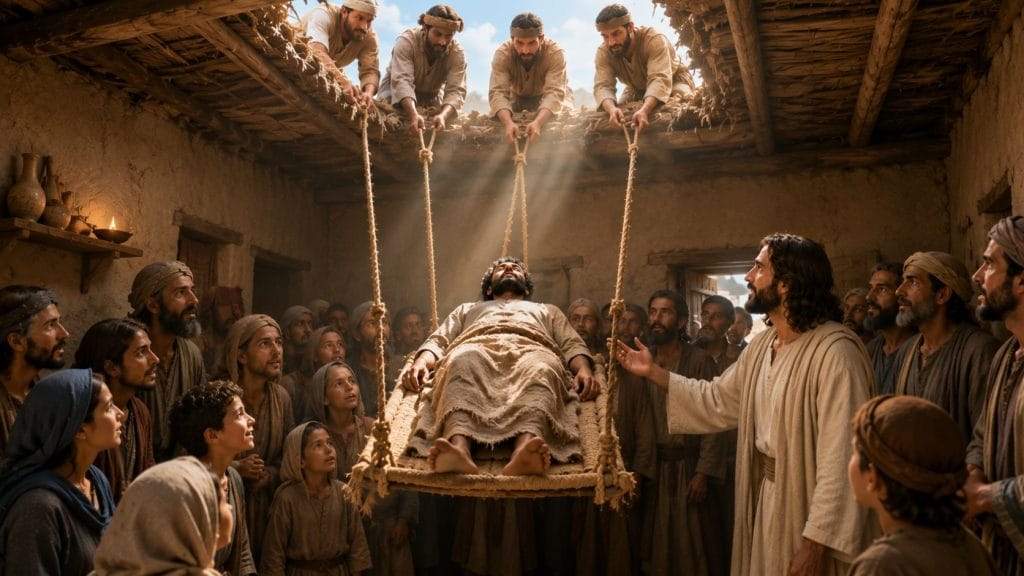
“Seeing their faith, Jesus told the paralytic, ‘Son, your sins are forgiven.’ But some of the scribes were sitting there, questioning in their hearts…”
—Mark 2:5–6, CSB
For this lesson, I suggest reading the whole story in Mark 2:1–12. Then use this simple four-step method.
1. Read the Bible Story
Read the passage out loud with the children when possible.
Do not rush through it. Pause to explain what is happening. Four men carried their paralyzed friend to Jesus, opened the roof, and lowered him into the house because the crowd was blocking their way.
Already, that is enough to capture a child’s attention.
2. Ask What It Reveals About God
What does God do, promise, command, or reveal about His character?
In this passage, Jesus does something surprising. Before healing the man’s body, He forgives his sins.
This helps children see that Jesus is not simply a teacher or healer. He has the authority to forgive sins. Something the scribes understood as belonging to God alone.
We should not say that their hearts were hardened because the passage does not directly tell us that. But they questioned who Jesus was and whether He had the authority to say such a thing.
3. Name the Doctrine
Give the truth a clear name: creation, sin, grace, covenant, resurrection, or another doctrine.
In this story, we can explain sin, forgiveness, faith, and the authority of Jesus Christ.
The man needed physical healing, but Jesus first addressed his deeper spiritual need. Sin separates humanity from God, and Jesus came to forgive sins and reconcile us to Him.
4. Connect It to Life and Prayer
Lastly, bring the doctrine into something children can understand and apply to their lives.
Ask them:
1) Why does this matter?
Jesus has the authority to forgive our sins. We do not need to hide from Him when we have done something wrong.
2) How should we respond?
We should honestly confess our sins, repent, and ask Jesus to help us obey God.
3) What should we thank God for?
We should thank God for sending Jesus as our Lord and Savior. Through the finished work of Christ, we can be forgiven and reconciled to God.
4) What should we believe or obey?
We should believe that Jesus has the power to forgive sins and that what He accomplished for us is enough for our salvation.
Of course, you can use catechisms, theology books, and workbooks to help you. It takes some practice before teaching doctrine begins to feel easier.
But do your best. You do not need to be perfect.
Just like with anything else, we improve as we go.
I have seen churches use catechism classes to help children memorize Bible passages and Christian teachings. I think that has real value.
But memorization should come with an explanation.
A child may memorize a passage without understanding what it means. The goal is not only for children to repeat the correct words, but also to understand the truth behind them.
Doctrine Alone Is Not Enough Either
We should practice what we preach, as they say.
I’m far from perfect.
But over the years, God is my witness, I have genuinely done my best to walk side by side with Jesus. And as you have probably guessed, it is not always easy.
However, I believe that if we want to teach others, we also need to be an example.
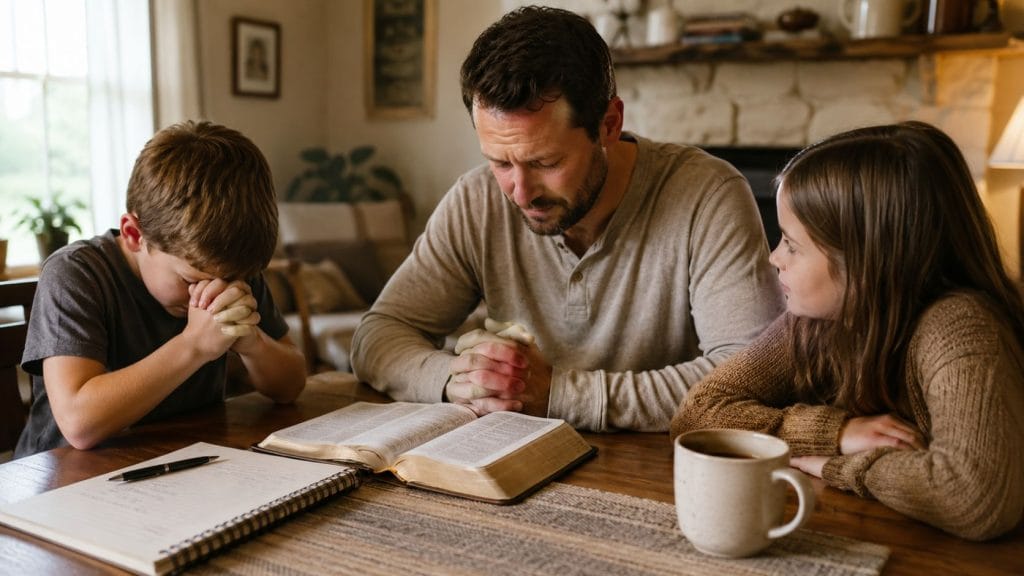
After spending the last two years doing street ministry, I’ve noticed a common theme. Many young adults told me they had left the Church partly because of hypocrisy. Perhaps a church leader or a parent taught one thing but lived in a completely different way.
So, we should be careful and do our best to imitate Christ.
Children do not only need correct answers. They also need:
- Adults who live what they teach
- Space to ask difficult questions without feeling judged
- Prayer and worship
- Participation in the life of the Church
- Examples of repentance, forgiveness, service, and trust
Children may memorize theology and even understand it. But if the people teaching them never apply those truths to their own lives, it can damage the child’s trust and make the faith seem empty.
That does not mean our failures will automatically cause children to leave the Church. None of us will represent Christ perfectly. But when we fail, children should also see us admit it, repent, ask for forgiveness, and try again.
Doctrine should lead to worship, character, and deeper faith.
But first, it starts with us.
Final Thoughts
Bible stories are not the problem. The problem is when children only learn what happened but never understand what those events reveal about God, sin, Jesus, salvation, and the Christian life.
So, keep teaching the stories. But also explain the doctrine behind them. Help children see how everything connects and why it matters.
They do not need to understand everything at once. Instead, teach one truth at a time. Read the story, explain the doctrine, connect it to Christ, and show them how to live it out.
That is how we help children build deeper roots in the faith.
What has worked best when teaching children about God? Which Bible story do you find hardest to explain? Do you use a catechism, workbook, or another resource at home or in church?
