What Does It Mean to Abide in Christ? John 15 Explained
What if abiding in Christ isn’t about trying harder but learning to depend on Jesus?
Following Christ and His teachings is not the same as reading a philosophy book. I pray more people will come to that realization.
I’ve been a street prayer warrior for the past few years. Meaning, I’ve met hundreds of people. Some people look at me and immediately label me a religious person.
Honestly, that’s true. And there is nothing wrong with being religious.
But people sometimes say it in a more condescending tone. Like, look, he’s following these crazy man-made teachings.
Unfortunately, they do not realize that following Christ is not about learning some weird rituals or philosophy and then trying to follow them through sheer willpower.
It involves surrendering ourselves to Him and allowing God to transform us. Over time, we become kinder, more compassionate, and begin producing other good fruit.
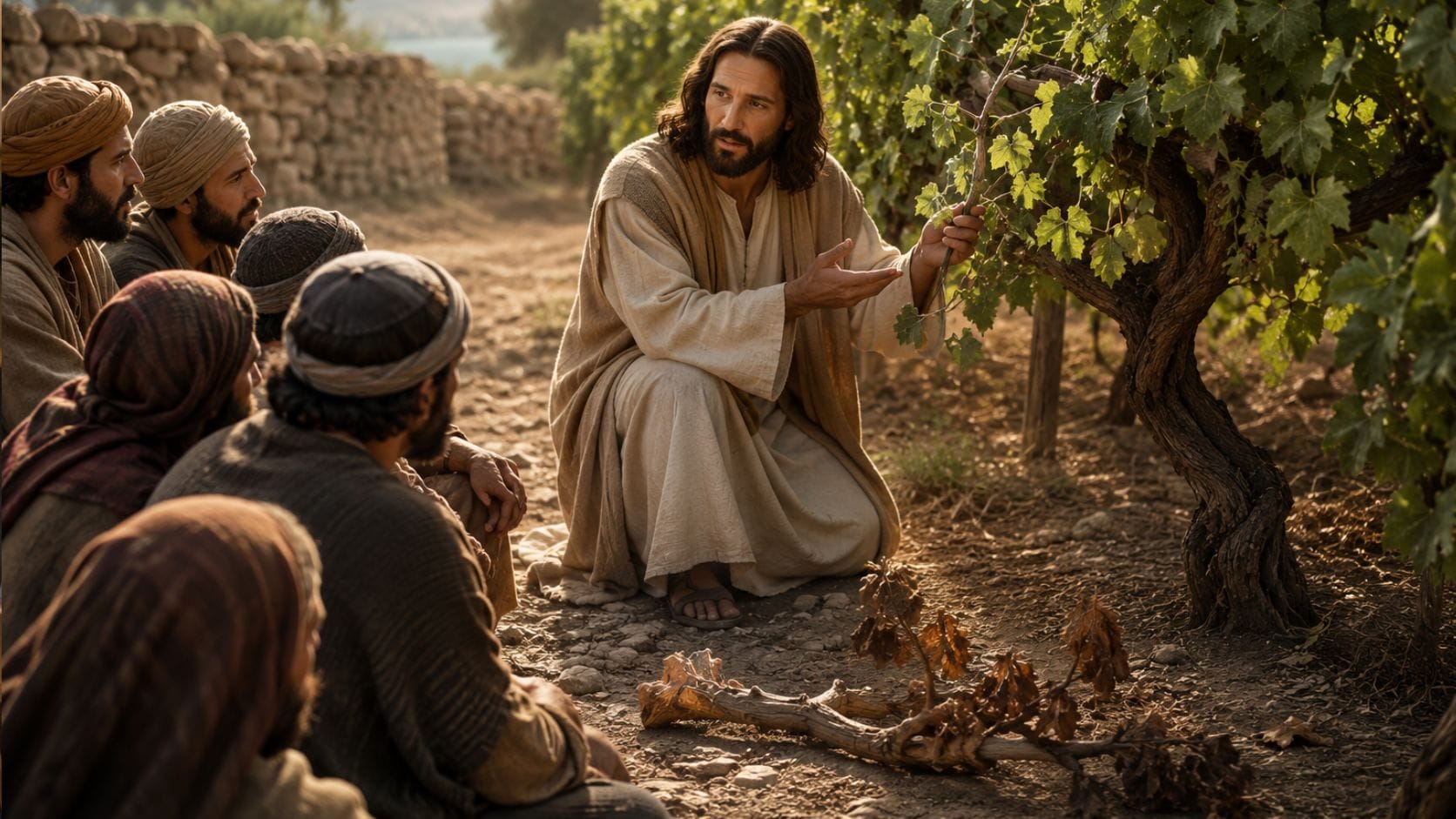
That is where Jesus’ picture of the vine and branches becomes so important.
Abiding in Christ means remaining in Him and depending on Him as the source of our Christian life. Surrender is part of that, but the branch does not produce life by itself. It receives life from the vine.
So, what does that actually look like?
In this guide, we’ll look at what Jesus meant when He said, “Remain in me,” why He compared Himself to a vine, and how abiding in Christ produces fruit in our everyday Christian lives.
Jesus Told His Disciples to Remain When He Was About to Leave
Jesus says:
“I am the true vine, and my Father is the gardener. Every branch in me that does not produce fruit he removes, and he prunes every branch that produces fruit so that it will produce more fruit.”
—John 15:1–2, CSB
The background of John 15 is important.
Jesus tells these words to His disciples on the same night as the Last Supper, before He is arrested and later crucified.
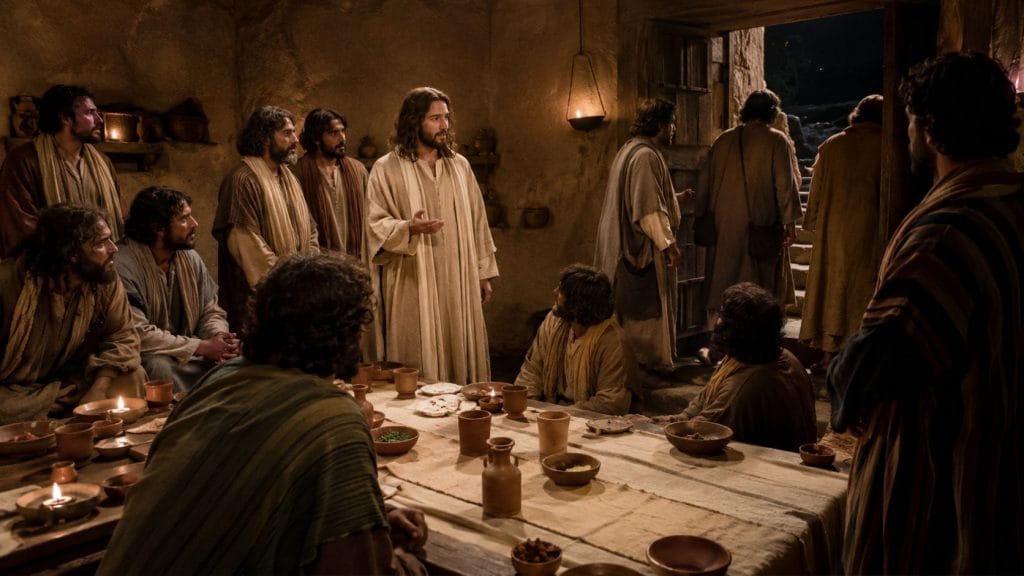
John 14 even ends with Jesus saying, “Get up; let’s leave this place.” Some believe Jesus may have spoken the following chapters while they were leaving, but John does not tell us exactly where this conversation happened.
What we do know is that His disciples are about to face His death and departure.
The ordinary experience of having Jesus physically walking beside them is about to change. Of course, after His resurrection, Jesus would appear to His disciples over a period of forty days before ascending to heaven.
But their lives were about to look very different.
When you look at this conversation, Jesus is giving instructions about how His disciples are supposed to continue after His departure. How can they remain in Him and continue producing good fruit.

So there is a sense of urgency behind the words:
Remain in me.
But let’s make a short pause here…
Why is this conversation so important?
In a sense, Christians today also do not have Jesus physically walking beside us like Peter, John, James, and the other disciples once did.
That is why what Jesus teaches them here matters so much for us too. He shows us how our Christian life remains dependent on Him (our source of life) and how good fruit grows from that connection.
In other words, John 15 helps us understand where our eyes should remain fixed.
What Does “Abide” Actually Mean?
Jesus says:
“As the Father has loved me, I have also loved you. Remain in my love.”
— John 15:9
The Greek word used here is menō, which means to stay, remain, continue, or abide.
So, we can already see that this is not a one-time deal:
“Today, I’m going to put in the effort of loving Jesus for an hour. But well… tomorrow we’ll see! My mood may have changed.”
No. Abiding is ongoing rather than a momentary spiritual experience.
Jesus loves us perfectly, and we are called to continue remaining in Him day by day.

We should abide in Him:
- When we feel uncertain about our future and everything around us seems to be falling apart.
- When we feel ecstatic about our new job or whatever good thing happens in our life.
- When we lose someone we love.
- When we do not feel God’s presence.
Whatever may or may not happen, we should remain in Him.
I say “should” because I know we all stumble here and there. But the important part is to return to Him and continue remaining in Jesus. Knowing that He is the vine and we are the branches.
The Branch Does Not Create Its Own Life
Jesus says:
“Remain in me, and I in you. Just as a branch is unable to produce fruit by itself unless it remains on the vine, neither can you unless you remain in me.”
—John 15:4, CSB
What happens if we cut a branch from a vine and throw it on the ground?
After a few days, it dries up and dies. It certainly won’t produce any fruit afterward.
That is because the branch depends on the vine to keep living and producing fruit.
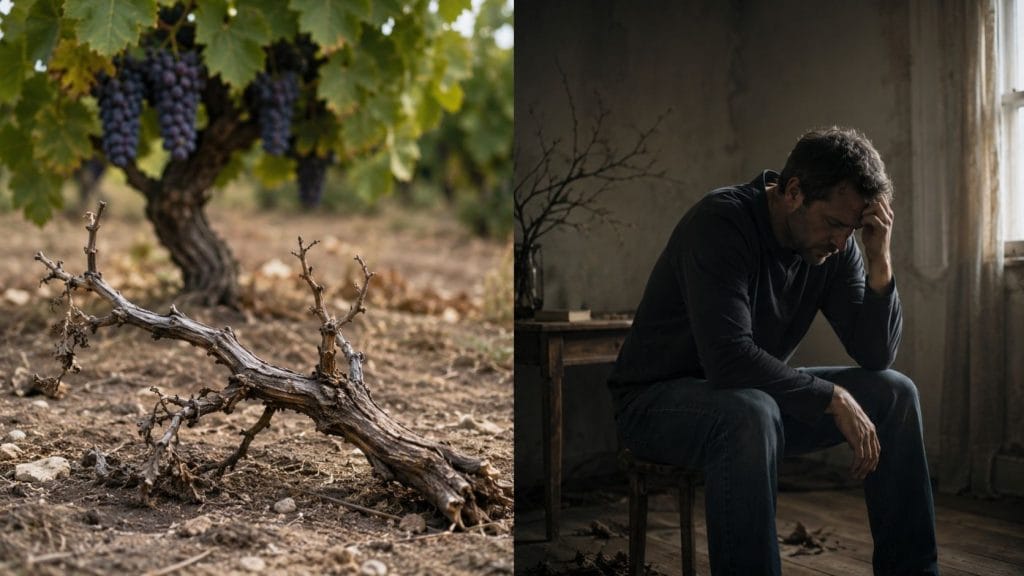
The same thing applies to us as Christians. We are the branches. If we cut ourselves off from the vine, Jesus, we dry up spiritually. We cannot produce the kind of fruit Jesus is talking about without remaining in Him.
Apart from Jesus, we cannot produce Christian fruit through our own strength:
- Christlike fruit: love, joy, compassion, faithfulness, patience, and other ways God transforms our character.
- Good works flowing from our life with Christ: helping people in need, sharing our faith, forgiving others, and showing them the kind of love Christ has shown us.
Now, some may think, “Well, I know people who help the homeless and they are not believers.”
Of course.
I’m not saying someone who does not believe in Jesus is incapable of doing something good. People can help the homeless, care for their families, give money away, and do all sorts of good things.
But that is not quite the point Jesus is making with the vine.
The branch receives its life from the vine. In the same way, the Christian life and the fruit that grows from it depend upon Christ and His grace, not simply on us trying harder to behave well.
And helping someone with their earthly needs is important. We should absolutely do that.
But we should also care about their eternal life. Sharing Christ with someone can be one of the greatest ways we love them because we are pointing them toward the One who can actually save them.
We cannot save anyone ourselves.
But we can point them toward the vine of life: Jesus Christ.
Abiding Comes Before Bearing Fruit
I noticed a gradual change in me. It did not happen from one day to another.
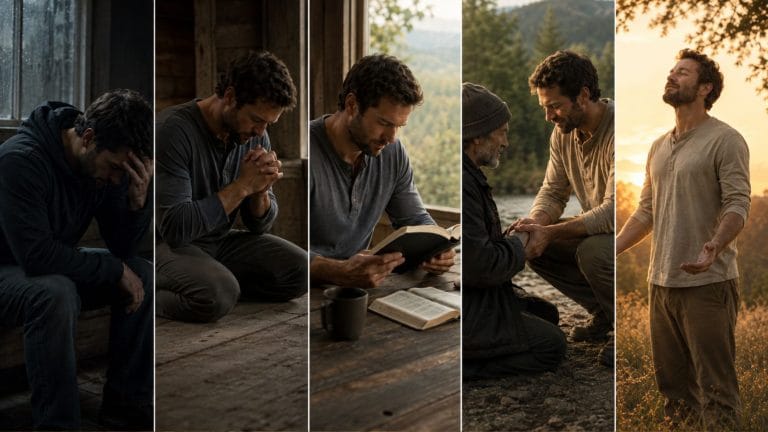
When I came to Christ a few years ago, I was a car wreck. I definitely lacked patience, sometimes compassion, and was lustful. But over time, and after many hours of prayer, I personally think that was a major factor; God changed me a lot.
I started to feel more compassionate and have more patience in situations where I did not have it before. I even found the courage to go to the streets and pray for people with my friend. I was pretty introverted before that.

Saying that:
Remaining in Christ is what allows those good fruits to begin growing in us.
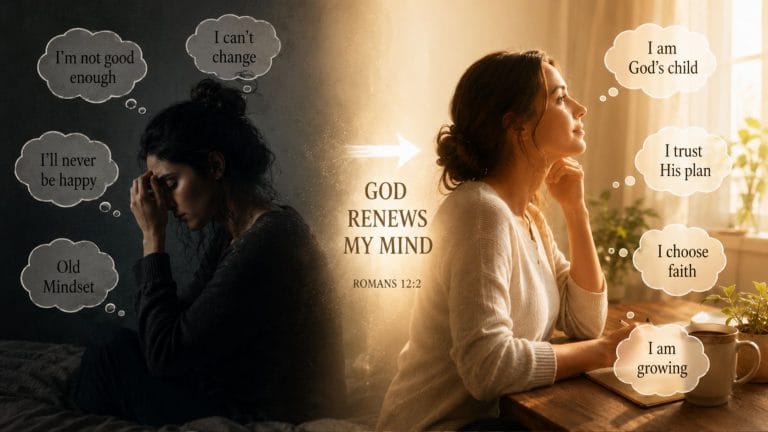
We do not produce compassion, love, or joy through willpower alone. God transforms us, changes our desires, and gives us the grace to become more like Christ. We still have to respond to that grace and choose to follow Him.
Even though patience sometimes seems like a different fruit. That one apparently needs buckets of water before I see it grow. Some people can be really hard to be patient with.
The same applies to good works.
We should not do good works merely out of fear or because we feel forced by God. Instead, as we grow in love for God, we also begin wanting to serve Him and others.
In my case, I pray for people and do other things for God partly because I want to show my gratitude to Him.
We cannot pretend
I once had a small course at my previous church. The pastor was teaching about being nice to our neighbors and everyone around us.
I know he had good intentions, and obviously there is nothing wrong with intentionally treating people well.
But if we focus only on changing the behavior on the outside, it can sometimes become performative. We can end up forcing ourselves to look loving without much changing inside.
I do not think that is the whole answer.
Instead, we should remain focused on Jesus and allow Him to transform us from within. Then, as we cooperate with His grace, the fruit begins to show itself in the way we actually live.
What Remaining in Him Looks Like
Okay, so you may be wondering, “I want to abide in Christ. What should I actually do?”
Jesus gives us some practical answers in John 15.
Let His Words Remain in You
Jesus says:
“If you remain in me and my words remain in you, ask whatever you want and it will be done for you.”
—John 15:7, CSB
Reading the Bible and spending time with God slowly changes the way we view the world.
The things we once desired, we may no longer desire. Some we may even find repugnant later.

This can even include movies. I used to love Viking movies. Now I cannot watch most of them, especially when they start getting heavily into pagan rituals.
Our decisions can also change.
Maybe before you used to spend most of your money on material things. But now you no longer value those objects as much.
His teaching increasingly begins to shape our beliefs, desires, and decisions.
And when Jesus says, “ask whatever you want,” we should read that together with the beginning of the verse: His words are remaining in us. As Christ changes us, even the things we desire and pray for begin to change.
Remain in His Love
Jesus says:
“As the Father has loved me, I have also loved you. Remain in my love.”
—John 15:9, CSB
Jesus already loved His disciples.
Peter, John, James, and the others did not purchase His love by performing enough good works.

So, do not think God’s love is something you can purchase. Or something you need to force yourself to do enough works to obtain.
Instead, we begin with His love for us.
And as we learn to love God more, good works begin to flow from that relationship.
Keep His Commands
Jesus continues:
“If you keep my commands you will remain in my love, just as I have kept my Father’s commands and remain in his love.”
—John 15:10, CSB
Abiding is not passive.

For instance, if a man loves his wife, he does things that show his love. One of them is remaining faithful to his marriage.
Instead, if a man goes around cheating, well… it is hard to call that love.
The same applies to following Jesus. If we love Him, we want to follow His commandments.
That does not mean we obey Him to purchase His love. Rather, obedience is one way our love for Him becomes visible.
We begin to understand that His commandments come from a loving heart and are meant for our good.
In other words, love and obedience belong together.
Love One Another
Jesus says:
“This is my command: Love one another as I have loved you.”
—John 15:12, CSB
When you love God, you slowly begin seeing other people differently too.
You begin wanting to walk side by side with people who share the same love for Christ. You also begin learning to forgive, serve, encourage, and show patience toward others.

So, abiding in Christ is not just a private spiritual experience between “Jesus and me.”
Eventually, it starts showing up in the way we treat the people around us.
The life we receive from the vine begins producing fruit on the branches.
Sometimes Abiding Includes Being Pruned
Pruning is not always the most fun part, but it is necessary.
Just like a branch that bears good fruit needs to be pruned to produce more, we also need to be pruned from time to time to produce even more fruit.
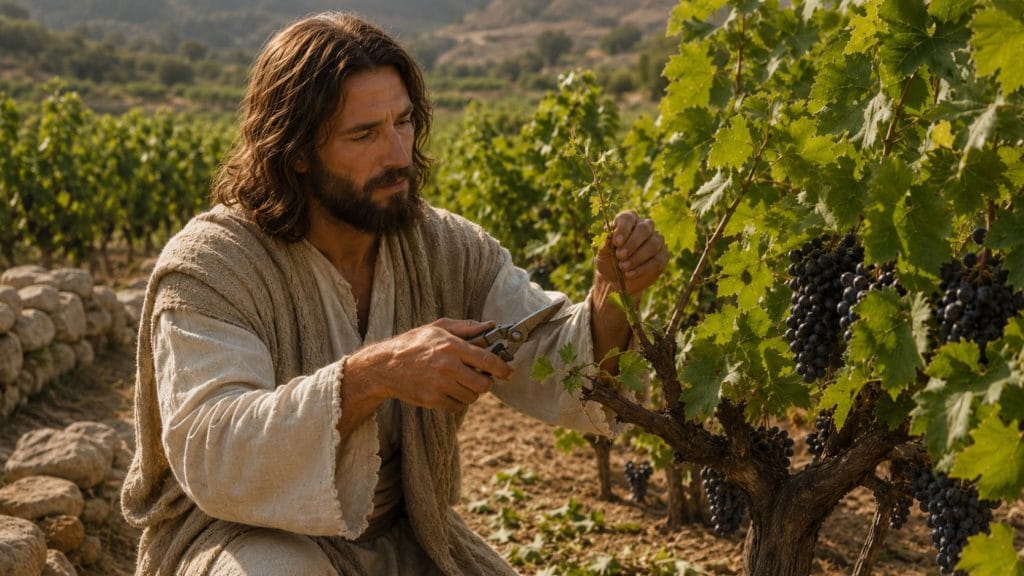
Jesus says that the Father “prunes every branch that produces fruit so that it will produce more fruit” (John 15:2, CSB).
Often, this may involve God removing unnecessary weight from our lives or correcting things that are getting in the way.
For example:
- God exposing people in our lives: Some people whom we considered friends may not be what we thought they were. Sometimes, that may mean we need to change those relationships.
- God using spiritual warfare or other hardships: Difficult seasons can reveal certain weaknesses in our character so we can recognize them, repent, and grow in faith.
- God bringing correction to our lives: This may involve realizing that a certain environment is unhealthy, whether in a church or workplace. Or God showing us that some of our morals or behaviors are not aligned with Him.
Of course, we should not automatically call every painful thing that happens “God pruning me.” Sometimes, we simply do not know why something happened.
So, abiding in Christ is not always comfortable.
At the moment, we often do not see the whole picture. We may feel like something is a big loss, and it can be very painful, especially when it comes to friendships.
But later, at least with me and some former friendships, I have looked back and seen how that person was negatively influencing me.
Pruning is a necessary part of growth. God continues working on us and purifying things in our lives so we can walk closer to Him and produce even more fruit.
What About Jesus’ Warning About Branches That Do Not Remain?
Jesus also gives us a serious warning:
“If anyone does not remain in me, he is thrown aside like a branch and he withers. They gather them, throw them into the fire, and they are burned.”
—John 15:6, CSB
We briefly touched on this subject. But Jesus is brutally honest here: if a branch does not remain in the vine, its source of life, it withers.
Next, these branches are thrown into the fire, which is not the most pleasant image, especially when we consider that this is a metaphor.
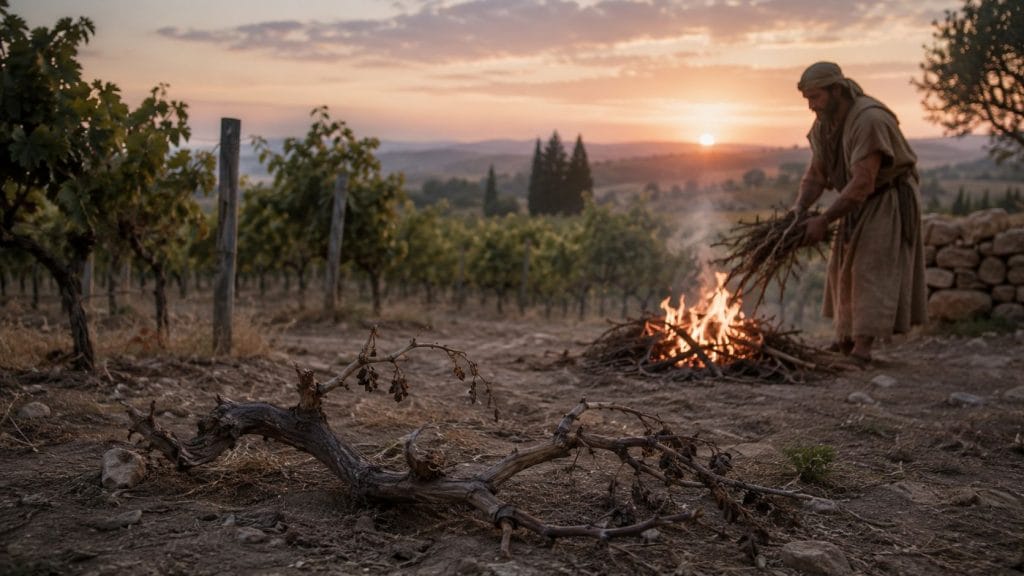
So, anyone who remains separated from Jesus, our source of life, cannot produce the fruit God wants to grow in us. Apart from the vine, the branch becomes spiritually barren. That is the warning Jesus is giving.
Now, this is also where Christians have disagreed over some details.
- Catholic teaching holds that someone can truly receive God’s grace and later lose sanctifying grace through serious and unrepented sin.
- Reformed Christians interpret perseverance differently and teach that those who truly possess saving faith will ultimately persevere.
I do not think we need to solve that entire theological debate here.
What we should not miss is Jesus’ warning itself:
Life is found in remaining in Him. Separation from Christ does not lead to greater freedom or fruitfulness. It leads to death and judgment.
Now, I know this sounds scary.
But once more, we do not follow God merely out of fear. We follow Him because we love Him.
Jesus is also showing love here by being truthful about the consequences of separating ourselves from Him. He came to reconcile us to God and give us life.
But Jesus does not present remaining in Him as something unimportant.
The branch needs the vine.
And so do we.
Last Thoughts
Abiding in Christ is something we learn to do day by day.
So, ask yourself: Am I really depending on Jesus, or am I still trying to do everything through my own strength?
Are His words changing the way I think and live? Am I becoming more loving, obedient, and willing to let God correct me?
And when things get uncomfortable, do I remain in Him or slowly start pulling away?
The branch needs the vine. And honestly, so do we.
1 – Can You Abide in Christ Even When You Don’t Feel Close to Him?
Yes. Feeling close to Jesus and abiding in Him are not the same thing. Our emotions can change from one day to another, and sometimes prayer feels dry or God feels distant.
That does not automatically mean your relationship with Christ has disappeared. In those seasons, keep praying, reading His Word, obeying what you already know, and remaining faithful even when the emotional side is missing.
2 – What Might Abiding in Christ Look Like on an Ordinary Day?
Usually, it looks pretty ordinary. Maybe Scripture challenges something you want, someone annoys you, prayer feels dry, or you are tempted to rely only on yourself.
In those moments, the question becomes: “Am I going to do this my own way, or remain dependent on Christ?” Abiding starts showing itself in those little choices we make throughout the day.
3 – Is Abiding in Christ the Same as Praying and Reading the Bible?
Not exactly. Prayer and Scripture are important ways we remain attentive to Christ and allow His words to shape us, but abiding is bigger than completing a devotional routine.
You can read the Bible every morning and still spend the rest of the day ignoring what Jesus says. Abiding means continuing to depend on Him, remain in His love, obey His commands, and allow that relationship to shape the way you actually live.