Biblical Decision-Making When Scripture Is Silent
What do you do when the Bible doesn’t directly name your decision?
When we follow Christ, we become more aware of our choices. I mean, we want to make decisions based on what is pleasing to God.
And here’s the thing: the Bible does not directly mention every decision we face nowadays. Scripture was written thousands of years ago, when the culture and civilization in general were very different. People in biblical times did not face many of our choices in exactly the same form.
For example:
- Should I accept this job?
- Which university should I choose?
- Should I start this online business?
- Should I move to another city?
We can search our Bible all day and never find, “Thou shalt accept that job in Lisbon.”
For this reason, we sometimes get stuck thinking, “Okay, I want to do what honors God, but I don’t see anything in the Bible telling me which option to choose.” And this is not a little thing. This concern may even freeze us and prevent us from taking action.
Still, Scripture is not silent simply because it does not name our exact decision. God gives us commands, moral boundaries, wisdom, and principles that shape how we choose.
In this guide, we’ll look at biblical decision-making, how to recognize when Scripture has already ruled out an option, how to compare two acceptable choices, and how to move forward faithfully without searching for a hidden command God has not given.
Key Takeaways
- Scripture may not name your exact decision, but it still guides you. God gives us commands, biblical principles, and wisdom that shape how we make our choices.
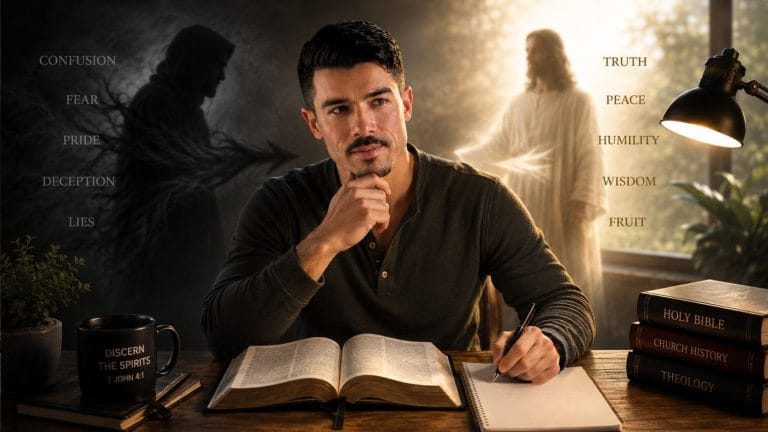
- Stop looking for hidden messages everywhere. God can guide us through circumstances, but not every coincidence, feeling, repeated number, or open door is a personal command from Him.
- Sometimes both choices really are faithful. If neither option is sinful and both agree with biblical principles, God may be giving you the freedom to choose responsibly.
- Make the wisest decision you can and trust God with the future. Unexpected problems do not automatically mean you chose incorrectly. We are responsible for choosing faithfully, not for knowing everything that will happen next.
First Ask Whether Scripture Is Actually Silent
First things first, ask yourself, “Is the Bible really silent about my decision? Or does God give us a relevant command or principle to follow?”
Here’s a simple example: A friend tells you about a job where you can make some easy and quick money, but he does not explain exactly what you’ll be doing.
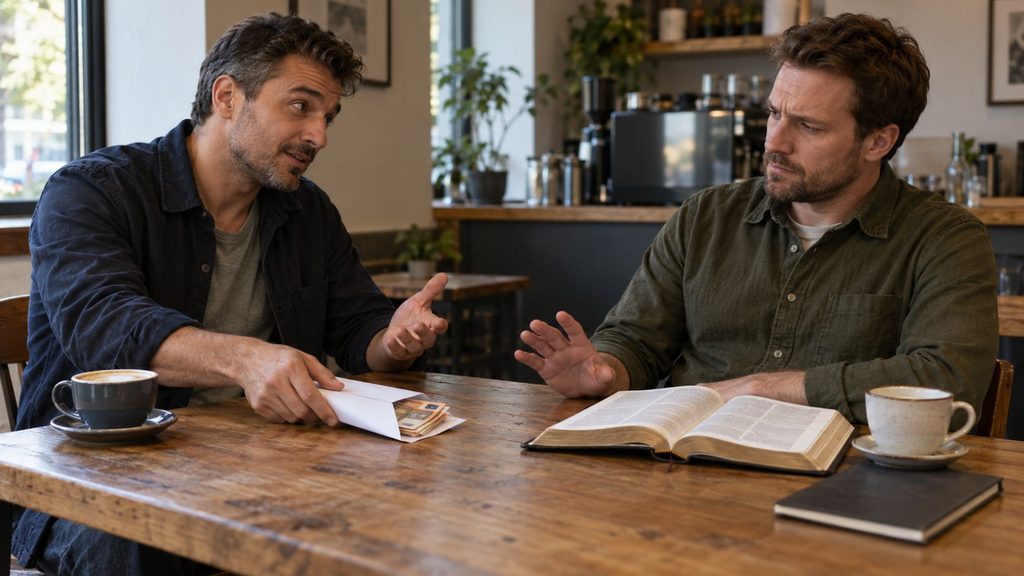
I’d be concerned about such a proposition. It immediately smells fishy, and I’d also begin questioning that friendship.
Although Scripture does not have an exact verse describing that particular job offer, it gives us wisdom that applies to the situation:
“The inexperienced one believes anything, but the sensible one watches his steps.”
—Proverbs 14:15 (CSB)
Once again, Proverbs is an amazing book that I highly recommend people read several times a year. It does not take that long to read, and it shares a lot of applicable wisdom.
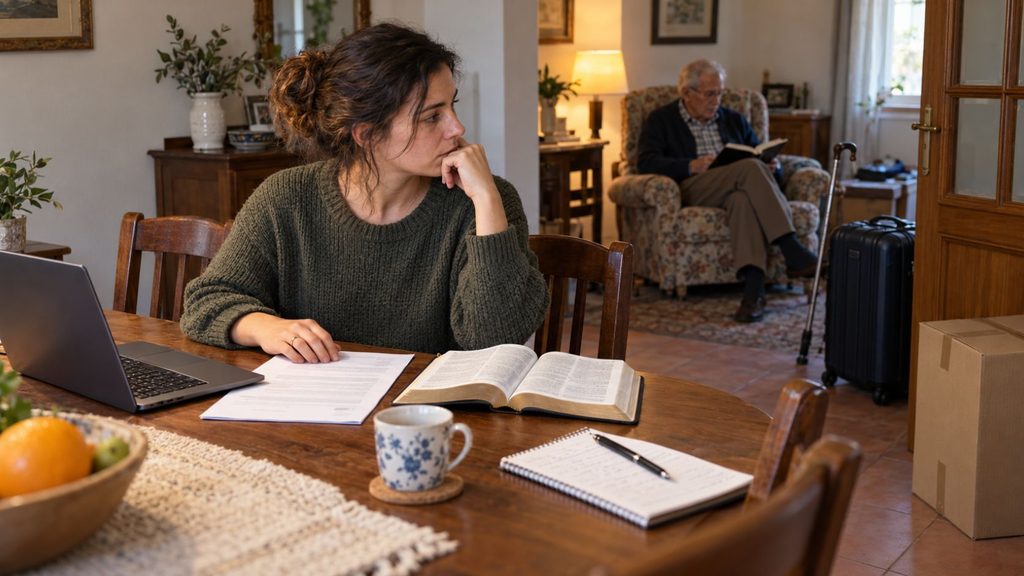
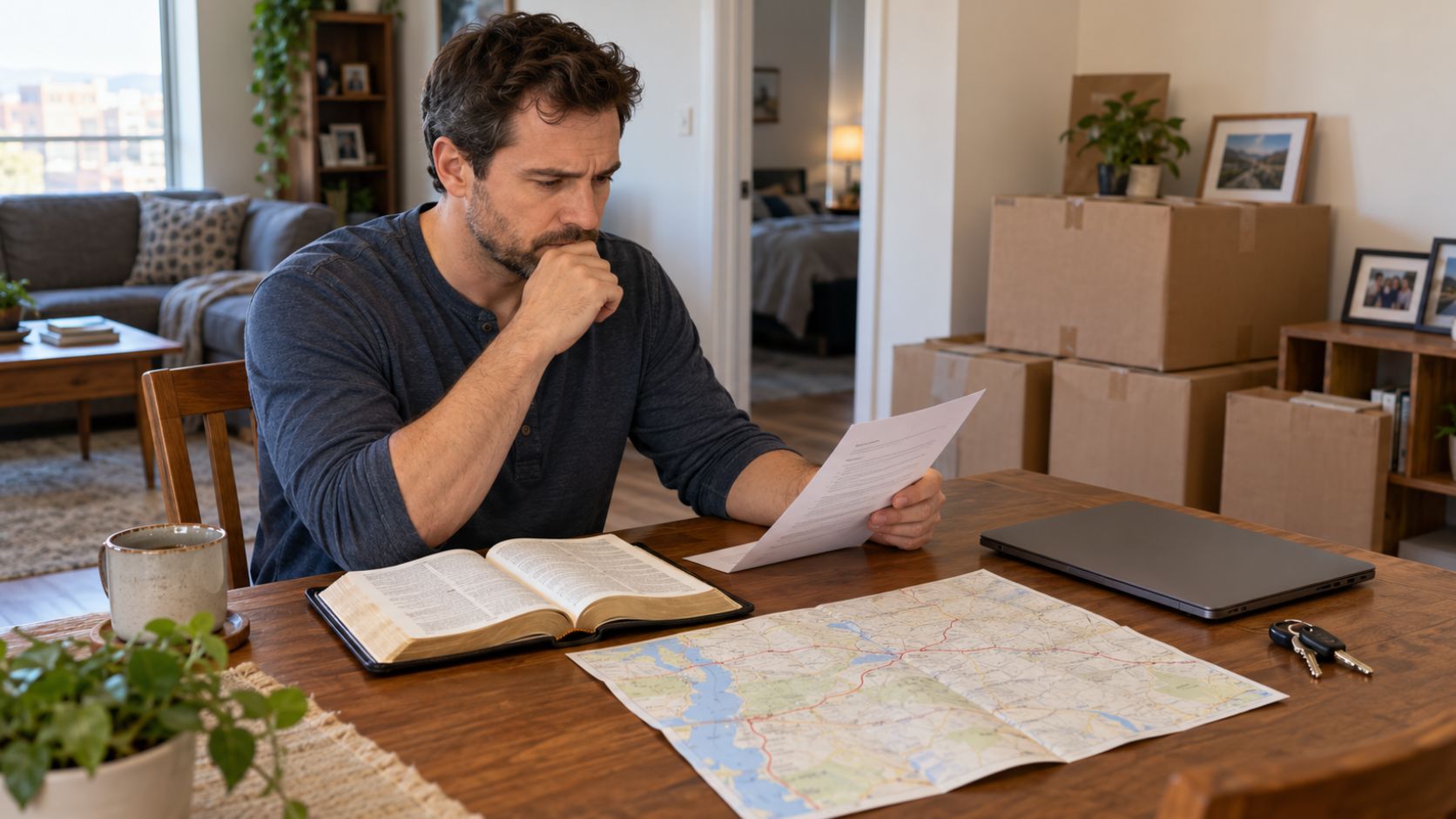
But what about something less morally obvious, like receiving a higher-paying job offer in another city? This means a big life change.
You may need to move away, leave your friends behind, and separate yourself from the life you know. So what now?
Scripture does not name the company or tell you which city to live in.
Still, it teaches us not to think only about ourselves. We should also consider our family, our responsibilities, the people who depend upon us, and how our decision may affect them.
“Everyone should look not to his own interests, but rather to the interests of others.”
—Philippians 2:4 (CSB)
This verse does not automatically tell us whether to accept or reject the job. However, it gives us a biblical principle to include in our decision.
Direct command — Scripture clearly tells us what is right or wrong.
Biblical principle — Scripture does not mention the exact situation but gives us relevant moral truth.
Wisdom decision — Several morally acceptable options remain, and we need to choose wisely.
As we ask our Heavenly Father, “God, what should I do?” we should also look at what He has already revealed through His written Word.
Scripture Gives Us More Than Rules—It Forms Our Judgment
We live on earth—and no, I do not believe in Martians—but our ways should come from above, from our Father in Heaven.
“Do not be conformed to this age, but be transformed by the renewing of your mind, so that you may discern what is the good, pleasing, and perfect will of God.”
— Romans 12:2 (CSB)
Before becoming a Christian, my main goal was to become rich. I spent hours reading books about the subject from Bob Proctor and others. For me, money was my priority. I’m not saying money is unimportant or that a Christian cannot be rich.

However, God changed my priorities. I began to see that I was idolizing money.
This is what I mean when I say that God renews our minds and hearts. Over time, reading Scripture and spending time with Him changes:
- What we value
- What we consider important
- What we recognize as foolish
- What kind of person we are becoming
Following Jesus Christ is much more than memorizing and remembering a few verses. I used to do something similar before becoming a Christian when I read Meditations by Marcus Aurelius and followed Stoic philosophy. But I depended upon my own willpower to put those ideas into practice.
God Transforms Us
Of course, following Jesus Christ also requires effort and obedience. But the difference is that we do not depend upon our willpower alone.
God works within us. As we cooperate with His grace, we slowly start becoming different people.
God makes us more compassionate, loving, wise, and knowledgeable about His ways. This changes how we make decisions as His sons and daughters.
With time, we begin looking at our choices through a Christian perspective. Scripture may not contain a verse naming our exact decision, but it forms our judgment so we can recognize what is wise, loving, and pleasing to God.
Stop Looking for a Secret Rule God Hasn’t Given
During my first few years as a Christian, I tended to overspiritualize things. Often, when I wanted to make a decision, I searched for signs.
Of course, once you start looking for them, you’ll eventually find something that seems to confirm what you already want.

I remember when I first started doing street prayer with a friend of mine. One day, I told him, “God probably wants me to leave the country.”
Nearby, there was a commercial truck parked with the name of another country written on it. My friend pointed toward the truck as though it were God’s confirmation.
I mean, thinking like that can lead you down a rough path and toward some bad decisions. It’s like telling someone, “Okay, now point your finger at every red object you see in this room.”
Before that moment, the person may not have noticed all the red objects around them. But after receiving those instructions, it’s like they suddenly see red everywhere.
Problem With Seeking Signs
The same thing happens when we start seeking signs to help us make a decision. Everything begins looking like a hidden message, and it can easily become an obsession.
So, we start decoding:
- Coincidences
- Bible verses opened at random or removed from their context
- Open doors
- Feelings
- Repeated numbers
- Unexpected conversations
I’m not saying that God can never use circumstances to guide us. But every coincidence should not automatically be treated as a personal command from Him.
Scripture spends far more time teaching us how to live faithfully than giving us techniques to discover every detail about our future. As we grow closer to Christ, our judgment changes, and we become better at making decisions that agree with God’s revealed will.
We do not become perfect, but we become wiser. And where God has not given us a command, we should be careful not to invent one for Him.
Sometimes Two Choices Really Are Both Faithful
Okay, so let’s imagine you have:
- Ruled out sin
- Considered biblical principles
- Prayed
- Examined your motives
- Sought counsel
- Looked at the consequences
And you still have:
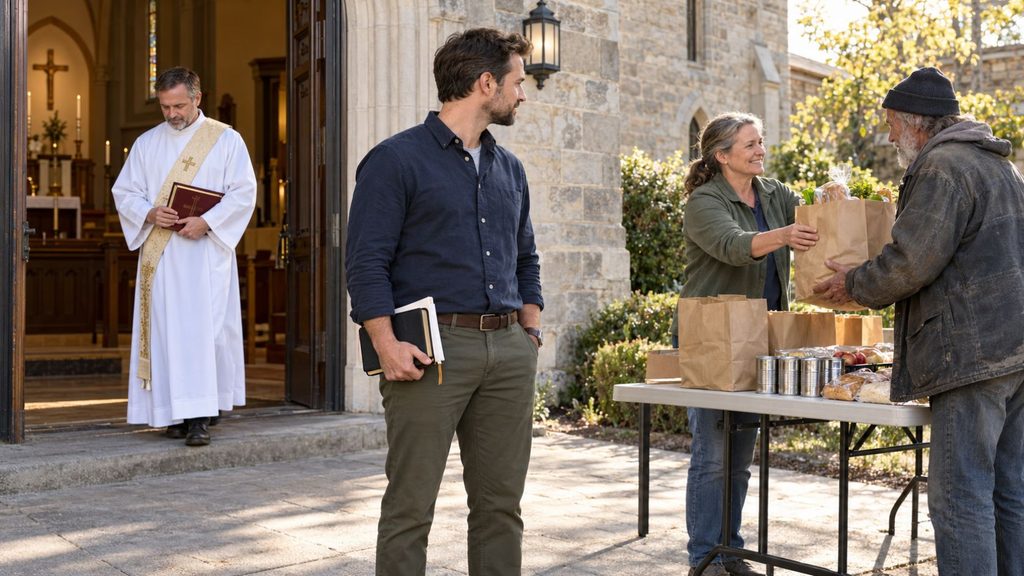
Option A:
Accepting an offer to serve as a deacon in your local church after completing the necessary formation.
Option B:
Serving at your local Christian homeless shelter.
Both sound reasonable and like godly things to do. And perhaps that is because both really are reasonable.
Just because God does not shout from Heaven telling you to choose “Option A,” it does not mean He is not present. Maybe God is giving you the freedom to choose responsibly.
“But solid food is for the mature—for those whose senses have been trained to distinguish between good and evil.”
— Hebrews 5:14 (CSB)
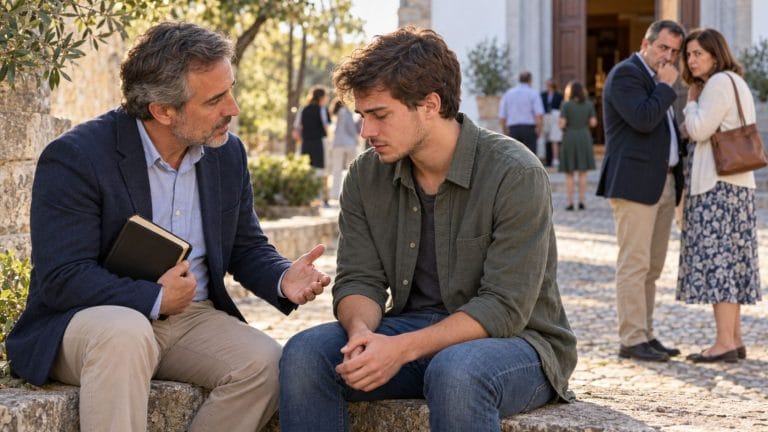
It’s similar to parents and their children. Once the children grow up, their parents do not expect to decide everything for them. They have taught them and helped them mature so they can make responsible choices.
Likewise, God helps us mature so we can make wise biblical choices rather than needing a specific sign for every decision.
At some point, we should make the wisest choice we can, move forward, and trust God with what happens afterward. Both choices are good and can produce good fruit.
Doing this prevents us from becoming spiritually paralyzed.
Make the Decision—and Leave the Future With God
For the past few years, I wanted to start a Christian website. Honestly, I was not expecting to build one this year.
Actually, I was only planning to publish a few books through IngramSpark, a self-publishing platform, and call it a day.
But then I published a book, and there were several problems because the title included the word “workbook.” Their automated system flagged and blocked it. It took me two months of sending emails to the company before they finally realized it was a mistake.

That issue made me frustrated. But it also made me realize that I needed to build something of my own. After spending hours in prayer and receiving God’s confirmation, I moved forward with Blessed Compass.
Honestly, I was afraid because building a website requires months of hard work. Christian blogging is also competitive and requires a lot of theological study. But despite that, I moved forward.
We do our best with what we have
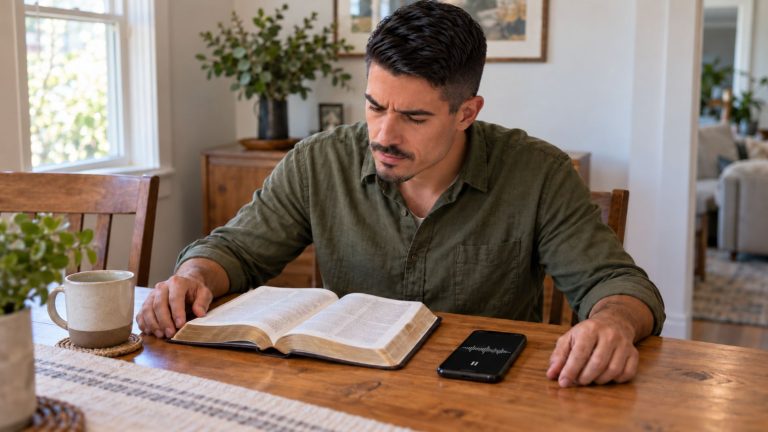
What I’m trying to say is that we should do our best to make the right decision. Of course, we want God involved in the things we decide to do. We pray, seek His guidance, and consider what He has already revealed.
But the future is in God’s hands. He is the only One who knows what will come next. We should do our best to choose wisely. Still, even a wise decision may involve:
- Difficulty
- Unexpected consequences
- Disappointment
- Changed circumstances
After all, we do not live in a perfect world where everything is served to us on a silver platter. Sometimes, I wouldn’t mind, but that’s not the case.
Challenges do not necessarily mean that we made the wrong decision. God can even use those challenges to strengthen us.
We are responsible for choosing faithfully based on what we know at the moment. But we are not responsible for knowing the future. We can only make the wisest choice available to us and trust God with whatever comes next.
“Commit your way to the Lord; trust in him, and he will act.”
— Psalm 37:5 (CSB)
Last Thoughts
Have you ever remained stuck because you believed there was only one correct choice? Have you ever mistaken difficulty for proof that you made the wrong decision? What helped you finally choose and move forward?
Leave your experiences and questions in the comment section below.
1. Can Something Be Permissible but Still Be an Unwise Choice?
Yes. First, we should distinguish between what society permits and what God permits. Hookup culture may be socially accepted, but that does not make it biblically acceptable.
However, even something that is not sinful can still be unwise. For example, buying an expensive car is not necessarily sinful, but going deeply into debt for it while neglecting your responsibilities would be foolish.
We should ask not only, “Am I allowed to do this?” but also, “Where will this choice lead me?”
2. Do Open and Closed Doors Reveal God’s Will?
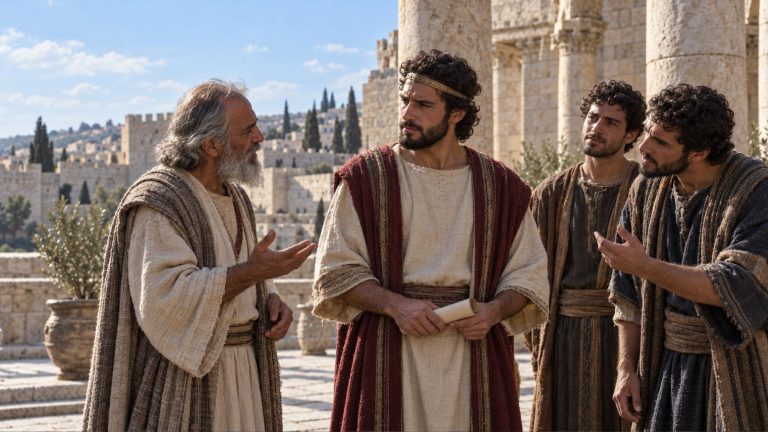
Open and closed doors can be part of God’s guidance, but they do not always explain themselves. In Acts 16, Paul was prevented from entering certain regions until God directed him toward Macedonia.
Still, difficulty does not automatically mean that God is closing a door, because Paul also faced opposition while doing exactly what God called him to do.
We walk in faith without always knowing the outcome. We keep praying, seeking, and knocking while remaining willing for God to redirect our path.
3. Does Feeling Peace Prove That I Made the Right Decision?
Not by itself. I’d look for long-term consistency rather than trusting one momentary feeling.
Does the decision continue to agree with Scripture, wisdom, prayer, and the fruit it produces over time?
Even then, feeling peaceful cannot make a wrong decision right, and experiencing fear or inner conflict does not automatically mean we chose incorrectly. Some faithful decisions are difficult and uncomfortable.