
What Does It Mean That the Bible Is Inspired by God?
If God wrote the Bible, why does every book sound different?
I remember my first doubts as a new Christian: “Was the Bible changed over the centuries? How can I trust the Bible and know it is the Word of God?”
Many people have these same thoughts. And they’re all pretty valid. But as I kept studying and researching more about the Bible’s origins, one thing I noticed was how incredibly consistent it is. Yes, there are difficult passages and apparent tensions that need to be studied.
But from Genesis to Revelation, you see this constant progression of a God who remains the same throughout generations.
Yes, the Bible was written by many authors, some of them with completely different backgrounds and writing styles. Take the Apostle Paul.
I love his writing. He was highly educated, and you can notice that when you read his letters. Yet his teachings belong to the same Christian faith we find throughout the rest of the New Testament.
The same thing happens throughout Scripture. Different people wrote in different centuries, cultures, situations, and styles, yet you can still see one unfolding story of God, humanity, sin, covenant, and ultimately Jesus Christ.
That raised another question for me: if these were real human beings writing with their own personalities and abilities, how can Christians also say that the Bible was inspired by God?
That’s what we’re going to look at in this guide: what biblical inspiration actually means, how God worked through human authors, and why the Bible can sound so human while still being the Word of God.
Key Takeaways
- The Bible being inspired does not mean the human authors stopped being human. God worked through real people with different personalities, backgrounds, writing styles, and abilities.
- Biblical inspiration means Scripture ultimately comes from God. It is not simply a collection of religious opinions or ideas people came up with on their own.
- Inspiration does not mean every book should be read the same way. Poetry, prophecy, history, wisdom, letters, and other genres need to be understood according to their context and purpose.
- If Scripture comes from God, then we should be willing to let it correct us. We do not open the Bible only to confirm what we already believe, but to understand what God has actually revealed.
“Inspired” Does Not Mean What We Usually Mean by Inspired
Usually, when someone thinks about being inspired, it’s something like this:
Someone is having a hard time, let’s say starting a new business. Then they hear “You Can’t Always Get What You Want” by the Rolling Stones on the radio, and something about that song motivates them to keep going.
The song inspired them to take action. But that’s not the same kind of inspiration we’re talking about here.

2 Timothy 3:16–17 CSB says:
“All Scripture is inspired by God and is profitable for teaching, for rebuking, for correcting, for training in righteousness, so that the man of God may be complete, equipped for every good work.”
Biblical inspiration is not about Scripture simply making us feel inspired or emotional. The Greek word theopneustos carries the idea of Scripture being God-breathed.
In other words, Scripture ultimately comes from God. But as we’re going to see, God did not remove the human authors from the process. He worked through real people when He gave us Scripture.
The Bible Did Not Drop Out of Heaven Fully Written
In some Christian circles, it almost seems like people think a leather-bound Bible just fell from Heaven.
But for much of biblical history, God’s people did not have the complete Bible as we have it today. Scripture came together across centuries as God revealed Himself through different people and different moments in history.
These authors included Moses, King David, King Solomon, Jeremiah, Daniel, the apostles, and others God used. We also have completely different types of books: poetry, history, prophecy, wisdom, letters, and more.
That already tells us something important: the biblical authors had different personalities, vocabularies, backgrounds, and writing styles.
They also lived through very different historical situations, and those circumstances shaped the way they wrote.

We can see this clearly in the New Testament:
- Matthew was a Jewish tax collector. I guess he probably did not have many fans back in the day, since tax collectors working with Rome were not exactly popular. His Gospel has a strong Jewish emphasis, beginning with the genealogy of Jesus from Abraham through King David.
- John was a Galilean fisherman, and his Gospel especially emphasizes Jesus’ divine identity.
- Luke was a physician and appears to have been a Gentile. He wrote both Luke and Acts, and his writing has a broad focus that reaches beyond Israel.
Just in the New Testament, we can already see very different backgrounds and writing styles. These were real authors through whom the Holy Spirit worked. And sometimes, they even needed to research information before writing.
Luke 1:1–4 gives us a great example:
“Many have undertaken to compile a narrative about the events that have been fulfilled among us, just as the original eyewitnesses and servants of the word handed them down to us.
So it also seemed good to me, since I have carefully investigated everything from the very first, to write to you in an orderly sequence, most honorable Theophilus, so that you may know the certainty of the things about which you have been instructed.”
So, saying all of this, we can see that the biblical authors were not robots.
They were real people with different backgrounds, personalities, abilities, and circumstances. Yet God worked through them so that what they wrote communicated what He intended.
Yet Christians Still Say God Is the Author
Now let’s join the pieces. Yes, as we saw, each biblical author had a unique background, personality, and writing style. That diversity makes the Bible even more remarkable.
People from different generations and cultures still wrote about the same God and the same unfolding story of salvation.
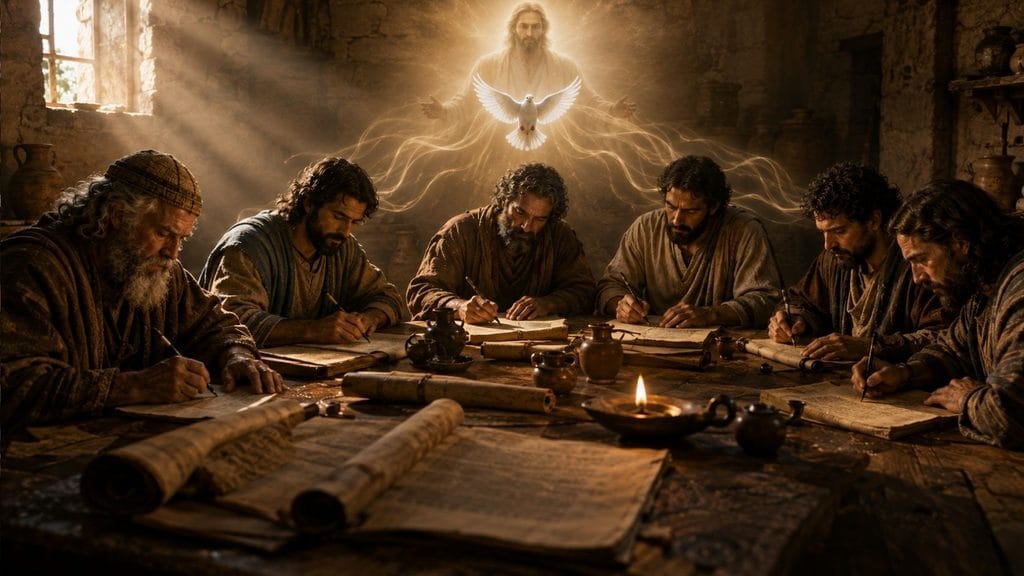
Peter gives us a good picture of the divine side of biblical inspiration:
“Above all, you know this: No prophecy of Scripture comes from the prophet’s own interpretation, because no prophecy ever came by the will of man; instead, men spoke from God as they were carried along by the Holy Spirit.”
—2 Peter 1:20–21, CSB
Scripture did not originate only from human initiative. The Holy Spirit worked through these authors without erasing their personalities, abilities, or writing styles.
So, what they wrote was genuinely their own work. But God worked through them so that Scripture communicated what He intended.
This does not mean God forced every author to write in the same way or turned them into passive machines. He worked through real people, using their abilities, experiences, personalities, and circumstances to bring His Word to us.
That is why Christians can say both things at the same time: real human beings wrote the Bible, and yet Scripture ultimately comes from God.
Inspiration Doesn’t Mean Every Sentence Should Be Read the Same Way
We should not read all Scripture the same way. You do not read the poetry, prayers, and songs in Psalms the same way you read the book of Joshua or one of Paul’s letters.
That’s because the Bible contains different writing styles and genres, such as:
- poetry;
- narrative;
- prophecy;
- letters;
- wisdom;
- parables;
- apocalyptic imagery.
All of Scripture is inspired by God, but that does not mean every book communicates in exactly the same way.
Dei Verbum says we should pay attention to literary forms, historical circumstances, culture, and what the human author intended to communicate.
If God chose to work through real human authors, then understanding what those authors were trying to communicate matters.
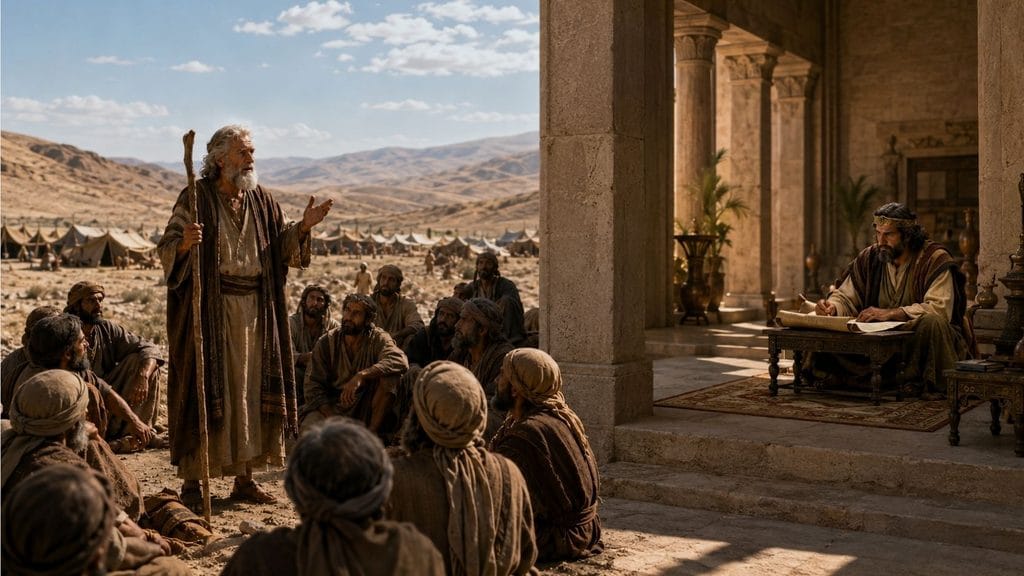
For instance, Deuteronomy takes place after Israel’s long journey through the wilderness. Much of the book contains Moses’ final speeches, covenant instructions, and reminders to Israel before they enter the Promised Land.
That is completely different from Proverbs. Proverbs contains many sayings associated with Solomon, along with other collections of Israelite wisdom. Its purpose is to teach us how to live wisely, make better decisions, and fear God.
So, Deuteronomy contains covenant speeches and laws given to Israel in a particular historical situation, while Proverbs is wisdom literature.
As we read the Bible, we should take these things into consideration. Understanding a book’s genre, historical setting, and purpose can help us better understand what the biblical author was actually trying to say.
Inspiration Should Change the Way We Open the Bible
Now, knowing that the Bible is not just a normal book but the written Word of God, what does this mean for the way we read it?
Humility: When we read Sacred Scripture, we should allow it to challenge and transform us. Sometimes we may read something that goes against a certain belief of ours.
We may want to hold on to a certain way of living, but Scripture teaches otherwise. It may hurt our ego, but knowing that it is the Word of God, and that God wants our good, we should reflect on our lives and do our best to change our ways.

Careful Thinking: God chose to communicate through language we can understand. So, we should actually take the time to understand what He is saying.
Who is God? What has He done? What are His commandments? How does He want us to live? This is also why context, genre, history, and the author’s intention matter when we read Scripture.
This means we should not treat Sacred Scripture as just another helpful book, like Meditations by Marcus Aurelius. I loved reading that book before becoming a Christian. Every single day, I read it, and it helped me live a more stoic life. I also read other self-help books.
But nothing, and I mean nothing, transformed my life like the Bible.
Hebrews 4:12 says:
“For the word of God is living and effective and sharper than any double-edged sword, penetrating as far as the separation of soul and spirit, joints and marrow. It is able to judge the thoughts and intentions of the heart.”
The Word of God is already living and effective. And I have experienced that personally. As I started reading Scripture, meditating on it, and spending time with God, it began exposing things in me that needed to change.
Little by little, Scripture helped shape the way I thought, the way I lived, and the way I understood God. That is one of the reasons we should not open the Bible just looking for something that agrees with us. We should also be willing to let God correct us through it.
Last Thoughts
Before you go, ask yourself a few questions:
Do I really approach the Bible as the Word of God, or just as a book I agree with when it fits what I already believe?
When Scripture challenges me, am I willing to change, or do I try to find a way around it? And when I read the Bible, am I actually trying to understand what God is saying, or am I looking for a quick verse that makes me feel better?
I’d love to hear your thoughts. Leave your answers in the comment section below.
1 – Did the Biblical Authors Know They Were Writing Inspired Scripture?
Sometimes they clearly understood that they were communicating God’s Word, especially when we look at the prophets. But we should be careful about assuming every biblical author sat down thinking, “I am now writing a future book of the Bible.”
Luke, for example, tells us that he investigated sources and decided to write an orderly account.
God could work through these normal human actions without the author necessarily understanding everything God was accomplishing through his writing.
2 – Are Chapter and Verse Numbers Inspired by God?
No. The chapter and verse numbers in our Bibles were added much later to make Scripture easier to navigate. Paul did not write “Romans 8:28” before one of his sentences, and Matthew was not dividing his Gospel into chapters as he wrote.
They are incredibly useful because we can quickly find and share passages, but they are not part of the inspired biblical text itself.
3 – Are Bible Translations Like the CSB Also Inspired by God?
When Christians talk about biblical inspiration, we are primarily talking about the Scriptures written by the biblical authors, not saying that every modern translation received a new act of inspiration from God.
Translations such as the CSB, NIV, ESV, or others are attempts to communicate those inspired writings in languages we can understand today faithfully.
That is also why translations sometimes use slightly different words—the translators have to make decisions about how best to communicate ancient Hebrew, Aramaic, and Greek in modern language.