

What Does It Mean That God Is Omnipresent? Explained
If God is everywhere, why do I sometimes feel closer to Him at Mass?
Last Saturday, during the Eucharist, I felt intense joy, peace, and a desire to cry. I always try not to cry in front of everyone, but I guess sometimes a few tears drop.
I feel God’s presence more strongly in the Catholic church than I did when I attended a Baptist church. I know we do not build our faith around “just” emotions. Our faith is more profound than that. Still, I cannot deny what I experienced.
But then I think: God is everywhere at the same time, right? Wasn’t He present when I was at the Baptist church too? And what about when I’m at work? Does God take some time off while I’m working?
Of course, He doesn’t. But if God is Omnipresent, what do we mean when we say we feel His presence or that He comes near to us?
In this guide, we’ll look at what Scripture says about God being everywhere, why we may experience His presence differently, and what that means for our ordinary lives.
Key Takeaways
- God is fully present everywhere. He does not have to leave one place to be somewhere else. But His creation is not God.
- We cannot hide from Him. That can feel uncomfortable when we’re hiding something, but it also means He is present when we feel alone.
- Drawing near to God is about our relationship with Him. He invites us into communion, and we can respond or turn away.
- Our feelings do not determine whether God is present. I may feel closer to Him at Mass, but He is also present when I’m at work and thinking about ten other things.
Omnipresent Means God Is Fully Present Everywhere
Before we go deeper into this topic, let’s talk about the word “omnipresent.”
Omni means “all” or “every.” Present means being there.
In other words, God is present everywhere. So it’s not like God has one of His legs in Portugal and one of His hands in some country in the middle of Africa.
Our God is Spirit. He is not made of matter or limited like us to one place at a time. He is fully present throughout His creation. I know that’s quite a big thing for us to wrap our heads around.

Psalm 139 Turns Omnipresence Into a Personal Question
“Where can I go to escape your Spirit? Where can I flee from your presence?”
—Psalm 139:7 (CSB)
It’s a beautiful Psalm written by David. He imagines going up to heaven, down to Sheol—the realm of the dead—or as far away as he possibly can. He even wonders whether darkness could hide him. But no matter where he goes, God is there.
“even the darkness is not dark to you.”
—Psalm 139:11–12 (CSB)
I know this can feel a bit scary. Gosh, does this mean I cannot hide anything from God? In fact, it’s true: I cannot. He knows me better than I know myself.
That’s why I sometimes wonder why some act like holy people in church but live differently outside it. We might hide things from other people, but we definitely cannot hide them from God.
But why is that something good?
Well, if we’re trying to keep one foot with God and the other in the world, being seen so clearly can feel uncomfortable. But it also means we do not have to pretend with Him. We can admit where we’ve gone wrong and ask Him to help us change.

David also says that even in the farthest place, God’s hand will lead him and hold on to him. So when we feel alone or struggle with temptation, God has not gone somewhere else. We can ask Him for strength.
For those of us who want to come closer to God, we do not have to run away because He knows us so well. He is loving, just, and perfectly holy. We can come to Him honestly.
If God Is Everywhere, Why Does the Bible Say He Comes Near?
“Draw near to God, and he will draw near to you.”
—James 4:8 (CSB)
God made us in His image. We can love Him and other human beings, seek truth, worship Him, and take care of His creation. We do not all have the same abilities, of course. But God created us to have communion with Him.
That was our original purpose. Then Adam and Eve disobeyed God, and sin and death entered the world. Sin damaged that communion with Him.
Why Does God Come Closer to Some?
Saying all of that, God makes Himself known and invites us to have a relationship with Him. But we can also reject Him.
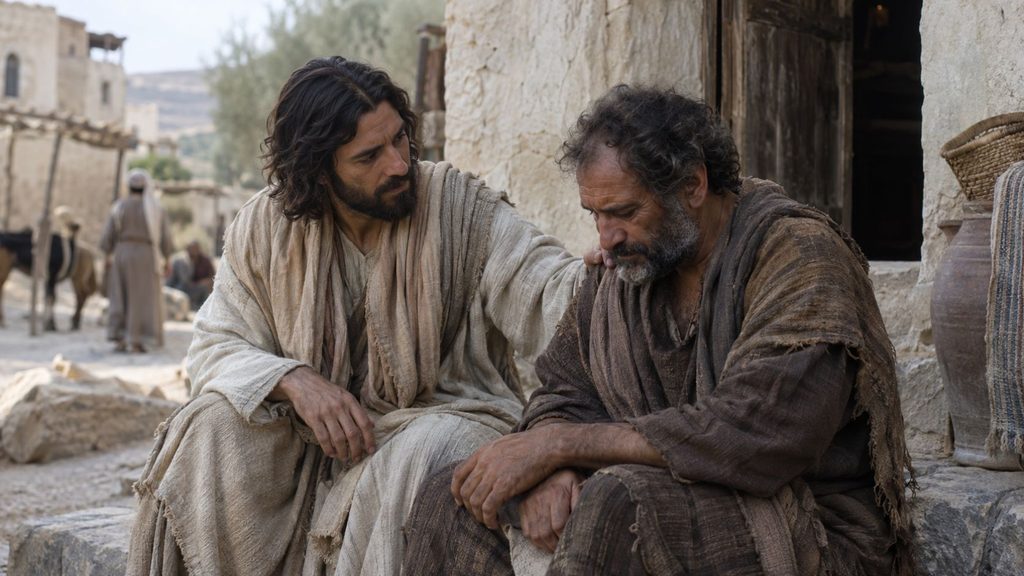
When we respond to His grace and desire to know Him, we grow closer to Him. God was already present; we are the ones who turned toward Him.
He sends His Holy Spirit to dwell in us, guide us closer to Him, and change our hearts so we can become more holy.
“The Lord is near the brokenhearted”
—Psalm 34:18 (CSB)
That does not mean He was somewhere else before and then travelled to them. He is present with them in their pain.
Also, Jesus is fully God and fully man. Immanuel means “God with us.” And truly, it cannot get much closer than that. God in the flesh, living a human life among other humans. He experienced hunger, tiredness, and suffering too.
Why Do I Feel God’s Presence More at Mass?
I know many people do not have a good impression of the Catholic Church. Still, joining it was one of the best choices of my life. I love the Mass and the Eucharist, and I find Catholic theology profound and beautiful.
When I attended an evangelical Baptist church, of course, the same God was there. At my church, we observed the Lord’s Supper once a month as a symbolic memorial of Christ’s death and what He did for us.
The Catholic Church teaches something different about the Eucharist: through the consecration at Mass, the bread and wine become the body and blood of Christ. Catholics call this His Real Presence. It is not something created by how I feel in that moment.
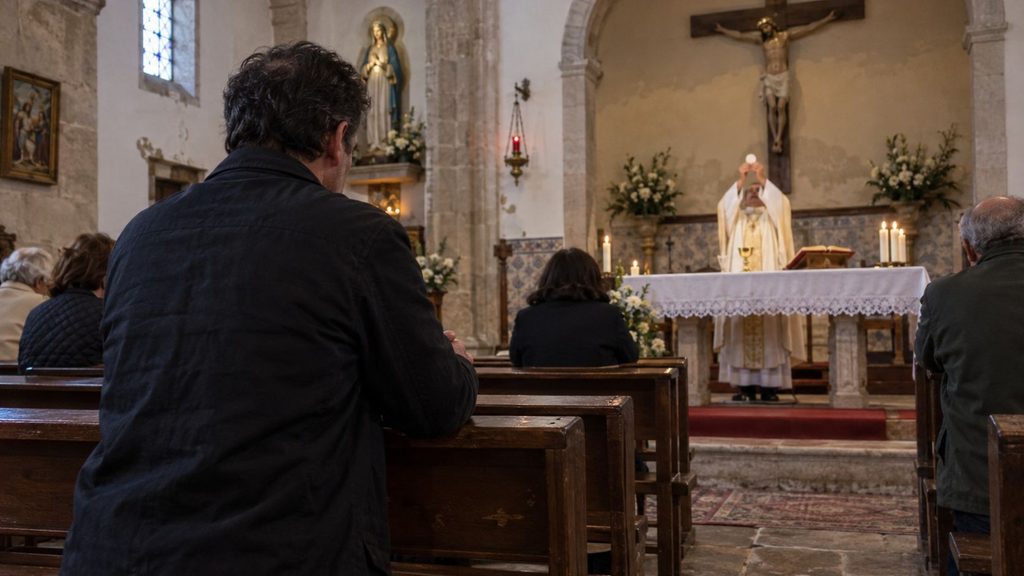
Still, when the priest consecrates the bread and wine, I often become more aware of Him. The silence in the church, people kneeling and praying, and sometimes the smell of incense—which I’m not a fan of, but for some reason I like it there—make that moment quite unique and beautiful.
It brings my mind back to what Jesus did for us. He loved us through suffering,