
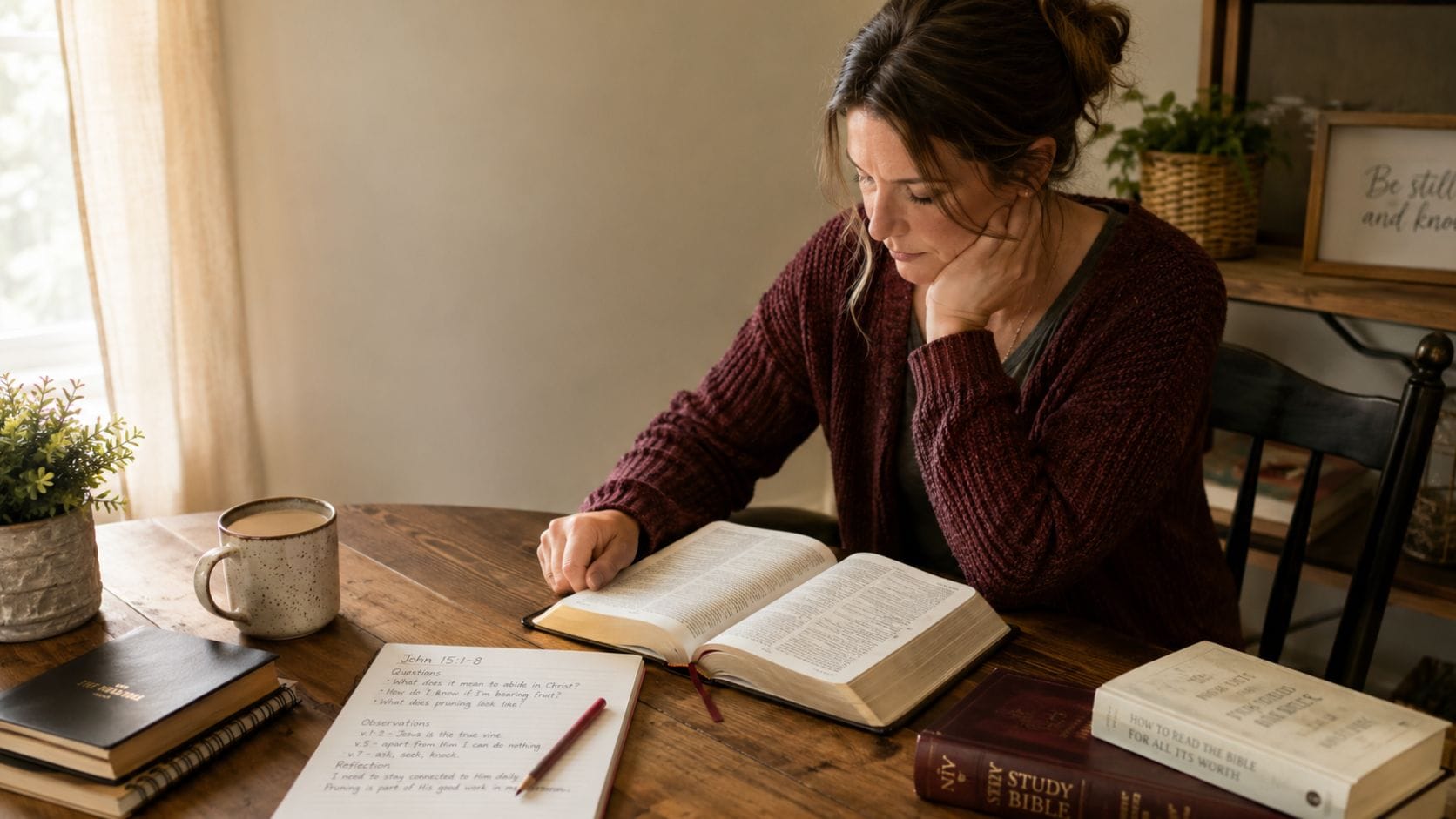
How to Study the Bible for Beginners: 7 Simple Steps
Do you find reading the Bible hard? Probably even boring at times?
Reading the Bible is not easy. In my first few years as a Christian, I did not read it often. It was not because I did not want to. Some books were simply difficult to understand, especially Isaiah.
I admit that the first time I started reading Isaiah, I did not get to the end. Another book I found initially complicated was Psalms because I’m not great at reading poems.
Other books can also become confusing with all the different names, places, and events. Sometimes, you read the same sentence over and over again and still do not understand it.
After a while, many people decide to throw in the towel. So, I want to share some ways to study the Bible as a beginner. These helped me understand it better, read it more consistently, and actually enjoy it.
Key Takeaways
- Start small. Choose one biblical book and study a short passage instead of trying to understand everything at once.
- Read the whole passage slowly. The verses before and after often answer questions that one isolated verse creates.
- Ask basic questions before opening a commentary. Who wrote it? Who was being addressed? What argument is being made? What does it reveal about God and humanity?
- Check your interpretation. Compare it with the rest of Scripture, historic Church teaching, and reliable Christian teachers. Personal interpretation can still be wrong.
- Do not study only to collect information. Ask what should be believed, obeyed, trusted, confessed, or changed, and then turn what you learned into prayer.
What Is the Difference Between Reading and Studying the Bible?
Reading the Bible is usually a broader approach. You may read for enjoyment, devotion, or to become more familiar with its stories and teachings. You will probably learn something here and there along the way.
Studying is when you slow down to understand a passage more deeply. Sometimes, this requires learning how people lived and thought back then.
For instance:
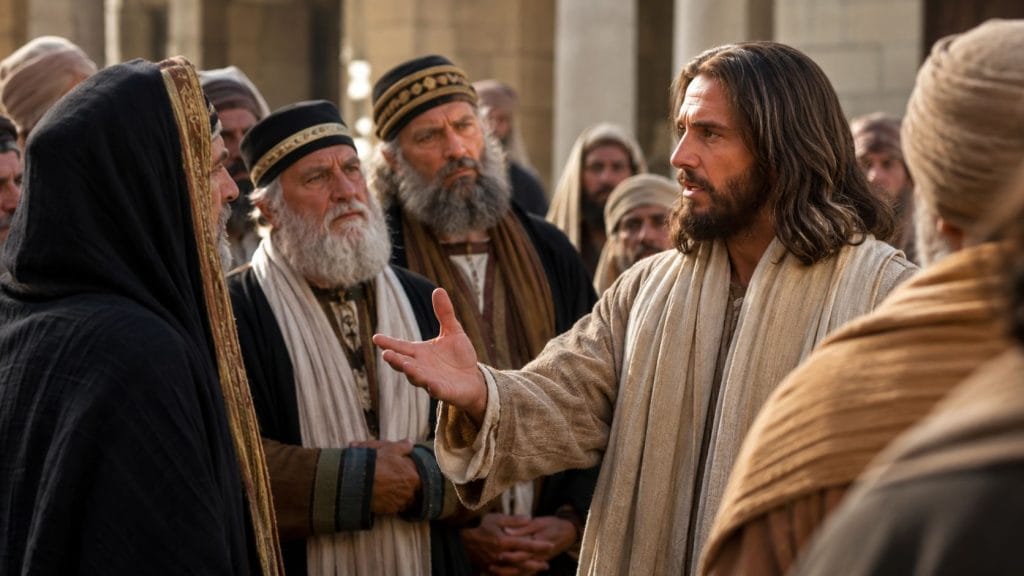
“He answered them, ‘Why do you break God’s commandment because of your tradition?’”
—Matthew 15:3, CSB
If you are only reading, you may not pay much attention to why Jesus said this.
But when you study the passage, you look at the verses before and after it. The Pharisees had criticized Jesus’ disciples for not following the tradition of washing their hands before eating.
Jesus replied that some of their own traditions allowed people to avoid helping their parents, even though God commanded them to honor their father and mother.
In other words, their traditions had started working against God’s commandments.
What Do You Need to Begin Studying the Bible?
When you start reading the Bible, it is like developing a new muscle.
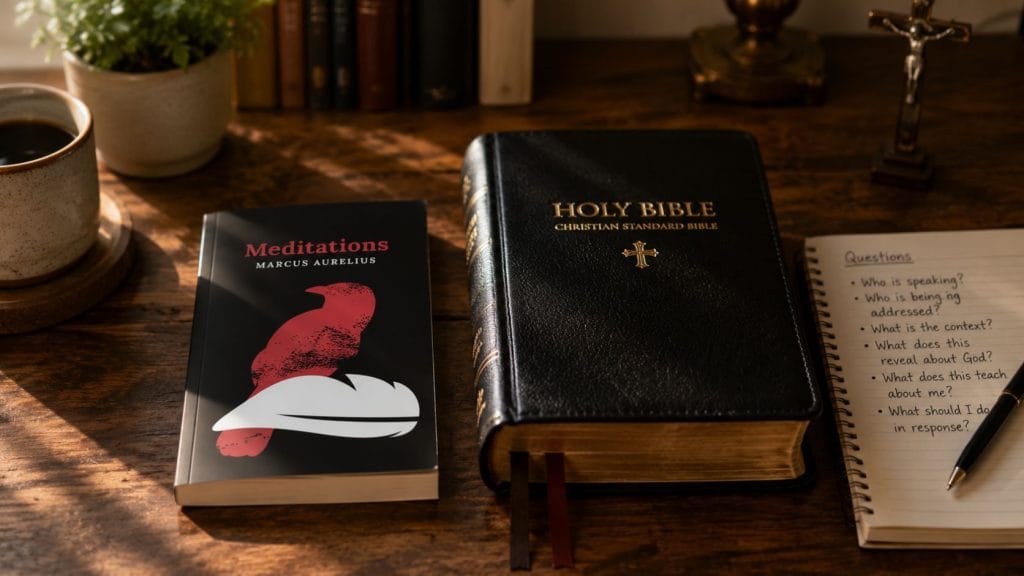
You may already be an avid reader, but reading God’s Word is different. The Bible is not simply a philosophy book like Meditations by Marcus Aurelius. I used to love reading Meditations before becoming a Christian.
Instead, the Bible teaches deep spiritual truths about God, humanity, sin, salvation, and His relationship with His people. It also contains history, poetry, prophecy, letters, wisdom, and several other types of writing.
For this reason, we need time to become familiar with it. Some deeper truths will also become clearer as we mature as Christians and understand how the different parts of Scripture connect.
Fortunately, you do not need many things to begin.
Choose a Readable Bible Translation
The first thing you need is a Bible translation you can understand.
Here are a few good options:
New Living Translation (NLT): The NLT focuses on communicating the meaning of the original text in clear, natural English. This makes it one of the easier translations for beginners to read.
New International Version (NIV): The NIV tries to balance accuracy with clear and natural English. It is readable without becoming overly simple.
Christian Standard Bible (CSB): The CSB also balances accuracy and readability. This is the translation I normally use on Blessed Compass.
New American Bible, Revised Edition (NABRE): This is a Catholic translation approved for private reading and study. It also contains the complete Catholic canon, including the deuterocanonical books.
You do not need to spend hours trying to find the perfect translation. Choose one you understand and start reading.
Keep a Notebook and Pencil Nearby
I recommend having a notebook and pencil beside you.
Write down:
- Questions you have.
- Verses you do not understand.
- Names or places you want to research.
- Connections you notice.
- Something the passage teaches about God.
You may also use a study Bible. The introductions, maps, timelines, and notes can help you understand the historical background.
However, remember that the study notes are not Scripture. They are explanations written by people and may reflect a particular Christian tradition.
A paperback Bible can also help you avoid notifications and other distractions, but you do not specifically need one.
Choose a Bible that is comfortable to read and durable enough to use regularly. I do not recommend using an expensive leather-covered Bible for studying, highlighting, and taking notes. But that is up to you.
1. Choose One Book and a Manageable Passage
If you’re a new Christian, I recommend starting with the New Testament.
It is not that the Old Testament is not needed. Quite the contrary. It helps us understand how everything was being prepared for the coming of our Messiah.
Still, the Old Testament can be a difficult read when we do not yet understand the history, laws, prophets, and how the different books connect. We may even come to wrong conclusions about God’s character by reading an isolated passage without understanding the wider story.
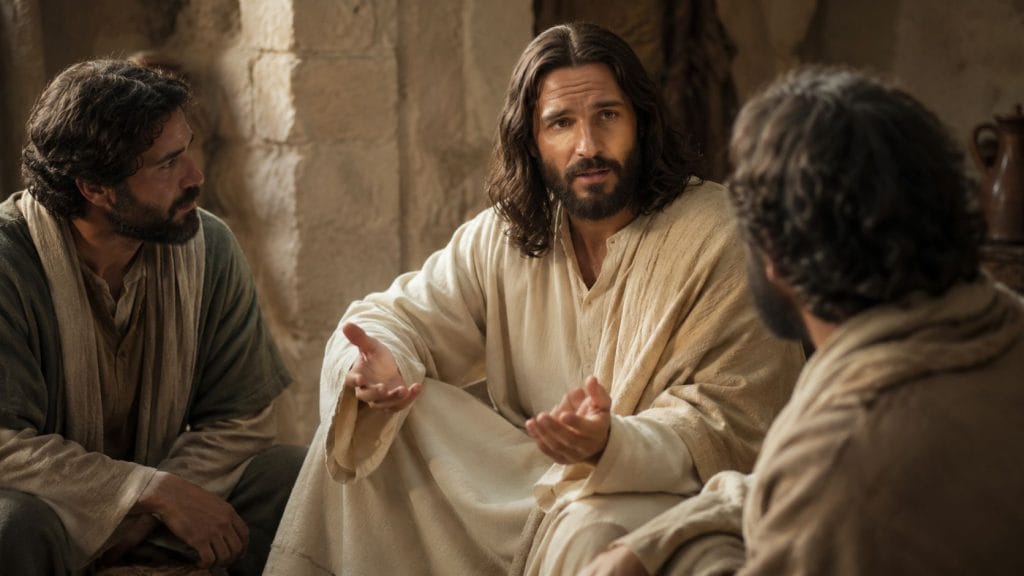
So, starting with one of the Gospels can help us first understand who Jesus is. He reveals the Father to us:
“The one who has seen me has seen the Father.”
—John 14:9, CSB
Once we begin to know and trust Jesus, it becomes easier to see how the Old Testament prepares for Him and how both Testaments connect. The Old prepares for the New, while the New helps us understand the Old more fully.
Start with one Gospel: Matthew, Mark, Luke, or John, rather than trying to read everything at once.
2. Begin With Prayer
Start with prayer before you begin this simple Bible study method. Actually, this is a good habit to have with many things you do.
For instance, I pray before writing a blog post for Blessed Compass or when I need to make a difficult choice. I want God to be fully involved in my life.
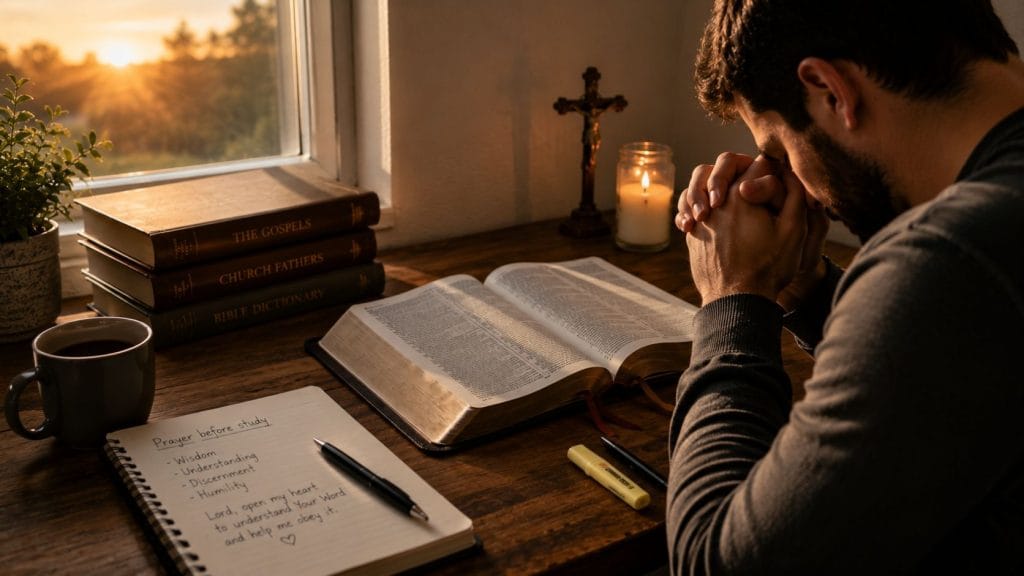
I remember the story in Nehemiah when the Jews were rebuilding the walls of Jerusalem. When their enemies threatened them, they prayed to God, stationed guards, and continued their work.
So, you can begin by asking God:
“Please help me understand Your Word. Give me wisdom, knowledge, discernment, and humility through Your Word.”
Whatever is in your heart, honestly pray it to God.
However, prayer does not remove the need for careful interpretation. The Holy Spirit helps us as we study Scripture, but we still need to read the passage in context, ask questions, and learn from the Church.
That does not mean every difficult passage will suddenly make sense. But prayer reminds us that Bible study is not only about gathering information. We are trying to hear, understand, and obey God.
3. Read the Passage Slowly More Than Once
Read the passage before opening commentaries or study notes. Look for repeated words, contrasts, commands, promises, and changes in the argument. Sometimes, you may also need to learn about the culture and customs of that time.
People back then lived in a very different world. Certain words may not immediately mean what we assume they mean today.
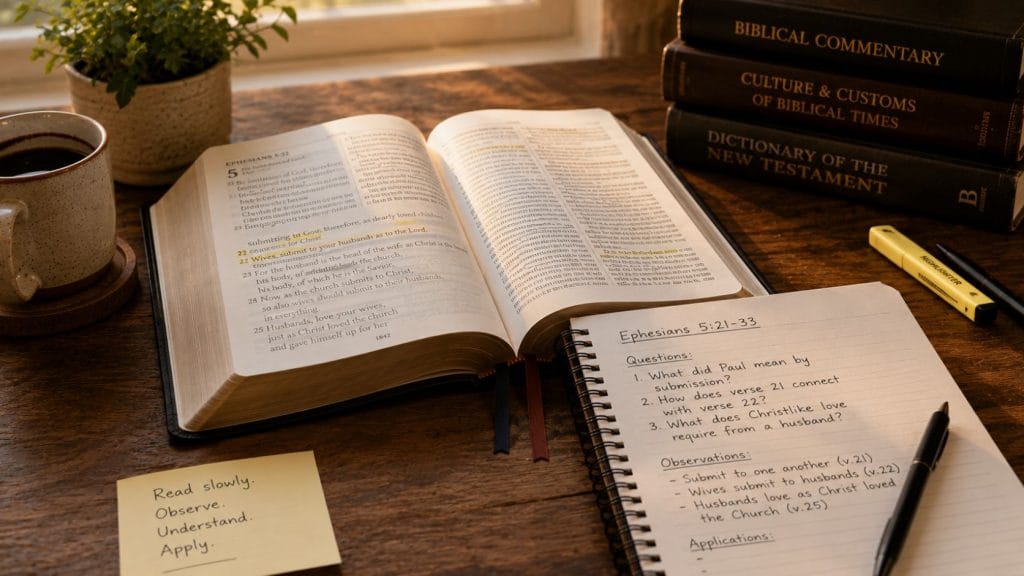
For example:
“Wives, submit to your husbands as to the Lord.”
—Ephesians 5:22, CSB
The word “submit” is controversial nowadays. But before reaching a conclusion, we should read the whole passage.
Verse 21 speaks about submitting to one another in the fear of Christ. Paul also commands husbands to love their wives as Christ loved the Church and gave Himself for her.
I suggest keeping a notebook and writing down questions such as:
What did Paul mean by submission?
How does verse 21 connect with verse 22?
What does Christlike love require from a husband?
Do not rush through difficult passages. These questions often help us understand Scripture more clearly.
4. Observe What the Passage Actually Says
After reading a passage, ask a few basic questions. I’ll use Ephesians 5:22 again for this example. You can also write these questions down for later.

1. Who Is Speaking or Writing?
Paul is writing to the Christians in Ephesus.
Ephesus was a major Roman city and port in Asia Minor, located in what is now western Turkey.
2. Who Is Being Addressed?
Paul is addressing the Christian community. In this particular section, he gives instructions to wives and husbands. The discussion continues afterward with children, parents, servants, and masters.
3. What Argument Is Being Made?
Paul tells wives to submit to their husbands. He then commands husbands to love their wives as Christ loved the Church and gave Himself for her.
At the end of the passage, he tells husbands to love their wives and wives to respect their husbands. So, we should not read only verse 22 and ignore everything Paul says afterward.
4. What Does the Passage Reveal About God and Humanity?
The passage connects Christian marriage with the relationship between Christ and His Church.
A husband is not given permission to dominate his wife. Instead, he is commanded to love her sacrificially, following the example of Christ.
The passage also appears within Paul’s wider instruction for Christians to submit to one another out of reverence for Christ.
When we observe a passage this way, we begin to notice details we might miss during a quick reading. It may take time and a few minutes of research, but that is part of studying the Bible.
5. Check Your Interpretation
After reaching a conclusion, compare it with other passages of Scripture.
Our interpretation of one verse should not contradict the wider message of the Bible. It also helps to consult reliable commentaries, official Church teaching, or a trusted priest or pastor. Scripture should be read with attention to the whole Bible and the historic faith of the Church.
Sometimes, you can also find good teachers online. I personally enjoy learning from Sam Shamoun, Father Mike Schmitz, and Derek Prince.
However, whoever you decide to listen to, make sure they are reputable. Do not only listen to several people and assume something must be true because they all make the same claim. Several people can repeat the same mistake.
Instead, ask:
- Does their explanation fit the passage?
- Are they reading it in context?
- Does it agree with the rest of Scripture?
- Does it agree with historic Christian teaching?
- Are they giving evidence, or only their opinion?
The goal is not to find someone who agrees with us.
The Bible can sometimes be a tough pill to swallow because some teachings go against our current perspective. But that is part of studying it honestly. We should allow God’s Word to correct us instead of forcing it to agree with what we already believe.
6. Apply the Truth and Respond in Prayer
We want to learn so we can apply God’s Word to our lives.
I do not agree with learning only to store information in our heads so that one day we can sound wise before others.
God’s Word is meant to change us. But first, we need a sound interpretation. Ask what should be believed, confessed, obeyed, trusted, or changed.

For example, with Ephesians 5:22, a married Christian should consider how the whole passage applies to marriage.
Wives are called to submit to and respect their husbands, while husbands must love their wives sacrificially, as Christ loved the Church and gave Himself for her.
If we are single, the passage can still help prepare us for marriage. We can ask whether we are becoming the kind of person who knows how to love, sacrifice, remain faithful, and respect another person.
Lastly, turn the passage into prayer.
In my situation, I may pray:
“God, I know that right now I am single. Prepare my heart to love and respect the wife You are preparing for me. Help me become the husband You want me to be.”
Prayer helps Bible reading become more than gathering information. It becomes part of our conversation and relationship with God.
7. A Simple 20-Minute Bible Study Routine
I suggest starting with a short Bible study. Later, once you feel more comfortable, you can increase the time.
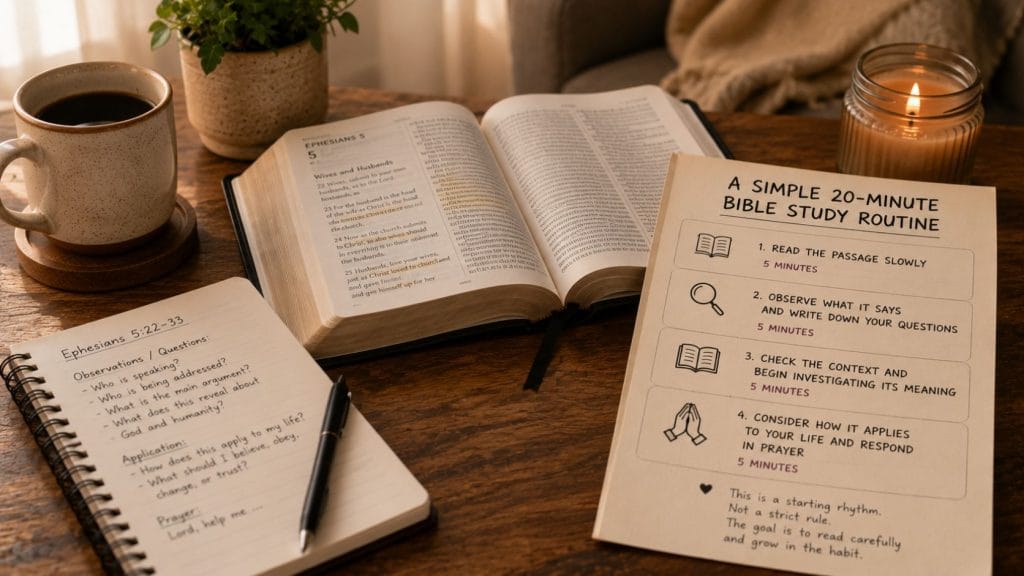
You can also study for 20 minutes, take a short break, and then continue for another 20 minutes. Here is a simple routine you can follow:
- Five minutes: Read the passage slowly.
- Five minutes: Observe what it says and write down your questions.
- Five minutes: Check the context and begin investigating its meaning.
- Five minutes: Consider how it applies to your life and respond in prayer.
This is only a starting rhythm and not a strict rule. Some passages may be easy to understand, while others may require more time, research, and prayer.
The important thing is not completing every step perfectly within five minutes. It is developing the habit of reading carefully instead of rushing through the Bible.
Last Thoughts
Now you have a structured way to study the Bible.
You do not need to understand everything in one day. Start with a short passage, read it slowly, ask questions, check the context, and pray about what you learned. Over time, the Bible will become easier to understand, and you may even begin enjoying books that once felt difficult.
Well, I still find Numbers and Deuteronomy boring. I guess some things never change.
What part of Bible study do you struggle with most? Is there a book or passage you find confusing? Or do you have trouble staying consistent?
Leave your question in the comments, and I’ll try to help.
1. What Should I Do When I Do Not Understand a Bible Passage?
Do not force yourself to reach an immediate answer. Write the question in your notebook, read the surrounding verses again, and check a reliable study Bible or commentary. You can also ask a trusted priest, pastor, teacher, or mature Christian.
Sometimes, you may still not fully understand the passage, and that is okay. Our understanding of Scripture grows over years, not during one Bible study session. Leave the question there and return to it later.
2. When Should You Use Bible Study Tools?
Try to examine the passage yourself before opening study notes or commentaries. Read it slowly, notice what it says, and write down your questions.
Afterward, cross-references, Bible dictionaries, study Bible notes, commentaries, and BibleProject overviews can help you understand the context or notice something you missed.
These tools should deepen or test your understanding, not replace reading the passage yourself. Also remember that they are created by people, so they may sometimes be wrong or reflect a particular Christian tradition.
3. Can I Study the Bible by Myself?
Yes and no. It is a good habit to study the Bible yourself. Unfortunately, it is easy to depend only on what we hear at church without examining Scripture during the rest of the week.
Personal study will quickly expand your understanding, but it should not become separated from the Church. Paul describes the Church as “the pillar and foundation of the truth” in 1 Timothy 3:15.
Our interpretation can easily be shaped by our culture, experiences, and personal opinions, and we may not notice when we are wrong.
So, study Scripture yourself, but also remain willing to learn from the historic teaching of the Church and from trustworthy Christian teachers.
