
How to Read the Bible in Context Without Misinterpreting It
Have you ever read a Bible verse and thought, “What on earth does that mean?”
I always say the Bible is not an easy book to understand. Of course, some translations are simpler than others. I was never able to get along with the King James Version (KJV). I know many people swear by it, but that archaic English just doesn’t work well for me.
Even with a modern translation, though, you can read a verse like:
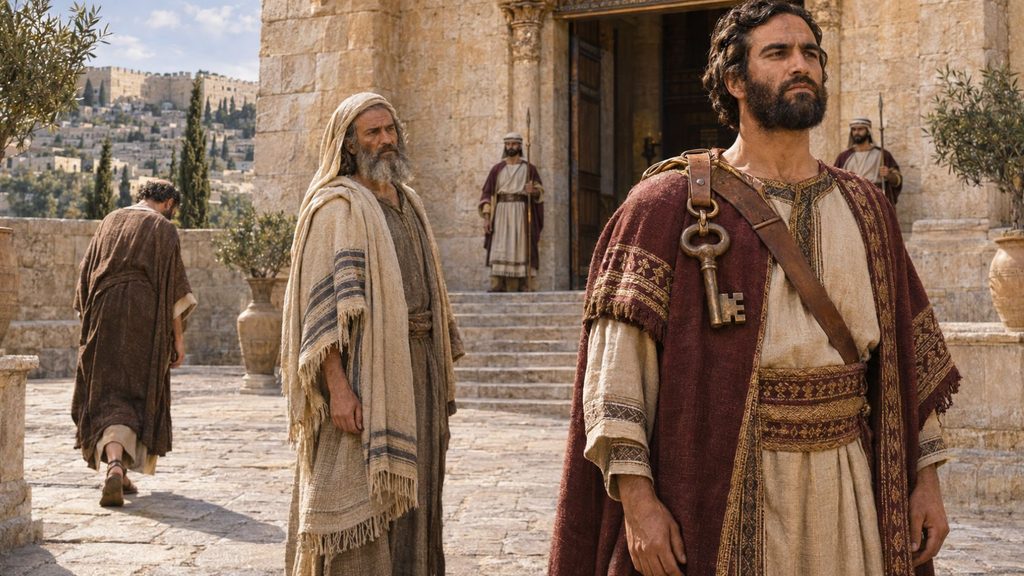
“I will place the key of the house of David on his shoulder.”
And suddenly you have several questions. What is the house of David? Who receives the key? Why is a key placed on someone’s shoulder?
We also have to remember that the people in the Bible lived in a very different world. They didn’t have mobiles, PCs, ChatGPT, or anything resembling modern life. Their culture, history, customs, and way of speaking were different from ours.
That is why learning how to read the Bible in context matters so much. Without context, it is easy to make Scripture say something the biblical author never intended.
In this guide, we’ll look at how to read the surrounding verses, understand the author’s purpose, consider the historical setting and genre, compare Scripture with Scripture, and use commentaries without letting them do all the thinking for us.
Key Takeaways
- Read what comes before and after a verse. Often, the easiest way to understand one Bible verse is simply to read ten more.
- Consider the author, original audience, and historical setting. The Bible was written for us, but its authors first addressed real people living in cultures very different from ours.
- Pay attention to the type of writing. Poetry, history, wisdom, prophecy, letters, and apocalyptic writing do not communicate in exactly the same way.
- Compare your interpretation with the rest of Scripture. Write down what you think the passage means, then test your understanding against other passages and reliable sources instead of assuming your first interpretation must be correct.
Start by Reading What Comes Before and After
Before you go ahead and research Greek or open a commentary, get into the habit of reading what comes before and after. So, let’s go back to our previous passage:
15 The Lord God of Armies said, “Go to Shebna, that steward who is in charge of the palace, and say to him:
19 I will remove you from your office; you will be ousted from your position.
20 “On that day I will call for my servant, Eliakim son of Hilkiah. 21 I will clothe him with your robe and tie your sash around him. I will hand your authority over to him, and he will be like a father to the inhabitants of Jerusalem and to the house of Judah.
22 I will place the key of the house of David on his shoulder; what he opens, no one can close; what he closes, no one can open. 23 I will drive him, like a peg, into a firm place. He will be a throne of honor for his father’s family.
I skipped a few verses here because the whole passage is quite long. In verses 16–18, God confronts Shebna and tells him about the judgment that will come upon him.
—Isaiah 22:15, 19–23 (CSB)
Now, let’s ask some questions:
1. What Subject Is Already Being Discussed?
Shebna holds an important role in the royal household. However, God condemns him and says that he’s going to be removed from his position. After him, Eliakim will take his place.
2. Who Is Speaking?
The Lord is speaking through the prophet Isaiah. Isaiah is the one delivering God’s message.