
Theology vs. Doctrine: What Is the Difference?
Are theology and doctrine actually different, or are they just two complicated words Christians use for the same thing?
Honestly, both of these words confused me when I first started. In fact, I thought they meant the same thing. I’d talk with people from church, and one moment they’d say doctrine and, a few seconds later, theology.
I did not even pay much attention. I guess many people use both words without thinking about the difference. Well, I was one of them. In my mind, the two words just lived together like college roommates.
But guess what? They work together, but they do not mean exactly the same thing.
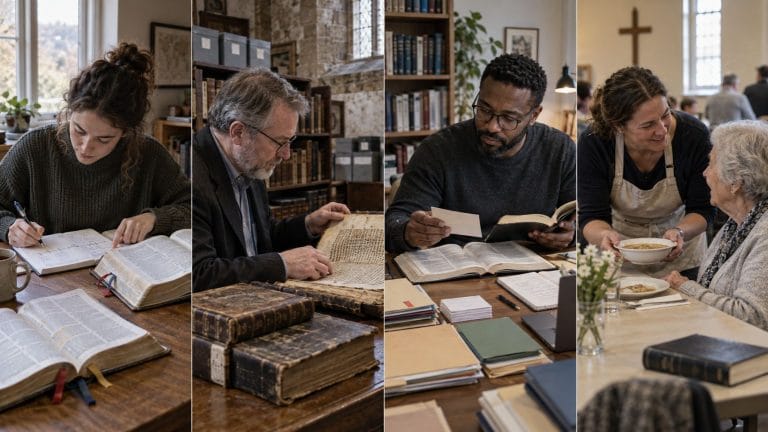
Basically, theology is our study of what God has revealed and our attempt to understand it. Doctrine is the teaching we arrive at and believe from that study. Theology asks questions like, “Who is Jesus?” Doctrine gives us a clear answer: “Jesus is fully God and fully man.”
Now, the separation is not always that simple. Theology and doctrine overlap a lot, which is why people sometimes use both words as if they mean the same thing.
In this guide, we’ll look at theology vs doctrine, see how the difference works through the example of Jesus, explore why Christians sometimes reach different conclusions, and understand why we need both.
Key Takeaways
- Theology studies God’s revelation. It asks questions, examines Scripture, and helps us understand what God has revealed about Himself.
- Doctrine puts those conclusions into clear words. “Jesus is fully God and fully human” is one example of a Christian doctrine.
- Christians sometimes reach different doctrines because they interpret Scripture through different theological traditions, assumptions, and views of Church authority.
- We need both theology and doctrine. Doctrine helps us know what we believe, while theology helps us understand why we believe it and explain it when someone asks.
Watch the Difference Happen With Jesus
Let’s look at a practical example. At least, I have an easier time learning things when I can get my hands dirty and see how something works.
Our main question is:
Who Is Jesus?
A very good question. It is also one we should know well, especially if one day you meet someone like I used to be—someone who thought Jesus was only a cool-looking guy with long hair.
Now, let’s do some theology. We open our Bible and start reading passages about Jesus.
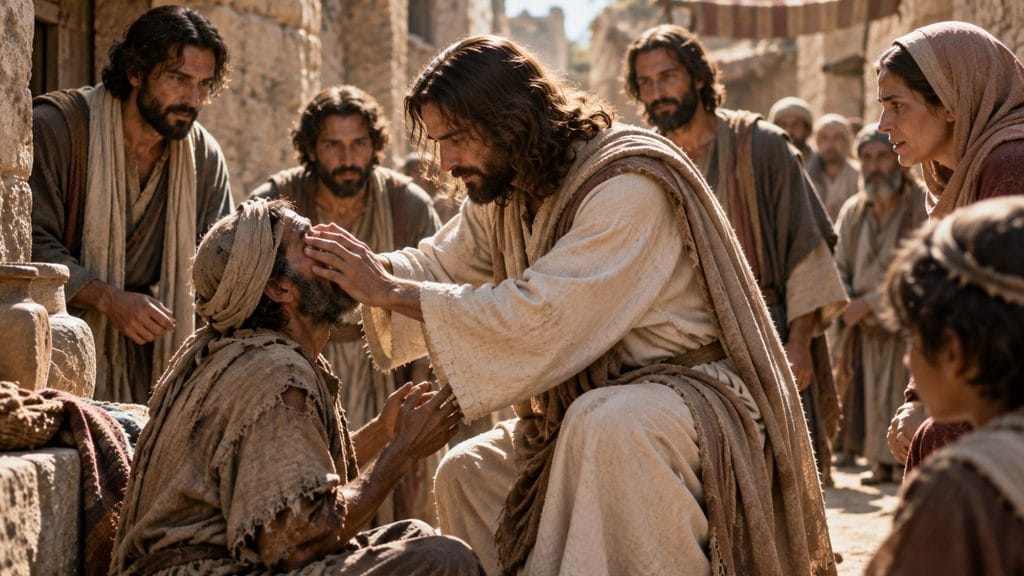
John 1:1, 14 (CSB)
“In the beginning was the Word, and the Word was with God, and the Word was God. … The Word became flesh and dwelt among us.”
John tells us that the Word was with God and that the Word was God. Everything that was created came through Him, and then the Word became flesh.
The Word is not simply God’s creative power. He is the eternal Son of God who became human and lived among us.
Then, in Philippians 2:5–11, the Apostle Paul tells us that Christ existed in the form of God, but He humbled Himself by becoming a servant and living as a human being.
Paul does not mean that Jesus emptied Himself of His divinity. No, Jesus did not stop being God. He emptied Himself by becoming a servant and remaining obedient even to death on the cross.
On top of this, we have passages showing us that Jesus experienced a real human life:
- Jesus grew in wisdom and stature (Luke 2:52).
- Jesus became hungry (Matthew 4:2).
- Jesus became thirsty (John 19:28).
In His human nature, Jesus truly grew, learned, and experienced human limitations. Of course, this does not mean He stopped being God. It means that He was not God pretending to be human.
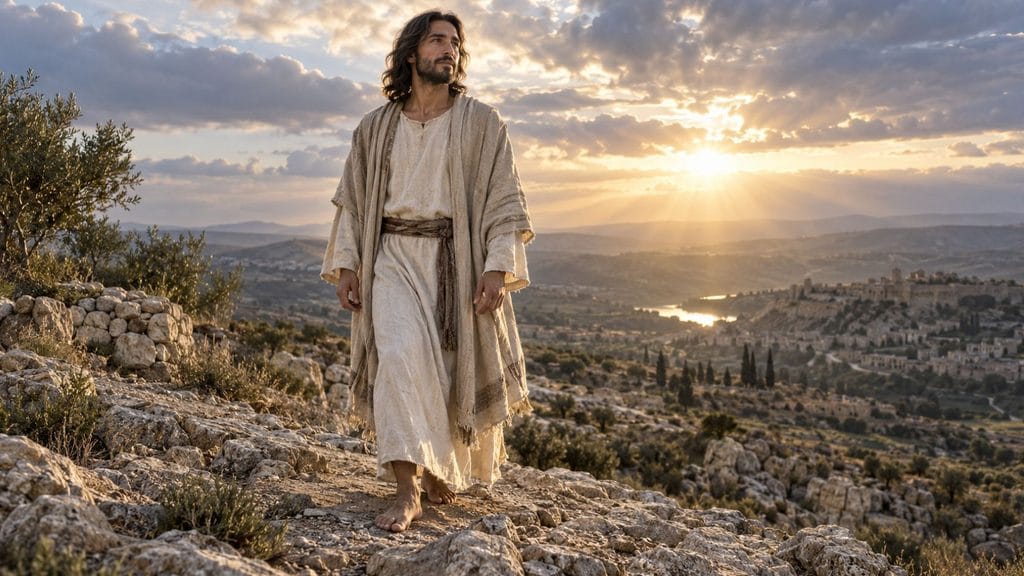
Now we are doing theology. We are not just reading one verse and calling it a day. We are connecting several passages and asking:
- Who is Jesus?
- What do these passages mean?
- How do His divine and human natures relate?
- Why does His identity matter for our salvation?
After putting all these passages together, the Church came to this clear doctrine:
Jesus Christ is fully God and fully man.
So, theology is the part where we ask questions, study God’s revelation, and connect the passages. Doctrine gives us the answer in a clear teaching that we can believe, explain, and pass on.
Why Christians Sometimes Reach Different Doctrinal Conclusions
I started in an Evangelical Protestant Baptist church. After being there for a few months, I began hearing people talk about Arminianism vs. Calvinism. It was quite a hot topic.
Some people would argue with each other, but usually nobody changed their point of view. Instead, they were just angrier than when they started.
Later, I realized that Arminian theology teaches that God’s grace enables people to respond freely to Him, but they can still resist that grace.
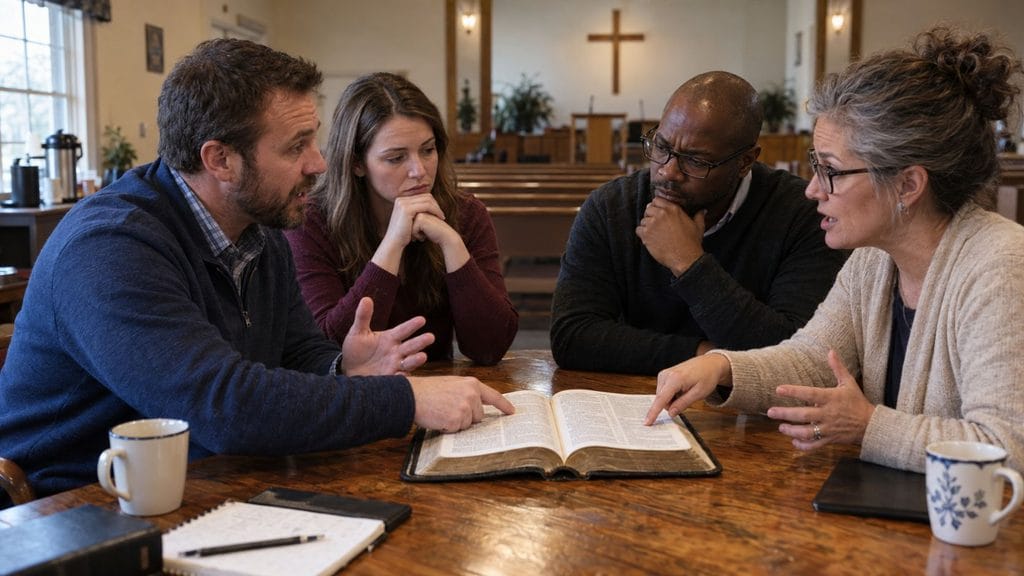
Meanwhile, Calvinist theology teaches that God unconditionally chooses those He will save and effectively brings them to faith.
Of course, I am simplifying both positions here. They both teach that salvation depends on God’s grace, but they understand the relationship between God’s grace, His sovereignty, and human freedom differently.
But here is the question:
How do Christians arrive at such different doctrines?
Even weirder, the debate I witnessed happened inside the same church.
Well, Christians may read the same Bible and still interpret certain passages differently. From my understanding, this comes down to several factors:
- Scripture and its interpretation: Two people may read the same verses but understand their meaning differently.
- Theological framework: What someone already believes about God, salvation, or the Church can influence how they interpret another passage.
- Sacred Tradition: Catholic and Orthodox Christians believe the apostolic faith was passed down through both Sacred Scripture and Sacred Tradition.
- Church authority: Different Christian traditions disagree about who has the authority to interpret Scripture and settle serious doctrinal questions.
Protestants rely on sola Scriptura, or Scripture alone. This does not mean they reject every tradition, creed, council, or Christian teacher. It means they consider Scripture the only infallible and final authority for Christian faith.
Catholics, on the other hand, believe that Sacred Scripture and Sacred Tradition belong together as one deposit of faith.
The Magisterium: the Pope and the bishops in communion with him have the responsibility of faithfully interpreting and protecting that deposit.
Different Ways of Understanding the Same Christian Faith
I am not trying to put down any Christian tradition. But this helps us understand why churches sometimes reach very different doctrinal conclusions about subjects like:
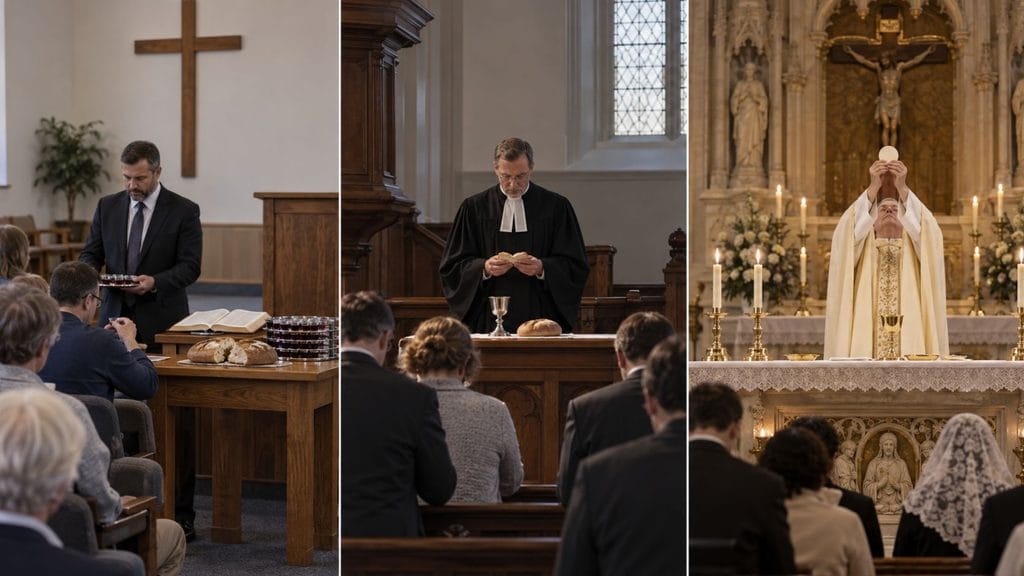
- Baptism: Should infants be baptized, or should baptism only happen after someone can personally declare faith in Christ?
- Communion or the Eucharist: Is it mainly a symbolic memorial of the Last Supper? Is Christ spiritually present? Or do the bread and wine truly become His Body and Blood?
- Predestination and free will: How do God’s sovereignty and grace work together with human freedom and responsibility?
- Church authority: Does Christ give the Church a visible teaching authority? How much authority should belong to bishops, pastors, councils, or individual congregations?
As you can imagine, things get complicated pretty fast.
Even with these differences, historic Catholic, Orthodox, and most Protestant traditions still share several central doctrines of the Christian faith, such as:
- The Holy Trinity: There is one God who eternally exists as three distinct Persons: Father, Son, and Holy Spirit.
- Jesus is our Savior: Jesus is the way, the truth, and the life. Through Him, we can be forgiven and reconciled with the Father.
- Jesus is fully God and fully human: He is the eternal Son of God who became truly human without ever ceasing to be God.
So, different theological traditions may reach different conclusions about certain doctrines while still agreeing on many of the central beliefs of Christianity.
And this is exactly why theology matters. The way we study, interpret, and understand God’s revelation affects the doctrines we eventually formulate and teach.
Why Christians Need Both Theology and Doctrine
Both go hand in hand, as you can see. We study theology so we can better understand God’s revelation. Then doctrines clearly express what we believe God has revealed.
If we never study theology more deeply, we may know what Christians believe without understanding why they believe it.
We become that type of person where Johnny asks Bill, “Who is Jesus?” and Bill replies, “Well, Jesus is our Savior.” Then Johnny asks why, and Bill says, “Well, that’s what my church teaches.”
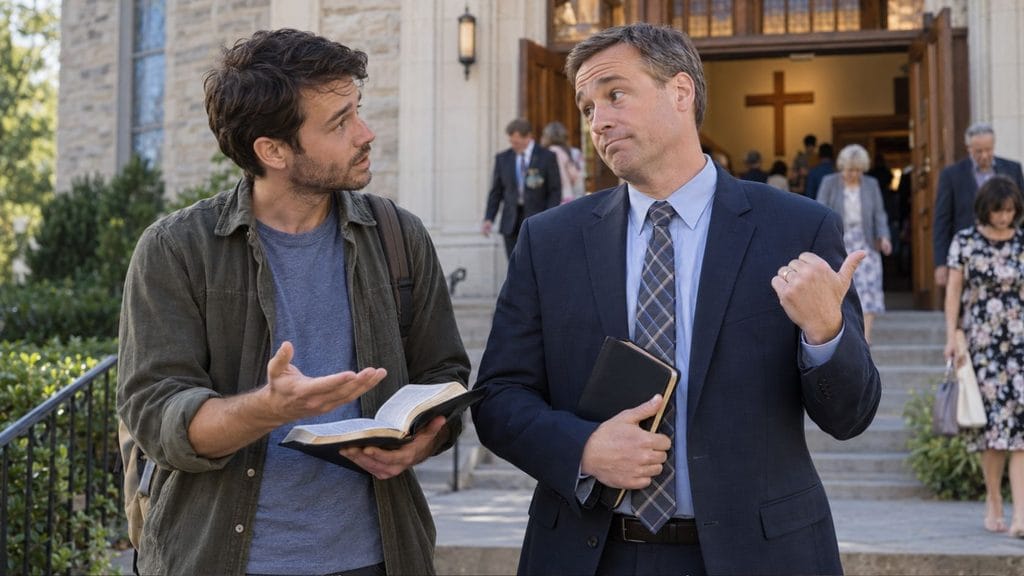
I do not think that will convince anyone. Certainly, Bill will not win an award for his efforts. We must do better than that.
- Studying theology and learning doctrine can bring us closer to God. When you study the doctrines surrounding Jesus being fully God and fully human, you also understand more clearly who He is and what He did for us.
- We do not fall for false claims so easily. Some religious groups teach doctrines that contradict historic Christianity. For example, Jehovah’s Witnesses reject the Holy Trinity. They call Jesus the Son of God but deny that He is Almighty God.
- We also become better at sharing our Christian faith. I believe Christians are called to share the gospel with others. But if we want to help people who may have never heard about Christ, we also need to understand our faith.
We do not need to earn a theology degree or spend years in college. But as Christians, we should at least understand our central doctrines well enough to explain what we believe and why we believe it.
Last Thoughts: What About You?
Before reading this guide, did you think theology and doctrine were basically the same thing? Is there a doctrine you believe but still struggle to explain why? Honestly, I think we all have a few of those.
Which Christian doctrine would you like to understand more deeply? Leave your answer in the comment section below. I would love to hear what you are currently studying and it might even become the subject of a future guide.