
What Does It Mean That God Is Spirit? John 4:24
If God is spirit, what does it actually mean to be in His presence?
Before coming to Christ, I had a background in yoga, meditation, and New Spirituality. Because of that, one thing I initially struggled with was spending time silently in prayer.
It made me uncomfortable because it looked very similar to mindfulness meditation.
If you don’t know, mindfulness often involves staying silent, focusing on your breathing, and trying not to get carried away by your thoughts.
Honestly, I was afraid I was doing something wrong. I did not even like Christians using the word meditation. It brought back memories of my past practices.
Then, while reading the New Testament, I came across:
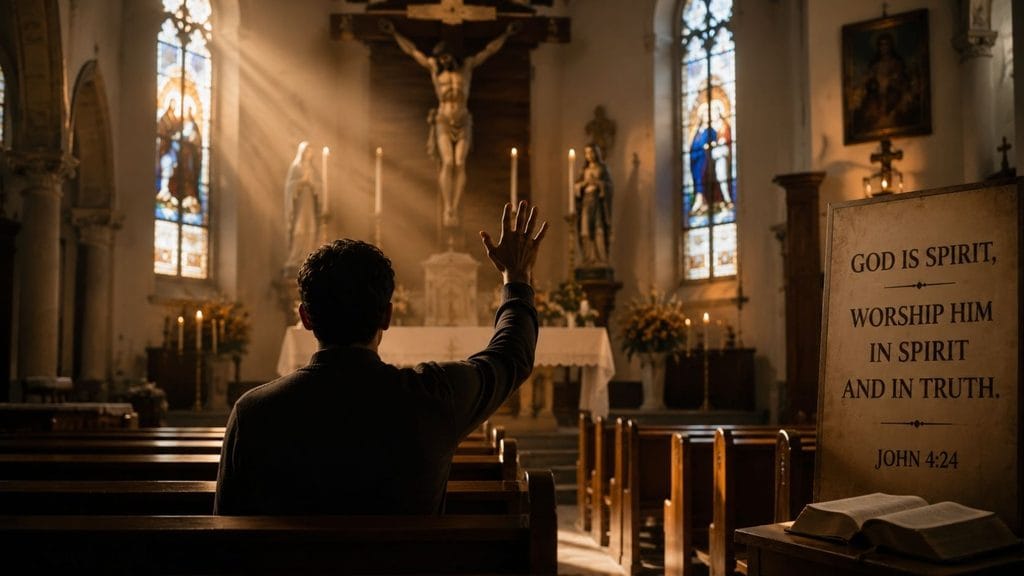
“God is spirit, and those who worship him must worship in Spirit and in truth.”
—John 4:24, CSB
I started wondering: What does it mean that God is spirit?
I slowly realized that God is not a physical being like us. He is not confined to one place, and His presence is not limited by what I can physically see.
With time, I worried less.
Someone watching me pray silently might not notice much difference between that and mindfulness meditation.
But God knew the difference.
He knew that whenever I sat there praying, I was not trying to empty my mind or turn inward. I wanted to spend time with Him.
In this guide, we’ll look at what Jesus meant when He said God is spirit, what that reveals about God’s nature and presence, and why it changes the way we think about worship and prayer.
Key Takeaways:
- God is spirit, not a physical being like us. He is not made of matter, confined to one place, or limited by the physical world He created.
- God being invisible does not mean He is distant. We may not see Him with our eyes, but His presence is not restricted the way ours is.
- Jesus shows us who the invisible God is. The eternal Son truly became human without God’s divine nature becoming material.
- True worship is not about trapping God inside one location. We worship the God who has revealed Himself through Christ, in Spirit and in truth, wherever we are.
Jesus Said This During an Argument About Where to Worship
Should we worship God in our local church or at home, or do we need to go somewhere special to do that?
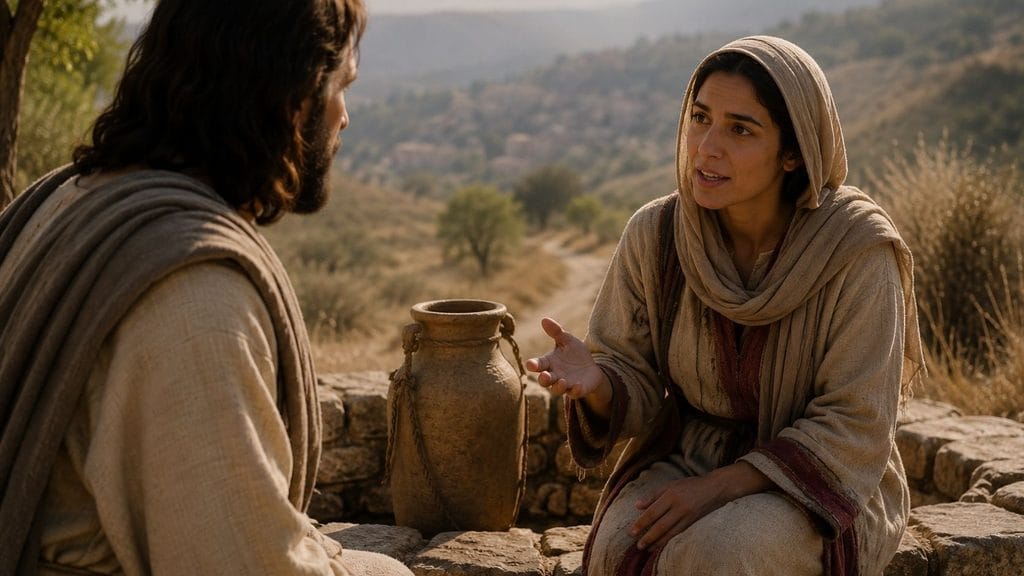
Well, that was somewhat similar to the concern of the Samaritan woman:
“Sir,” the woman replied, “I see that you are a prophet. Our ancestors worshiped on this mountain, but you Jews say that the place to worship is in Jerusalem.”
—John 4:19–20, CSB
Of course, when I started following Christ, I was not wondering whether I needed to go to Mount Gerizim or Jerusalem.
But I had a smaller version of the same question.
If I sat quietly in my room to spend time with God, would He know I was there for Him? Did I need to be in some special place to approach Him?
The Samaritan woman was asking about the proper place of worship. My question was more about private prayer. They are not exactly the same thing, but both raise a similar question:
Is God tied to a particular place?
Then Jesus tells her:
“Believe me, woman, an hour is coming when you will worship the Father neither on this mountain nor in Jerusalem.”
—John 4:21, CSB
Basically, Jesus is saying that His ministry is already changing the landscape of worship.
The Samaritans worshiped on Mount Gerizim, while Jewish worship was centered on the temple in Jerusalem.
But Jesus announces that a time is coming when worship of the Father will no longer be tied to either geographical location.
Through Christ, worship opens beyond those borders to people throughout the world. God is not contained on one mountain, inside one temple, or within one nation.
And that helps us understand why Jesus shortly afterward says:
“God is spirit.”
“God Is Spirit” Does Not Mean God Is a Ghost
It is confusing for us to form an image of a spirit in our minds. Honestly, I do not think we can completely imagine it.
We naturally think in physical terms.
When we think about the Holy Spirit, we may picture a white dove because Scripture describes Him descending like a dove. When we think about God, we often picture Jesus because the Son truly became human and could be seen.
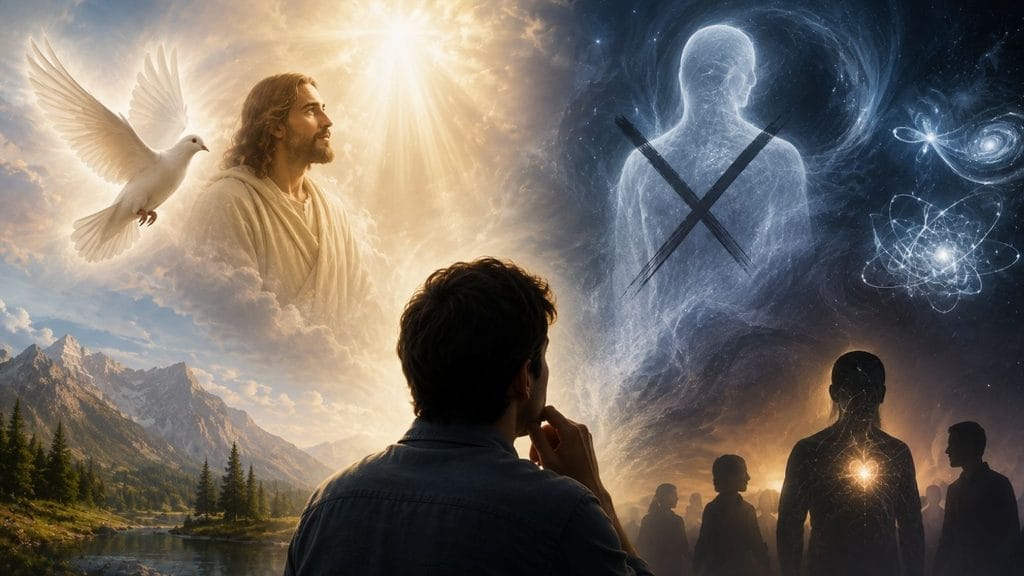
So, sometimes we need to understand what “God is spirit” means based on what Scripture tells us:
- God is not made of physical matter: Matter occupies space. God, by His divine nature, does not have a physical body like ours and is not confined by space in the way we are.
- God does not possess a body like ours by His divine nature: Of course, the Son truly took on a human body in Jesus. We will talk more about that later.
- He is invisible: We cannot see God’s divine nature with our physical eyes in the same way we see another human being or object. However, we can still look around at everything He created and see signs of His power, wisdom, and existence.
- He is not some vague energy, force, or ghost floating somewhere in the universe: Nowadays, especially in New Spirituality, people sometimes talk about “energy” almost as though energy itself were God. But God is the Creator of energy and all existence. He is all-knowing and all-powerful.
- God is living and personal: God is the source and author of all life. He did not create humanity merely to observe us from a distance. From the beginning, He created us for communion with Him.
So, when Jesus says “God is spirit,” we should not imagine God as some enormous ghost floating through the universe like Casper.
God is far greater than the physical categories our minds naturally try to put Him into.
God Cannot Be Put Inside a Box or a Place
Now let’s go back to the question at hand.
Since God is spirit, we know He cannot be contained. For this reason, we cannot close God inside a box or place and tell Him to stay there.
King Solomon understood this when he finished building the temple:
“But will God indeed live on earth? Even heaven, the highest heaven, cannot contain you, much less this temple I have built.”
—1 Kings 8:27, CSB
Even Solomon knew that God was far greater than the heavens and the temple he had built.
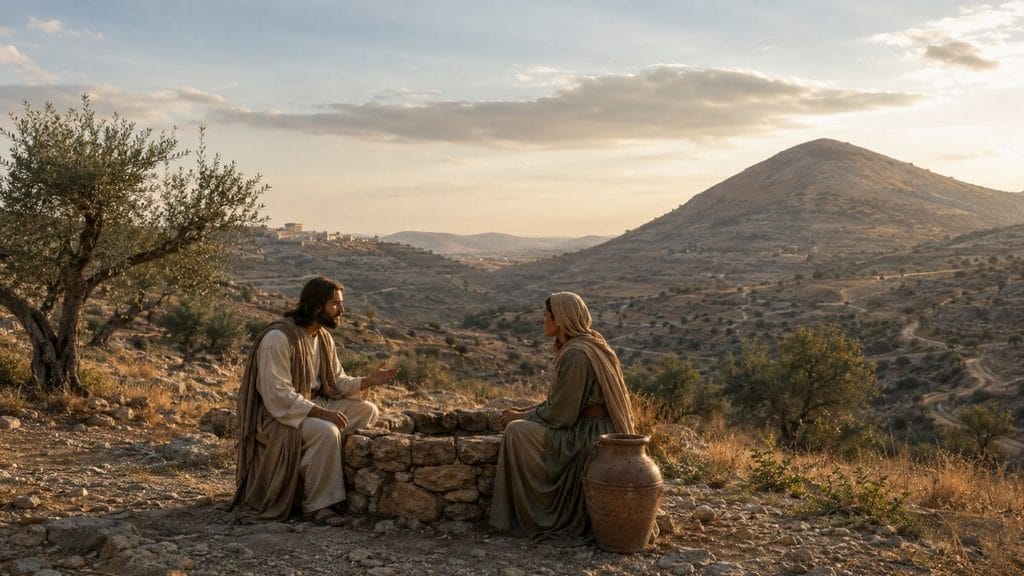
So:
- God is not contained by a mountain. He is far greater than the mountain.
- He is not contained by a temple. He is far greater than the temple.
- He is not confined to one city or nation. He is far greater than a city or nation.
This helps us understand Jesus’ conversation with the Samaritan woman.
The question was not ultimately whether God belonged to Mount Gerizim or Jerusalem.
God cannot be contained by either.
A church can be a sacred place where Christians gather to worship God. But the building itself does not contain Him.
Then Why Does the Bible Talk About God’s Hands, Eyes, and Face?
But Jordan, you said God is spirit. Then why does Peter describe God with ears, a face, and eyes as though He were a person?
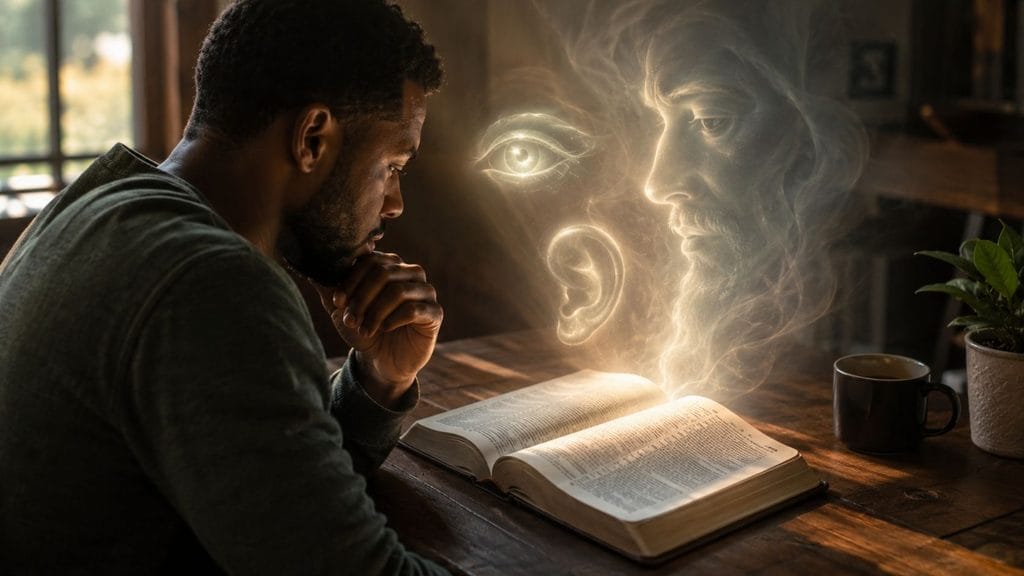
“Because the eyes of the Lord are on the righteous and his ears are open to their prayer. But the face of the Lord is against those who do what is evil.”
—1 Peter 3:12, CSB
Well, once again, we have a hard time understanding a being who is spirit.
For this reason, Scripture sometimes uses human characteristics to help us understand something true about God. This is often called anthropomorphic language.
When we read this passage, we can easily understand that:
- God hears the prayers of the righteous.
- God sees them and watches over them.
- God is against those who do evil.
Using words like eyes, ears, and face helps us understand God’s actions through things we already know.
But that does not mean God literally has physical eyes, ears, or a face by His divine nature.
But Didn’t God Become Human in Jesus?
But then we have an obvious question.
If God is spirit, didn’t God become human in Jesus?
Yes.
Through the power of the Holy Spirit, the eternal Son took on a genuine human nature and was born of the Virgin Mary. Jesus is fully God and fully man.
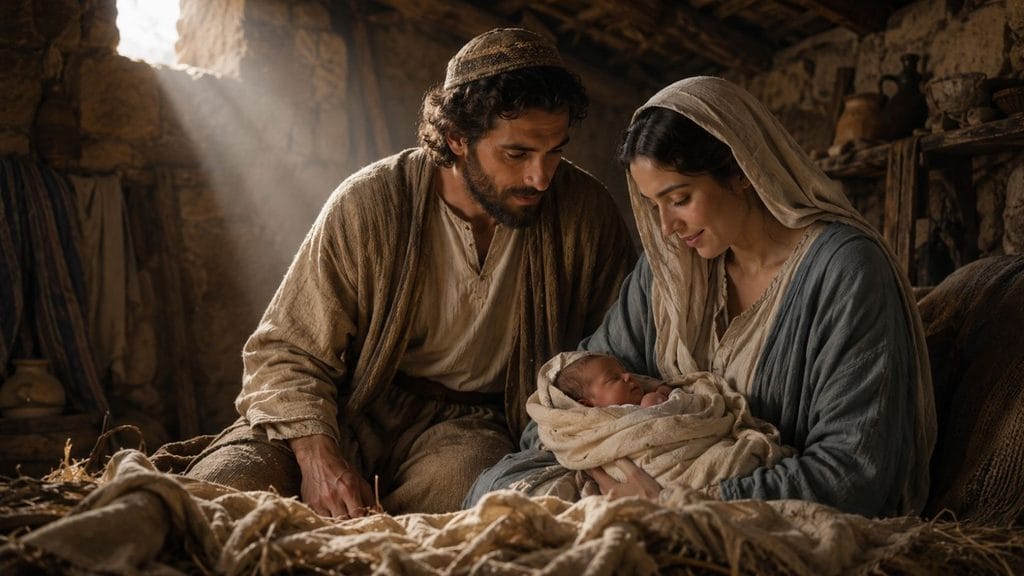
In other words:
- The eternal Son is truly divine: Jesus did not begin to exist when He was born in Bethlehem. The Son existed eternally with the Father before becoming human.
- In the Incarnation, the Son took on a genuine human nature: He truly became human, with a real human body and soul.
- Jesus truly became flesh: As John says, “The Word became flesh and dwelt among us” (John 1:14, CSB).
- The divine nature did not become material: The Son took on humanity without ceasing to be God. His divine nature did not suddenly turn into flesh or matter.
This is where the Trinity can become difficult for our minds.
There is one God in three Persons: Father, Son, and Holy Spirit. Each Person is fully God and shares the same divine nature.
The Holy Spirit is not simply some force God uses to help humanity. He is truly God.
And Jesus is not merely someone who gave us a way back to the Father. Jesus Himself is the way, and through His death and resurrection we are reconciled to God.
So, when we say “God is spirit,” the Incarnation does not contradict that. The eternal Son truly became human without the divine nature becoming material.
So What Does “Worship in Spirit and Truth” Mean?
Jesus says:
“God is spirit, and those who worship him must worship in Spirit and in truth.”
—John 4:24, CSB
So, what does it mean to worship “in Spirit and in truth”?
It does not simply mean becoming emotional during worship.
True worship comes from a heart genuinely turned toward God, but it is also connected to the Holy Spirit and to the truth God has revealed about Himself through Christ.
In other words, we do not invent our own version of God and worship Him however we want. We worship the God who has actually revealed Himself to us.
This also goes beyond simply being in the correct location.
The Samaritan woman was concerned about Mount Gerizim or Jerusalem. Jesus moves the conversation beyond that question. True worship is not about finding one geographical place where God is trapped.
Rituals Can Still Become Empty
Now, this does not mean rituals or physical acts of worship are bad.
As a Catholic, I participate in liturgy and sacraments that developed from the worship of the early Church.
But even something beautiful and ancient can become empty if I simply go through the motions while my heart is far from God.
The same can happen in any church.
Someone can sing Christian songs, listen to a sermon, kneel, pray, or participate in a liturgy while mentally being somewhere completely different.
True worship is not only about what we do outwardly. It is about genuinely turning toward God, through His Spirit, according to the truth He has revealed.
Last Thoughts
Before you go, I want to leave you with a few questions.
When you think about God, do you picture Him in a way that may be too small?
Do you sometimes feel like God is far away because you cannot see or feel Him?
And has understanding that God is spirit changed the way you think about prayer or worship?
I’d genuinely like to hear your thoughts. Leave your answer in the comments below.
1 – God’s Invisibility Does Not Mean He Is Far Away
Just because we cannot see God does not mean He is far from us. God is spirit, so He is not limited by a physical body or confined to one place like we are. Psalm 139 shows that nowhere can we go where God is absent.
So, even when we do not feel His presence, that does not mean He has somehow moved away. The God we cannot see can still be closer to us than someone standing beside us.
2 – Does the Way I Picture God Make Him Too Small?
Yes, it can. We naturally think in physical terms, so sometimes we imagine God almost like a very powerful human being somewhere “up there.” But God is far greater than anything we can picture in our minds.
We should not limit Him to our imagination, a church building, or even to how strongly we happen to feel His presence. Instead, we should let Scripture and Jesus Christ shape the way we understand who God truly is.
3 – If God Is Invisible, Will We Ever See Him?
Scripture gives Christians hope that one day we will see God in a way we do not experience now. 1 John 3:2 says that when Christ appears, “we will be like him because we will see him as he is,” and Revelation 22:4 says that God’s servants “will see his face.”
Honestly, I do not think we can fully imagine what that will be like. But God being invisible does not mean we will remain forever distant from Him. Our final hope is communion with Him far deeper than anything we experience today.