
Why Is Christian Fellowship Important? A Biblical Guide
Can you go to church every week and still feel alone?
I still remember the first time I went to church.
Before coming to Christ, I was never really a church person. Even after I started following Jesus, I initially walked nearly alone. I had only one Christian friend from Lisbon who was helping me along the way.
Then one day at the gym, a friend invited me to his church. I thought, “Why not!”
The first time I went, I spoke with one of the church leaders, and we later scheduled coffee. But meeting other Christians and actually building relationships took much longer.
More recently, as my faith matured, I found myself connecting more with a traditional church and started attending somewhere new.
And once again, I realized something: Simply showing up is not enough.
You can sit surrounded by Christians every Sunday and still feel mostly alone.
Over the years, I have also had conflicts and disappointments with other Christians. Fellowship is not always easy. But Scripture repeatedly shows us that Christianity was never meant to be lived in isolation.
In this guide, we’ll look at what Christian fellowship actually means, why we need other believers, and what healthy Christian community can look like in real life.
Key Takeaways
- Christian fellowship is more than simply attending church. It means actually sharing the Christian life with other believers through faith, prayer, help, correction, service, and ordinary life.
- We were never meant to walk this road completely alone. Isolation can make us more vulnerable, while mature brothers and sisters can help us see things more clearly and pray with us when life gets heavy.
- Fellowship is not only about what we receive. We are also part of the body of Christ, and God can use our gifts, time, experience, generosity, and presence to strengthen other Christians.
- Real fellowship will not always be comfortable. Christians can disappoint us, personalities can clash, and denominations can disagree. But we can still love one another, keep healthy boundaries, and refuse to turn Christianity into an “us versus them” battle.
What Does Christian Fellowship Actually Mean?
In the New Testament, one Greek word for fellowship or communion is koinonia. It can mean sharing, participation, partnership, or having something in common.
Now, this fellowship is not a normal one. Not exactly the one you have with your local barber or butcher. I’d say not even the one you may have with a regular friend.
Instead, it describes a close bond between brothers and sisters in Christ who share the same faith, hope, and life in Jesus.
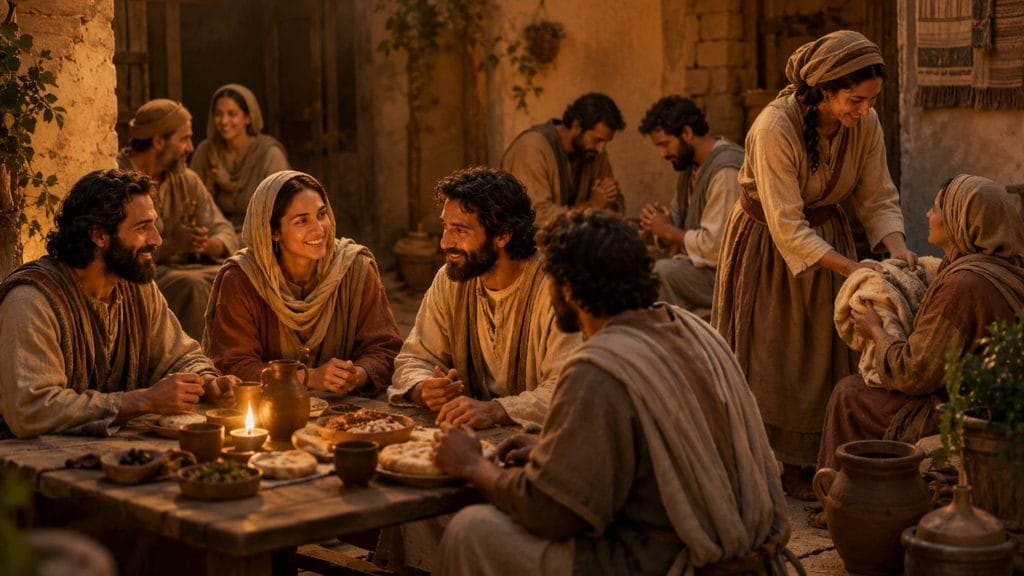
We can see a good example in the book of Acts:
“They devoted themselves to the apostles’ teaching, to the fellowship, to the breaking of bread, and to prayer.”
—Acts 2:42, CSB
The following verses explain that they also met together, helped those who were in need, shared meals, prayed, and praised God.
Well, things have come a long way from those times in the book of Acts. But by reading this passage, we still get the idea:
- We are not supposed to walk alone.
- We should help one another when someone is genuinely in need.
- We share worship, faith, prayer, and hope in God with other brothers and sisters.
- We can even share simple things like meals and time together.
Scripture often calls Christians brothers and sisters, and I think that shows how close this bond is meant to be.
It is not just about enjoying each other’s company.
Christian fellowship means sharing the Christian life together.
Christianity Was Never Designed to Be Lived Alone
This walk is too hard to walk alone.
One thing I’ve seen over the years is how the enemy loves to isolate us. Often, Jesus talks about us as being a flock of sheep, and He is our Good Shepherd.
As you can imagine, a sheep by itself is vulnerable. First, it can sometimes end up on its back (called a “cast” sheep) and struggle to get back up on its own.

Or it can easily be devoured by wolves or other predators. So without a shepherd or other sheep helping, it’s pretty much asking for problems.
“Be sober-minded, be alert. Your adversary the devil is prowling around like a roaring lion, looking for anyone he can devour.”
—1 Peter 5:8, CSB
The same thing happens with a lone Christian.
We often think we can handle everything alone. That’s a common problem. But when it comes to spiritual matters, we need one another.
It’s not like you can punch the devil in the face until he throws in the towel and calls it a day.
And just because you do not see the enemy prowling around you does not mean the enemy is not there. That is one reason Christian fellowship matters so much.
Other Christians Help Us See What We Cannot See Alone
Isolation can become dangerous for several reasons.
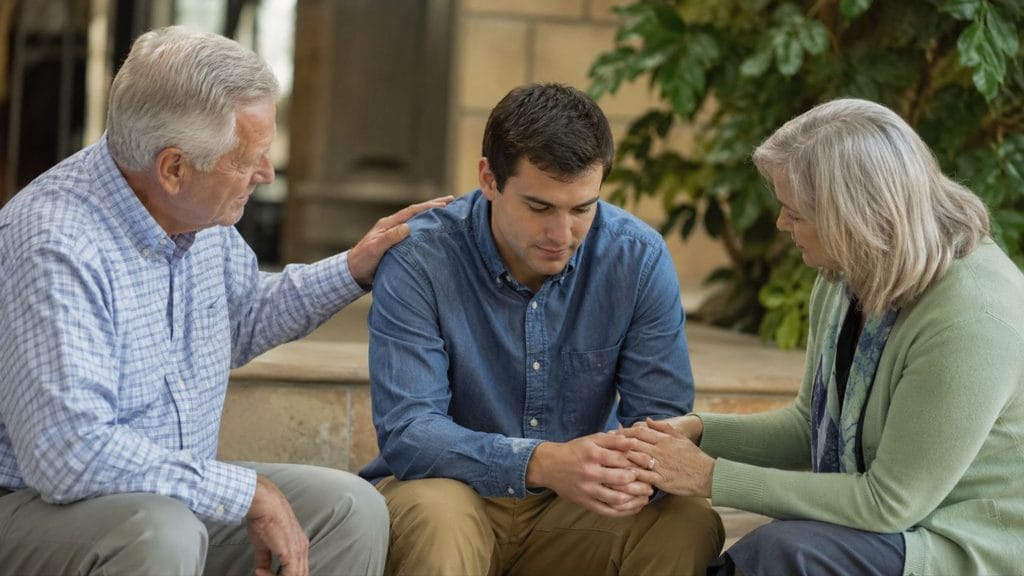
Self-deception becomes easier:
I do not recommend underestimating the enemy. Spiritual deception can be hard to recognize, especially when we are convinced our way of thinking is correct. Even in fellowship with brothers and sisters, we can still be deceived.
But it can get worse when we are completely alone and have nobody to help us see things more clearly.
Mature believers can help us in our walk:
They may have gone through similar situations and can encourage or correct us. Unfortunately, this is not always the case. Some people may still lack wisdom despite being Christians for a long time.
But I can tell you that when I was going through a period of spiritual confusion, a more mature Christian from my church helped me see things more clearly.
Other Christians can pray for us:
I’m a huge fan of prayer. I consider it one of the most powerful gifts God has given us. I’ve seen God move in incredible ways through my street ministry.
This is where having brothers and sisters around us matters. They can pray with us and for us when we are struggling.
“Therefore, confess your sins to one another and pray for one another, so that you may be healed. The prayer of a righteous person is very powerful in its effect.”
—James 5:16, CSB
Healthy correction should come from humility and love, not control or spiritual superiority.
And we also need people we can actually trust.
Suppose you attend a church where you never feel comfortable sharing your spiritual burdens with anyone. Or perhaps your church leaders consistently seem uninterested in helping people who are struggling.
At some point, you may need to ask whether that is really a healthy Christian community for you.
You do not need twenty close Christian friends. Sometimes having one or two mature believers who genuinely know what is happening in your life can already make a huge difference.
What Am I Giving to Other Christians?
Christianity is not all about getting and getting more. It teaches us to serve others. Especially nowadays, we live in an ego-driven world. Jesus teaches us to do the opposite.
Also, being a Christian means being part of a body, and Jesus is our head. Each part of a body has a different function. Your hand does not do the same thing as your feet.
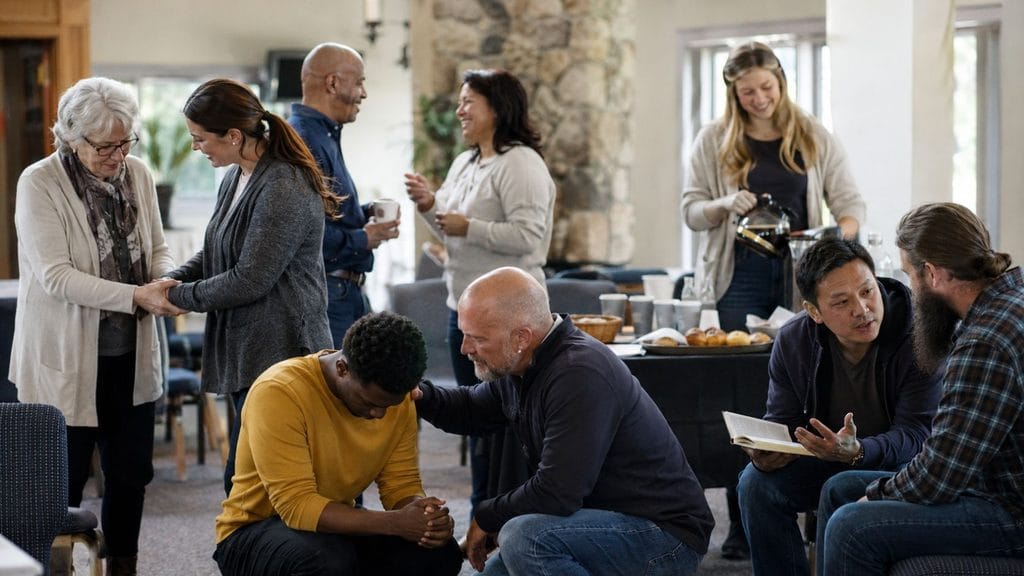
Neither does your heart do the same thing as your lungs. But each part works together so the whole body can function.
“For just as the body is one and has many parts, and all the parts of that body, though many, are one body—so also is Christ. For we were all baptized by one Spirit into one body…”
—1 Corinthians 12:12–13, CSB
Later in the chapter, Paul talks about different roles and gifts. Some are apostles, prophets, and teachers, and there are also spiritual gifts such as healing, miracles, and speaking in tongues.
These gifts are not meant only for ourselves. They are given for the common good and can strengthen and help our brothers and sisters in Christ.
All this uniqueness comes together to serve God and build up His Church.
So, the Christian life is not meant to be a Sunday-to-Sunday church service. It’s much more than that.
We are supposed to be a living sacrifice, where we give ourselves to God and part of that means using what He has given us to serve others.
Maybe it is worth asking ourselves:
If I disappeared from my Christian community, would anyone lose something I was contributing?
Real Fellowship Is Not Always Comfortable
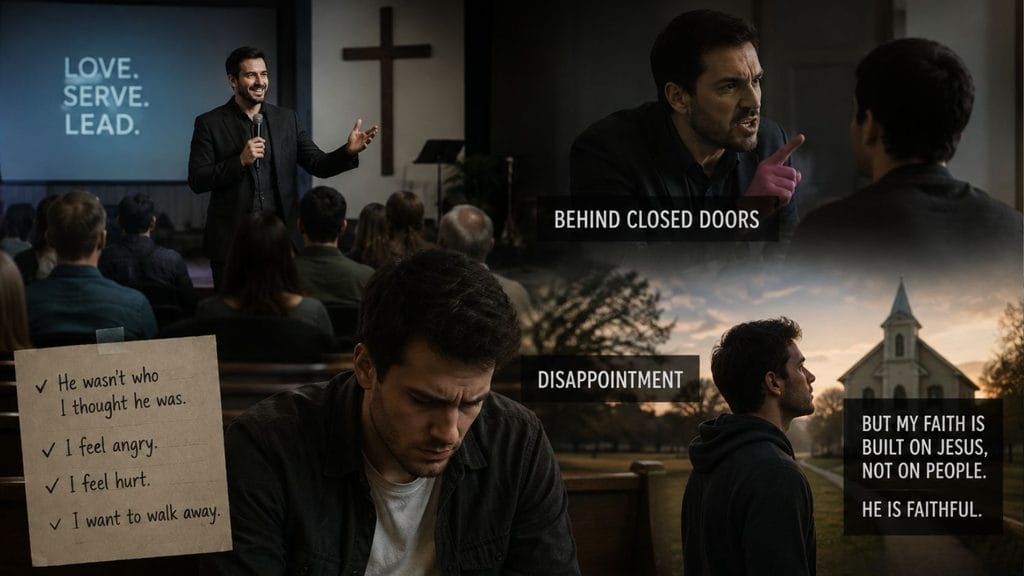
I’ve already mentioned a bit of this before. But over the past few years, I have had some real disappointments with both friends and church leadership.
Often, when people lead services, ministries, or gatherings at church or at home, we think they should be a bigger example than the rest. I mean, after all, they are teaching other Christians.
But that is not always the case. And when disappointment comes from someone in that position, it can be very painful.
I’ve seen Christians even leave church completely, sometimes because of serious problems with leadership.
But I always say:
“Our faith should not be built upon men. Otherwise, it can easily crumble because we are all imperfect. Instead, our faith is built upon Jesus, who is always faithful and will never fail us.”
That does not mean we should ignore leadership problems. But another Christian’s failure should not become the reason we abandon Christ.
Some common problems we have to learn to deal with are:
- Hypocrisy: We all have some hypocrisy. But the problem becomes more serious when someone is a totally different person at home than they are at church. Unfortunately, you may encounter cases like this.
- Personalities clash: People have different personalities. Some people may be calmer, while others are more direct. We have to learn to live with people who are different from us too.
- Lack of tolerance: Sometimes you’ll encounter people who act like they know the Bible almost as well as Jesus Himself. You may have contrasting ideas, and they may struggle to respect your point of view.
- Other people can interrupt our convenience: Sometimes another Christian needs prayer, help, or simply someone to listen at the exact moment we would rather be doing something else. Fellowship sometimes costs us time and comfort.
When you attend a church, you will probably encounter some of these things.
At least for me, it was shocking at first. But I never gave up. I still keep going to church. I’ve just learned to be wiser.
Some brothers and sisters we can spend a few minutes with; still, we pray for them, help them, and genuinely care about them. Others we can spend hours with because we naturally connect better.
Christian fellowship does not mean we will connect equally with everyone. It means learning to love other Christians even when they are not always the people we would naturally choose.
Christian Fellowship Goes Beyond Denominations
Talking about this may leave some people unhappy. But I must touch on this topic because it bothers me.
God calls Christians to unity, not hostility toward one another. Yet sometimes we seem to be very good at creating division ourselves.
Paul writes:
“There is one body and one Spirit—just as you were called to one hope at your calling—one Lord, one faith, one baptism, one God and Father of all, who is above all and through all and in all.”
—Ephesians 4:4–6, CSB
Over the years, I’ve seen this mentality of, “I’m this denomination and you’re that denomination.”
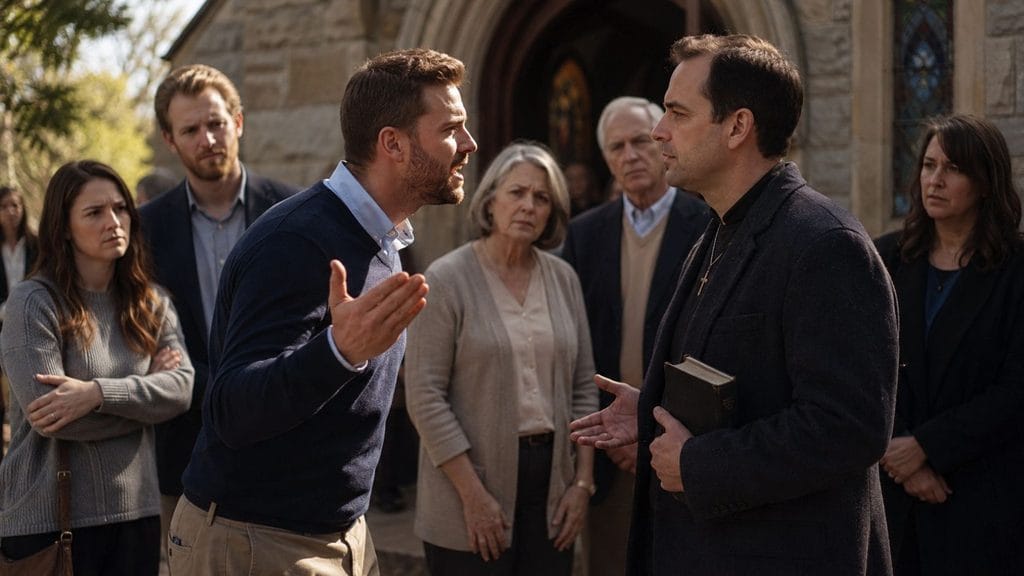
I spent three years attending a Baptist church, and today I attend a Catholic church. So, I’ve experienced Christian life in both settings.
In the Baptist church I attended, I encountered people who were strongly anti-Catholic, anti-Orthodox, anti-Anglican. Basically, anti-everything that was not Baptist.
Back then, I heard things like:
- Catholics do not believe in the same God as us.
- Catholics do not follow Christ. Instead, they worship the Virgin Mary and the Saints.
- Catholics are a cult.
But after months of studying the Church Fathers, the Protestant Reformers, and Catholic doctrine, I realized many of these claims were simply inaccurate.
And even when these claims are based on misunderstandings, they can still create real division and hostility among Christians.
Now, doctrine matters.
I’m not saying we should pretend Catholics, Baptists, Pentecostals, Orthodox Christians, and other traditions all believe the same things.
They don’t. But disagreement does not mean we need to treat each other like rival football teams.
God also has a funny way of doing things.
Recently, I’ve been praying with people on the street, and the friend who goes with me is a Protestant Baptist. In another group of friends, I was originally the only Protestant. Some belong to an Eastern Orthodox church and others to a Catholic church.
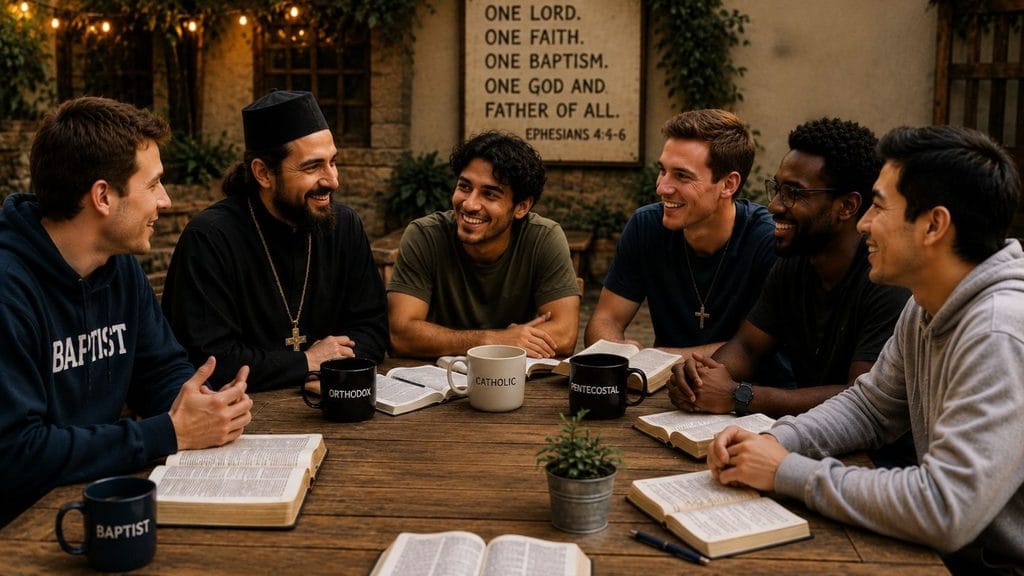
Still, we all got along.
So, what I’m saying is that we can belong to different churches and still get together, study Scripture, pray, talk about faith, help others, and become genuine friends.
We can care deeply about truth without turning Christianity into “me versus them.”
What If You Attend Church but Still Feel Disconnected?
Going to a Catholic church has been a challenge for me, even though I go with a friend. I still find it harder to socialize with people around Mass than I did at the Protestant Baptist church.
In the Protestant church, we had a coffee meeting before the service. This helped people come together. But even then, I often had to start the conversation myself.

Over the years, I got involved in church events like theater, evangelistic work, and other activities. That’s where I met many people.
So, what does this mean? And does the same apply to me now in this new journey?
- Participate in the community. Take advantage of events, ministries, groups, or whatever your church offers. I find this to be one of the best ways to meet more people in the community.
- Start with one or two people rather than trying to connect with everyone. Sometimes those people may eventually introduce you to others.
- Speak with your priest, pastor, or church leader and ask how you can participate more in the community.
- Be patient. Building real relationships takes time and does not happen overnight.
Even outside the church, you can still meet Christians. Many of my Christian buddies I met at the gym, through friends, and in other places.
Just a word of caution: sometimes the community problem is not entirely us.
In my prior church, I noticed a real lack of community. People often stayed within their own groups, and it could be hard for someone new to join.
When it came to evangelistic work or other activities, it also seemed like the younger people were usually the ones participating while many others stood by and watched.
So yes, we should make an effort to connect with people. But sometimes a church community also needs to ask whether it is genuinely making room for new people to become part of it.
Last Thoughts
Before you go, I want to leave you with a few questions.
Do you have people in your Christian life who really know how you are doing? Are you making an effort to build fellowship, or mostly waiting for others to approach you?
And is there someone in your church or Christian community you could get to know a little better this week?
I’d genuinely like to hear your thoughts. Leave your answer in the comments below.
1. Why Does Christian Fellowship Become More Valuable When Life Gets Heavy?
Christian fellowship often becomes more valuable when life gets difficult. Grief, sickness, spiritual dryness, financial problems, temptation, or discouragement can make us feel like we are carrying too much alone.
Other Christians may not always have the perfect answer, and they cannot fix every problem.
But sometimes what we need most is simply someone who stays beside us, prays with us, listens, or helps in a practical way.
2. Does Christian Fellowship Still Need Boundaries?
Yes. Christian fellowship does not mean trusting everyone immediately or allowing people to manipulate, abuse, gossip about, or constantly disrespect you.
We are called to love and forgive one another, but that does not mean we need the same level of closeness with every Christian.
Some people may become close friends, while others are people we love, pray for, and treat well from a healthier distance.
Boundaries and forgiveness are not opposites. We can forgive someone while still being wise about how much access they have to our life.
3. Can Christian Fellowship Happen Online?
Yes, Christians can encourage one another, pray together, study Scripture, and build genuine friendships online.
I think online fellowship can be especially useful for people who live far from other Christians or struggle to find a strong local community.
But I would not use it as a complete replacement for being around other believers.
Some parts of Christian life- sharing meals, serving together, being physically present during difficult moments, and worshiping together- are hard to reproduce through a screen.