
What Does It Mean to Be a Living Sacrifice (Romans 12:1)
What exactly does God expect us to put on the altar?
I still remember the first time I was reading the New Testament and came across the following passage:
“Therefore, brothers and sisters, in view of the mercies of God, I urge you to present your bodies as a living sacrifice, holy and pleasing to God; this is your true worship.”
—Romans 12:1, CSB
Like most people, I initially thought, “Does that mean I need to sacrifice myself? Give up my life?” I was thinking about physical death.
That is not completely wrong… but there is far more to this than meets the eye.
To follow God, there are things we eventually need to put aside for Him. Not always the moment we come to Christ. But slowly, we begin to see that some of the things we desire are neither good for us nor pleasing to God.
For me, that included lustful desires, New Spirituality, among other things.
But being a living sacrifice goes further than simply giving up sinful habits. Paul is talking about placing our whole lives at God’s disposal: our bodies, choices, relationships, money, gifts, reactions, and desires.
And importantly, we don’t do this to earn God’s mercy. Paul begins, “in view of the mercies of God.”
In this guide, we’ll look at what a living sacrifice actually means and how Romans 12 brings this dramatic image into ordinary Christian life.
Key Takeaways
- A living sacrifice is a response to God’s mercy, not a way to earn His grace.
- Presenting your body to God means allowing your faith to shape how you actually live: your speech, work, sexuality, possessions, and relationships.
- Being a living sacrifice is an ongoing process, not a one-time moment of surrender.
- Romans 12 shows that sacrifice often looks ordinary: humility, generosity, genuine love, patience, forgiveness, and choosing good over revenge.
- Sacrificing yourself to God does not mean destroying yourself or allowing others to abuse you. We offer our lives to God so He can continue transforming us.
Romans 12:1 Begins With What God Has Done, Not What You Must Do
First, let’s focus on this short section: “in view of the mercies of God.”
Before Paul tells Christians to offer themselves as a living sacrifice, he reminds them of what God has already done.
Throughout the previous chapters of Romans, Paul explains humanity’s problem with sin, God’s grace, what Jesus did for us, and the new life we receive through Him.
God gave His Son to redeem us from sin and reconcile us to Himself.
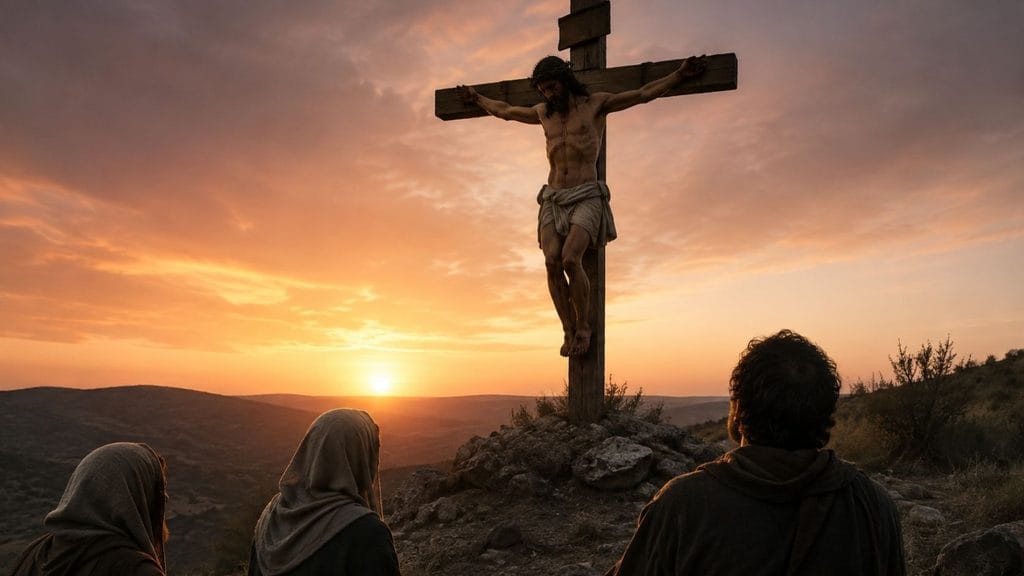
As Paul writes:
“But God proves his own love for us in that while we were still sinners, Christ died for us.”
—Romans 5:8, CSB
In other words, there is nothing we can do to repay what God has done for us.
We cannot earn His grace or somehow put God in our debt. Trying to repay what Jesus did for us through our own actions would be impossible.
Of course, that does not mean good works are unimportant.
James tells us that faith without works is dead. When we truly love God and receive His grace, that faith should eventually begin producing something in the way we live.
But notice the order.
Paul does not say, “Offer yourself so God will show you mercy.”
He says to do it “in view of the mercies of God.”
God’s mercy comes first.
So, we give ourselves as a living sacrifice to God not as payment for His grace, but as a response to the grace and mercy He has already shown us.
We do not work for God’s grace, but instead, we sacrifice ourselves as a response to God’s grace.
Why Does Paul Say to Present Your Body?
Now let’s talk about the next little section: “I urge you to present your bodies.”
Paul does not say to give only a piece of yourself. Let’s say, to give only your heart to God, or your hands and feet.
No, instead he tells you to give your body to God. In other words, our faith is not meant to remain only inside our thoughts or feelings.
We offer our whole lives to God and do our best to walk in obedience. This begins changing the way we talk, behave, work, and act toward ourselves and others.

Our Christian faith and how we live also become a visible example to those around us.
Now you may wonder what that looks like. Here are a few examples:
Our speech: We should watch what we say. Often, people do not realize what they tell themselves and others.
If we constantly say to ourselves, “I’m worthless and dumb,” then we can slowly begin thinking and living from that perspective. We should learn to speak truthfully and use our words to build up rather than tear down.
Work: No matter what we do for a living, we should do it to glorify God. People may say, “But how do I do that? I’m only a school teacher.” Then apply your Christian values and standards to your work. Be compassionate, patient, and loving with your students and colleagues.
Sexuality: I know this is a big topic, and it can easily get controversial. But we should learn to have self-awareness and self-control over our sexuality.
In my case, I had to learn to stop looking at sex as something casual. I had to change my perspective and see it as something sacred, not meant to be taken lightly.
Possessions: We understand that all we have comes from God. We stop being so selfish about our possessions and learn to be more generous.
For instance, giving to our local church, helping the homeless, or helping someone who is genuinely in need.
I also like this next passage because it helps us understand things more clearly:
“And do not offer any parts of it to sin as weapons for unrighteousness. But as those who are alive from the dead, offer yourselves to God, and all the parts of yourselves to God as weapons for righteousness.”
—Romans 6:13, CSB
Notice that Paul describes us as “alive from the dead” before telling us to offer ourselves to God. Once again, God acts first, and then we respond.
Because of the new life we have received through Christ, we offer ourselves to God and increasingly learn to use our bodies for righteousness instead of sin.
Now, do not expect this to happen overnight.
When you come to Christ, it can take time to surrender different areas of your life to God. Sometimes we don’t even realize how tightly we are holding onto something until God brings it to our attention.
With time, and I speak from my own experience, we begin to understand more deeply that God’s will is good, pleasing, and perfect.
A Living Sacrifice Keeps Living After the Moment of Surrender
Here is where things get complicated. I mean, “living sacrifice.” How can we sacrifice ourselves and still be alive?
Unlike an animal sacrifice that died on the altar, we remain alive. So our offering to God continues through the way we live afterward.
As I said before, we give every detail of ourselves to God: our relationships, how we talk, our possessions, and much more.
But this is not a one-time event where you make a few changes here and there and then leave the rest untouched.

No, rather, it is an ongoing process.
We keep walking with Jesus every single day. As our lives unfold, new situations and challenges appear where our self-interest and obedience collide.
For example, I once had a friend who was constantly “prophesying.” Almost every day, she would say, “God said this,” or “God told me that.”
At first, as an immature Christian, I thought it was exciting. But as I started reading the Bible and maturing, I noticed that many of her predictions never happened. Instead of bringing clarity, they often produced confusion and sometimes even anger toward God.
Then I came across passages like this:
“Don’t despise prophecies, but test all things. Hold on to what is good.”
—1 Thessalonians 5:20–21, CSB
The Bible does not tell us to reject prophecy automatically. But neither should we blindly accept every person who says, “God told me.”
Eventually, I decided to speak with her privately.
I would also prefer to avoid the confrontation and keep everything peaceful. But sometimes obedience means doing something we would rather avoid.
Unfortunately, she did not accept the correction.
That experience taught me that loving someone does not always mean saying what is pleasing. Sometimes love means speaking the truth respectfully, even when it is uncomfortable.
This is why being a living sacrifice is an ongoing process.
As we continue walking with Christ, we will face situations where we need to ask:
“God, what should I do here?”
And sometimes the thing we need to place on the altar is our pride, comfort, fear of confrontation, or simply our desire to have things our own way.
“Holy and Pleasing to God” Does Not Mean Becoming Flawless First
This may sound scary at first. What does it mean to be “holy and pleasing to God”?
First, being holy and pleasing to God is not the same as being perfect.
It does not mean that you need to clean up your whole life before you can come to God. None of us reaches a point where we suddenly stop struggling, stop making mistakes, and become flawless.
Instead, God sets us apart as His own and slowly changes us as we walk with Him.
Holiness does not begin with our own strength. It begins with God and His grace.
But we are still called to respond.
As we turn away from sin, resist temptation, and learn to obey God, our lives begin to reflect Him more clearly.
Sometimes that change happens quickly. Other times, it takes years.
I know from my own walk that there have been things God showed me slowly. Things I did not even realize were wrong at first.
So, we do not offer ourselves to God because we have already become holy enough.
We offer ourselves because of His mercy, and He continues shaping us as we walk with Him.
Romans 12 Shows What a Living Sacrifice Actually Looks Like
“Do not be conformed to this age, but be transformed by the renewing of your mind, so that you may discern what is the good, pleasing, and perfect will of God.”
—Romans 12:2, CSB
Paul continues by telling us not to be “conformed to this age.”
I really like this part because even though Paul wrote these words nearly two thousand years ago, the warning still applies to us.
Unfortunately, I sometimes see Christians trying so hard to fit into the culture around them that they are afraid to make any waves.

But the simple fact is that following Jesus and His teachings will sometimes collide with what we hear from social media, television, friends, or society in general.
Sometimes when I speak about Jesus, people look at me as though I’m extremely religious or ask, “Do you really believe in that?” Almost as if Christianity were some old-fashioned clothing people stopped wearing a century ago.
But with time, I stopped caring, especially when you look around at the state of the world. So much is broken, yet somehow following Jesus is treated as the outdated way of living.
Instead, Romans 12 shows us another way of living:
- Humility rather than self-importance.
- Using your gifts for others.
- Genuine rather than performative love.
- Generosity and hospitality.
- Staying faithful through difficulty.
- Blessing rather than retaliating.
- Refusing revenge.
- Overcoming evil with good.
In Romans 12:3–21, Paul moves from the dramatic language of the altar into the practical realities of everyday Christian life.
That last sentence is especially useful because it brings the section directly back to your main argument without repeating everything you already taught.
True Worship Is Bigger Than Singing
What is true worship? Is it simply what happens when Christians gather together on Sunday, or is it something more?
Gathering with our brothers and sisters to worship God is important.
But Romans 12:1 shows us that worship does not end when we leave church.
Under the Old Covenant, sacrifices and burnt offerings were an important part of Israel’s worship. God gave them as part of His covenant with Israel, and they ultimately pointed to the perfect sacrifice of Jesus.

Fortunately, we no longer need to offer animals on an altar. Christ offered Himself once for us.
Now Paul tells us to offer ourselves as a living sacrifice. That means worship continues after church.
It happens in how we work, treat our families, make decisions, respond to suffering, serve others, resist sin, and even love our enemies.
So true worship is not limited to something we do for an hour on Sunday. Our entire Christian life can become an offering to God.
Being a Living Sacrifice Is Not the Same as Destroying Yourself
Now, before we end this guide, I want to mention that sacrifice does not mean destroying yourself.
Sometimes you watch a movie where you see some fanatic lashing himself because he thinks pain somehow makes him more spiritual.
Well, do not do that! It simply is not a good idea.

Following God and becoming a living sacrifice does not mean:
- Neglecting legitimate needs.
- Allowing others to abuse or manipulate you.
- Saying yes to every request.
- Treating suffering as automatically holy.
- Believing your body has no value.
- Trying to earn God’s approval through pain.
Biblical sacrifice is offered to God.
We offer our whole lives to Him, including those areas that still need to be changed and made more holy. That is not the same as becoming passive and allowing people to treat us like a doormat.
Quite the contrary.
I can say that as I’ve walked with God these past few years, I’ve actually learned to value myself more.
Just think about the fact that through Christ, God brings us into His family as His sons and daughters. That is no little thing.
Last Thoughts
Before you go, I want to leave you with a few questions.
What part of your life is the hardest for you to place in God’s hands?
Is it your pride, relationships, money, comfort, anger, plans, or something else entirely?
And when you think about becoming a living sacrifice, what does that realistically look like in your life right now?
I’d genuinely like to hear your thoughts. Leave your answer in the comments below.
1 – What Pleases God More Than Sacrifice?
God desires obedience and a sincere heart more than outward sacrifice performed without genuine faithfulness.
When King Saul disobeyed God but tried to justify himself by pointing toward the sacrifices he intended to offer, Samuel told him, “to obey is better than sacrifice” (1 Samuel 15:22, CSB). This does not mean sacrifice is unimportant.
Romans 12:1 itself tells us to become a living sacrifice. The point is that God is not impressed by religious actions when our hearts and lives are deliberately turned away from Him. True sacrifice and obedience are supposed to belong together.
What Are Three Ways Christians Can Offer Sacrifices to God?
The Bible does not give us one official list of exactly three types of Christian sacrifice, but it gives us several examples.
First, we can offer ourselves to God as a living sacrifice (Romans 12:1). Second, we can offer a sacrifice of praise, giving thanks and glorifying God even when life is difficult.
Third, we can do good and share with others. Hebrews 13:15–16 actually connects these things with sacrifices that please God.
So Christian sacrifice is no longer about placing an animal on an altar; it shows up through worship, obedience, generosity, and the way we live