

How to Handle Spiritual Dryness and Distraction in Prayer?
Have you ever sat down to pray and felt absolutely nothing?
I remember when I had only been praying regularly for a few months. I would sit on the bench in my bedroom with only the light of my salt lamp. After a few minutes, I sometimes felt an intense awareness of God’s presence.
It felt as though His Spirit was hovering over me, and I experienced an unspeakable peace. It was beautiful. Of course, each person’s experience is different.
But over time, that slowly began to fade. There were days when I felt nothing. Some mornings, it was as though my body did not want to cooperate. Like it was telling me, “Hey Jordan, I’m tired of this prayer thing. I’m revolting!”
Those days were, and still are, challenging. On other days, my mind races from one thought to another. I find myself telling God, “I’m sorry. I really want to be with You, but my mind will not stop.”
Spiritual dryness and distraction can both make prayer difficult, but they are not the same struggle. In this article, we will look at what may cause them and how Christians can keep praying without pretending everything feels fine.
Key Takeaways
- Spiritual dryness and distraction are not the same thing. Prayer may feel empty, or your mind may refuse to stay quiet. Sometimes, both happen together.
- A difficult prayer life does not automatically mean God has abandoned you. Feelings change. God’s faithfulness does not.
- Be honest with God. Tell Him when you feel angry, disappointed, tired, distracted, or empty. You do not need to pretend.
- Make prayer easier to focus on. Turn off notifications, use a short Bible passage, pray for shorter periods, and gently return when your mind wanders.
- Do not isolate yourself. When dryness, anxiety, exhaustion, or low mood begins affecting the rest of your life, speak with a trusted Christian or qualified professional.
What Is Spiritual Dryness?
Spiritual dryness is a season when prayer, reading Scripture, or worship feels empty. It is like someone has squeezed all the life out of it.
You may have gone through a season when God felt especially close. When you prayed or read Scripture, perhaps you experienced more peace, joy, or desire to be with Him. It may have felt like a honeymoon phase in your faith.
But then, one day, you start praying and no longer experience those things. In fact, prayer now seems lifeless. It feels like you are walking through the wilderness and cannot sense God anywhere.

The Psalms show that believers can be honest about this feeling:
“How long, Lord? Will you forget me forever? How long will you hide your face from me?”
—Psalm 13:1, CSB
Know this: spiritual dryness does not automatically mean you have lost your faith, that you are doing something wrong, or, worse, that God has abandoned you.
Feeling that God is distant is not the same as God actually being distant.
In Psalm 13, David continues to pray and trust in God’s faithful love even as God seems hidden from him. This shows that such seasons can happen even to faithful believers. David himself was described as a man after God’s own heart.
What Does Distraction in Prayer Look Like?
Some days, I struggle with this. I sit down to pray, but something has happened in my life that is worrying me, and my mind keeps wandering.
My mind also tends to be very creative. Often, it begins creating an entire conversation with someone: “John said this, then I said that. Then I got mad, and he got mad…” Before I know it, there is a full-blown soap opera happening inside my head.
By the time I notice, several minutes have passed, and I have done everything except spend time with God. Even after years of prayer, my mind can still feel like an untamed animal that occasionally wants to escape from its cage.

Distractions can also come from outside us: a phone notification, noise in another room, unfinished chores, or something we suddenly remember we need to do.
Sometimes, though, the thoughts are stranger or more disturbing. In my first years of praying, especially at night, I would sometimes picture an ugly demon staring at me while my eyes were closed. It disturbed me enough that I wanted to open my eyes and check whether anything was there.
I cannot say whether that image came from spiritual temptation, anxiety, or simply my imagination. Scripture teaches that we do face a spiritual enemy. But that does not mean every unwanted thought is demonic.
This is where spiritual discernment becomes important. We should test our thoughts and spiritual impressions rather than immediately assuming they came from God or the enemy.
Wandering attention also does not automatically mean that your prayer is insincere. God knows our weaknesses.
When your attention wanders, you can simply notice it and return to Him without condemning yourself or restarting the whole prayer.
How Spiritual Dryness and Distraction Can Affect Each Other
Sometimes, both struggles work together like a perfect duet.
You become distracted by your thoughts, notice that several minutes have passed, and then get frustrated with yourself. That frustration can make prayer feel even more difficult.
Or the opposite happens. Prayer already feels dry, so your mind begins searching for something more interesting. Before long, you are thinking about work, messages, chores, or an imaginary conversation instead of God.
The more often this happens, the harder it may become to remain attentive during prayer. However, spiritual dryness and distraction do not always have the same cause.
You may feel spiritually dry but still remain focused. Or you may genuinely desire to pray and feel close to God while still struggling with a restless mind.
Understanding the difference matters because the response may not always be the same.
Why Prayer May Feel Dry or Distracted
There are several reasons this may happen. Some of the most common ones I have found are:

Different Seasons
God does not always work in us in the same way.
A new Christian may experience strong peace, joy, or an intense awareness of God’s presence during prayer. God may use those experiences to draw the person closer to Him.
But after some time, those feelings may become less intense. This does not mean that God has withdrawn His grace. He may be teaching us to remain faithful even when prayer no longer feels exciting or comforting.
Not every season of prayer will feel the same.
Exhaustion, Stress, or Grief
I went through a period when I struggled to sleep, and that affected my prayer life. I often fell asleep while praying. So, exhaustion is a big one here.
Stress and grief can also weaken our desire and ability to concentrate. We should not assume that every struggle in prayer comes from a lack of faith or rebellion. We live in a broken world, after all, and some things affect us physically and emotionally.
Habits of Constant Stimulation
Mobile phones have become almost like a modern drug for many people.

It bothers me when I walk past the restaurant area in a mall and see groups of people sitting together while everyone stares at their phones. Nobody is talking to one another, and I doubt that is how God intended us to be.
When our minds constantly receive notifications, messages, videos, and entertainment, slowing down for prayer can feel uncomfortable. The habits we form during the rest of the day can follow us into prayer.
Disappointment With God
I have gone through moments when I did not understand the suffering I was experiencing. Unfortunately, I blamed God and felt disappointed with Him.
I wondered, “God, if You love me, why are You allowing me to suffer? Where are You?”
Those thoughts can create distance in our prayer life. Scripture shows that faithful people also suffered and struggled to understand what God was doing. Joseph suffered in Egypt, Moses struggled in the wilderness, and Jesus suffered for us even though He was God in the flesh.
Many times, we simply do not understand why something is happening.
How to Respond When Prayer Feels Spiritually Dry
So what can you do? Let’s take a look at more practical things you can do right now:
Talk Honestly With God
Say what is in your heart.
Are you angry with God? Tell Him. Do you think God is angry with you? Tell Him. Does your prayer feel pointless? Tell God.
We should be honest with Him. He can handle our emotions.

Job once said:
“His anger burns against me, and he regards me as one of his enemies.”
—Job 19:11, CSB
Job was expressing how his suffering made the situation appear to him. Even a faithful man could bring painful and confused thoughts before God rather than pretending everything was fine.
Read the Psalms
There are Psalms for almost everything.
Psalm 51 gives us words for repentance and asking God for mercy. Psalm 109 expresses deep pain, anger, and a desire for justice after being falsely accused and attacked.
Many Psalms are attributed to David, while others are connected with Asaph and other writers. Together, they show a whole spectrum of what it means to be human before God.
Our struggles may feel deeply personal. But people have wrestled with guilt, injustice, fear, grief, and disappointment throughout human history.
Keep Praying
God’s faithfulness does not depend on our feelings. He remains faithful even when prayer feels empty.
Our emotions, on the other hand, can change from one day to the next. So, we should continue to pray and trust God rather than rely on our feelings to see whether He is near.
“Rejoice in hope; be patient in affliction; be persistent in prayer.”
—Romans 12:12, CSB
Keeping prayer does not mean forcing ourselves to create an emotion. Sometimes, faithfulness simply means continuing to show up.
Examine Yourself
Nowadays, we can become so distracted by everyone and everything else that we forget to stop and look within.
Ask yourself:
- Do I need to repent of something?
- Do I need to rest?
- Am I disappointed with God about something?
- Do I need to ask another Christian for support?
Still, we should be honest about what is happening within us. And when needed, we should be humble enough to ask for help. I know we may sometimes feel ashamed to do that, but the Christian walk was never meant to be done alone. Paul tells believers to carry one another’s burdens.
How to Respond When Your Mind Keeps Wandering
I have found some ways to combat a mind that simply does not want to pray.

Pray Directly From a Short Bible Passage
I usually like to read a passage about Jesus. For instance, I may read about Him praying in the Garden of Gethsemane or being baptized by John the Baptist in the Jordan River.
I meditate on what happened and ask God to help me become more like His Son. I notice that this shifts my attention away from my own thoughts and back toward God’s Word.
Remove Interruptions
Turn off notifications from WhatsApp, Facebook, Instagram, and other apps before you begin praying. They can be extremely distracting.
You may be praying, something rings, and suddenly you feel the need to check it. Even when you resist, part of your mind may continue wondering what the message said.
Sometimes, the easiest solution is to leave your phone in another room.
Use Shorter Prayers and Mix Things Up
Instead of forcing yourself to spend an hour sitting in prayer, try shorter periods.
Spend fifteen minutes sitting calmly and praying. Then get up, read a few Bible passages, and meditate on them. Afterward, write in a notebook a few things you are thankful for.
I sometimes struggle to spend an entire hour sitting and praying. So, switching things around has helped me focus on God in different ways and gives my prayer more flow.
Longer prayers are not automatically better prayers. What matters is that we are honestly spending time with God.
When Your Attention Wanders
While praying, your mind may keep jumping from one thought to another. First, do not become frustrated with yourself. After all, you are not a machine. Yes, it is normal.
Simply notice what happened and gently return to your prayer rather than starting again.
Sometimes, you may need to do this a hundred times during one prayer session. That does not mean the whole prayer was a failure. Each time you return your attention to God, you are choosing to remain with Him.
When You Should Ask for Help
Walking with the Lord is not supposed to be a lonely journey. We should be humble enough to ask for help when we need it.
I know some people struggle with this part. They feel as though they can take on the whole world by themselves. That is especially common in our individualistic culture.
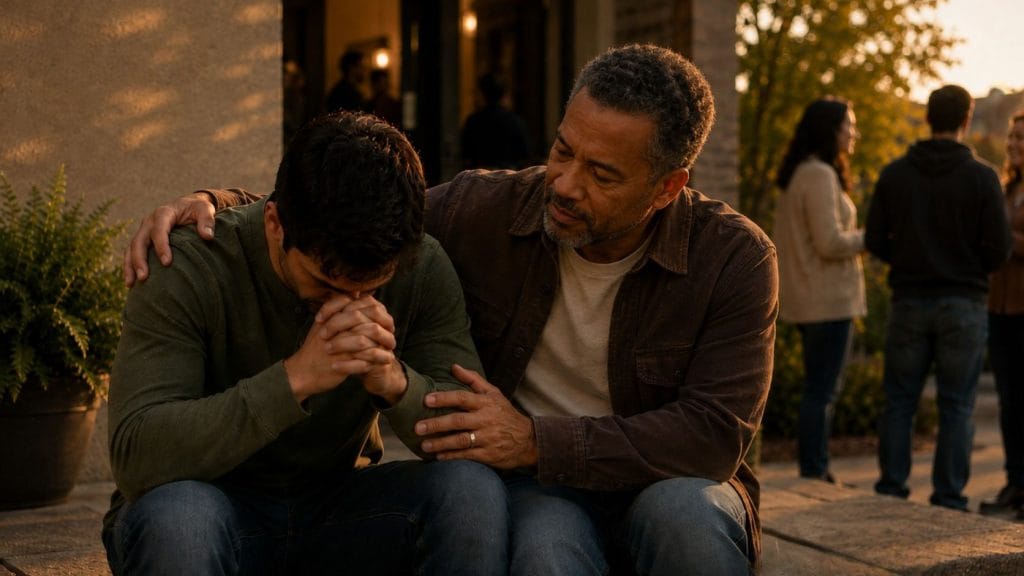
But Scripture tells us:
“Carry one another’s burdens; in this way you will fulfill the law of Christ.”
—Galatians 6:2, CSB
Consider asking for help when:
- Spiritual dryness continues for a long time and you feel increasingly distant from God.
- You experience persistent low mood, hopelessness, or a lack of energy.
- You begin isolating yourself from other people.
- Your distraction is connected to severe anxiety, exhaustion, or difficulty functioning normally.
In these situations, speak with a trusted priest, pastor, mature Christian, or spiritual director. If the problem is also affecting your mental or physical health, seek help from a qualified professional.
The worst thing we can do is isolate ourselves and pretend everything is fine. Asking for help does not mean that our faith is weak. Sometimes, it is the wisest and most humble thing we can do.
Last Thoughts
Have you been going through a spiritually dry season? Or do you genuinely want to pray, but your mind refuses to stay quiet?
What has been making prayer difficult for you lately? Is it exhaustion, disappointment, distraction, or something you cannot fully explain?
Leave your experience or question in the comments below. I’ll read it and try to help where I can.
1. Does God Allow Spiritual Dryness?
Yes, God may allow a season when prayer no longer feels exciting or comforting. He may use it to teach us to remain faithful without depending on strong emotions.
However, we should not assume that every dry season is directly caused by God. Exhaustion, grief, disappointment, unconfessed sin, or constant distraction may also affect our prayer life.
2. How Do You Know if You’re Spiritually Blocked?
“Spiritually blocked” is not really a biblical term, and it can mean different things. Ask yourself whether you are resisting something God has shown you, holding on to resentment, avoiding confession, or withdrawing from prayer.
But also consider whether you are simply exhausted, anxious, grieving, or overstimulated. Not every difficult season means there is some mysterious spiritual barrier between you and God.
3. What Are Some Prayers I Can Say to Combat Spiritual Dryness?
Your prayer does not need to sound impressive. You can simply say, “God, prayer feels empty right now, but I still want to be with You. Help me remain faithful even when I feel nothing.”
You can also pray through Psalms 13, 42, 51, or 63. The Psalms give us words for disappointment, longing, repentance, and trust when our own words are difficult to find.
4. How Long Can Spiritual Dryness Last?
There is no fixed timeline. It may last a few days, several weeks, or much longer, depending on what is causing it. Do not panic because one prayer session felt lifeless.
However, when spiritual dryness continues for a long time and becomes connected to isolation, hopelessness, anxiety, or difficulty functioning, speak with a trusted priest, pastor, mature Christian, or qualified professional.